Floral Wedding Invitation Designs for a Romantic Celebration
Flowers set the mood of a wedding before a single guest arrives. The right blooms on your invite tell guests whether to expect a garden morning or a candlelit evening.
Flowers as the design language
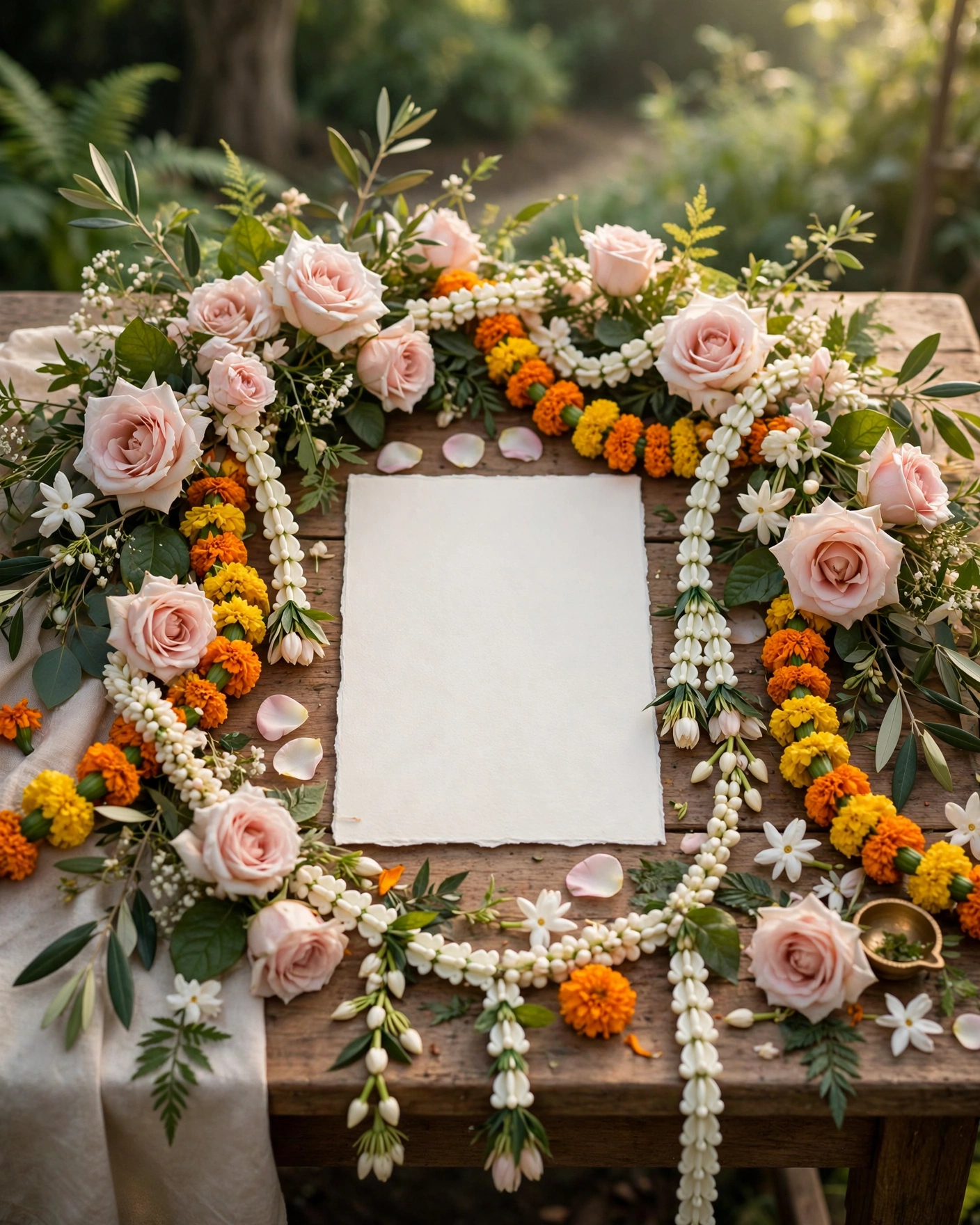
Flowers are the design language of a romantic invitation. They can form a border, an arch, a corner spray, or a full garden ground, and the choice of flower changes the whole feeling. Roses feel romantic, marigolds feel festive, jasmine feels traditional, and lotus feels calm. Pick the flowers first, and the rest of the design follows.
Use one hero bloom and one supporting bloom, not a garden of everything. Let the flowers frame the names, never cover them, and keep the text in a clear space where the petals stop.
Roses and blush
Blush Rose Arch
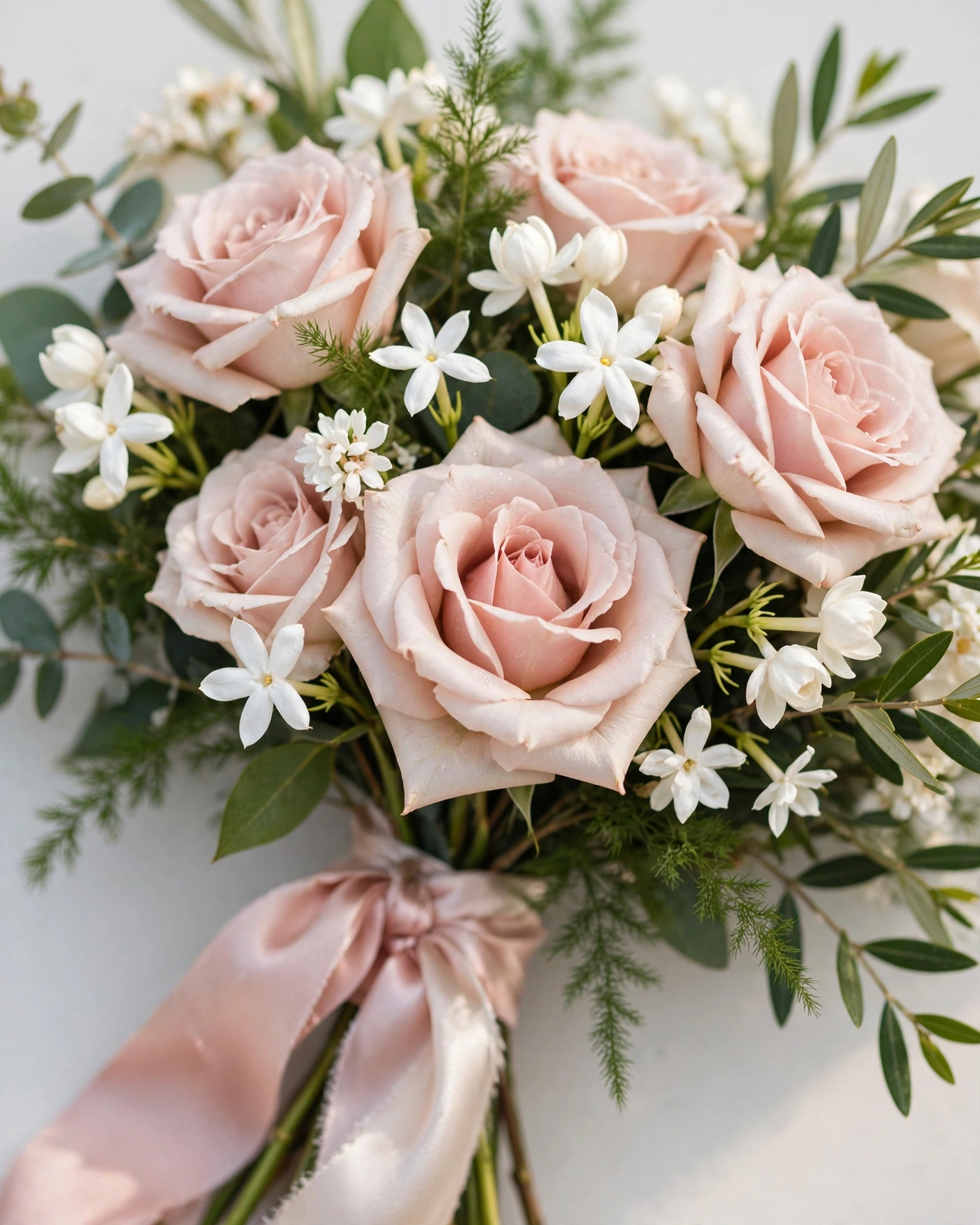
Blush roses form a soft arch over the couple names on warm ivory, with a few green leaves to keep the pink from turning flat. It suits a romantic evening wedding, and it works best on screen. Keep the roses to the top and sides, and leave the centre clear for reading.
Deep Red Rose Border
Deep red roses run along the border of a cream card, with the names in a dark burgundy serif in the middle. It suits a classic, formal wedding, and it reads well in print, where the red stays rich.
Rose and Gold
Pale pink roses with fine gold stems and a thin gold frame on ivory, for a romantic look that still feels formal. It suits a wedding with gold in the decor, and it pairs well with a simple serif for the names. Keep the gold to the stems and the frame, so the roses stay the softest thing on the card.
Single Rose Stem
One long rose stem runs down the side of a plain ivory card, with the names in large type beside it. It suits a couple who want romance without a busy design, and it works beautifully on a phone, where the stem guides the eye down the page. Use a real photo of a rose if you can, because a drawn rose at this size can look thin.
Marigold and festive blooms
Marigold and Mango Leaf
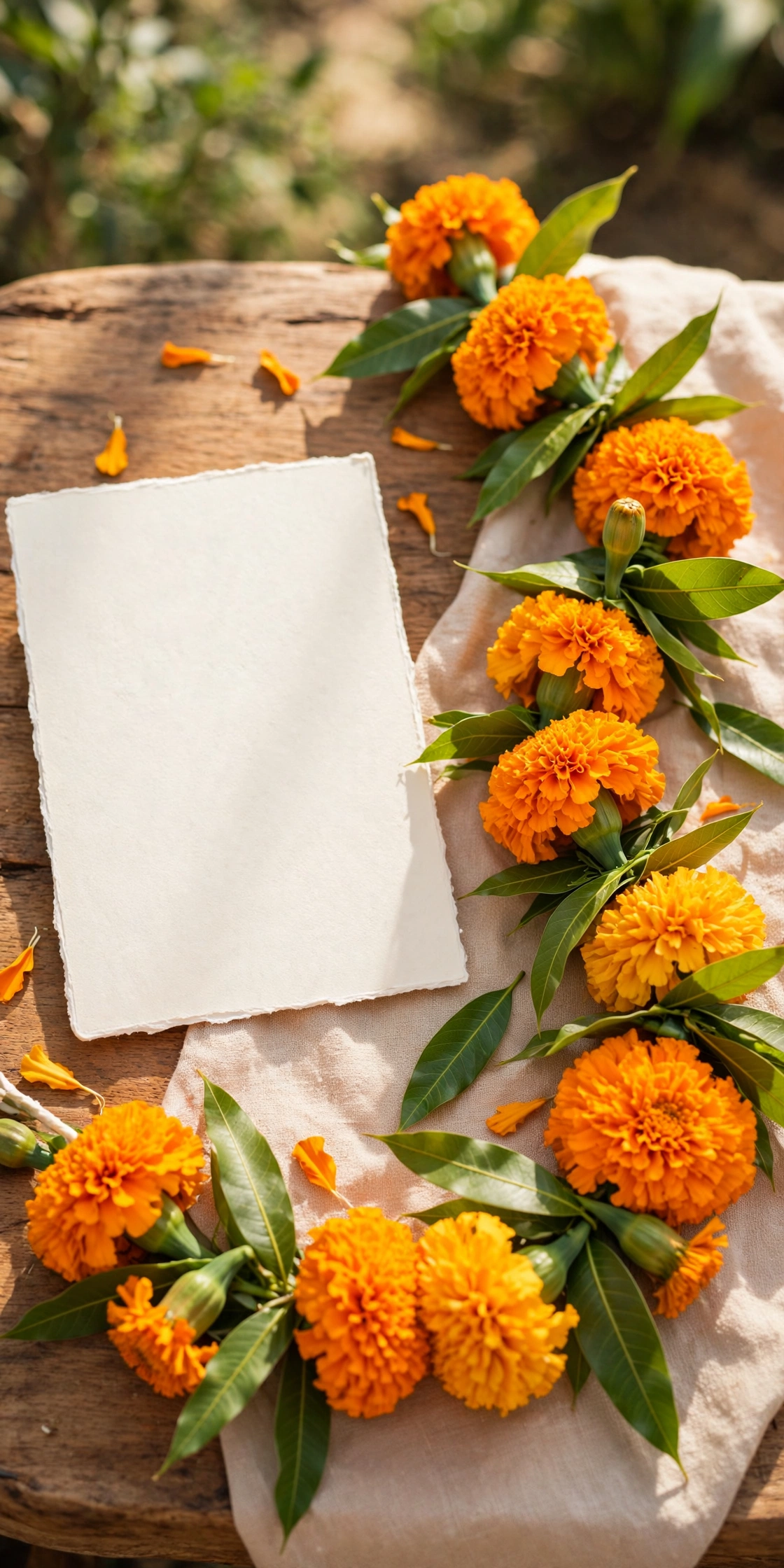
Orange marigolds and green mango leaves form a garland across the top of an ivory card, with the names below in deep green. It suits a festive daytime wedding, and it is familiar to every guest. Keep the garland loose and uneven, like a real one.
Marigold and Pink
Marigolds mixed with pink roses and a touch of green, on a warm cream ground, for a wedding that is both festive and romantic. It suits a haldi and wedding week with many daytime events, and it works well when the real decor will mix the same two flowers. Keep the pink to a third of the mix, so the marigold stays the lead.
Jasmine, lotus, and calm blooms
Jasmine and Ivory
White jasmine sprays on warm ivory, with the names in deep green and a thin gold line at the edge. It suits a traditional South Indian wedding, and it feels serene rather than showy. Keep the jasmine small and fine, because large white blooms on ivory can disappear, while small sprays read clearly.
Lotus and Sage
Pale pink lotus blooms with sage green leaves on ivory, for a calm, elegant ceremony. It suits a morning wedding or a temple wedding, and it pairs well with a simple, generous layout and plenty of empty space. Use the lotus once, as a single bloom near the names, and do not repeat it as a pattern behind the text.
White Lily and Green
White lilies with soft green stems on a pale ground, for a romantic look that feels fresh and modern. It suits a daytime garden wedding, and it works well for a couple who want flowers without the usual rose. Keep the background plain, because lilies need empty space to look elegant.
Garden and wildflower moods
Wildflower Meadow
A loose mix of small wildflowers in pink, yellow, and white along the bottom edge, with the names in large dark type above them. It suits a relaxed outdoor wedding, and it feels personal, like flowers picked rather than arranged. Keep the meadow to one edge, so the text above it stays clean.
Garden in Full Bloom
A full floral ground in soft pinks and greens, with the names set in a plain ivory panel in the centre. It suits a wedding where the flowers are the whole point, and it works best on a large screen or a printed card, where the ground has room. Do not place text directly on the flowers, because even pale petals will fight the letters.
Lavender and Sage
Lavender sprigs with sage leaves on ivory, for a romantic design that feels cool and quiet. It suits a wedding in a hill station or a cool season, and it is a good choice when the couple want romance without pink. Use a deep purple for the names, so they stay readable against the pale ground.
Matching the flowers to the real wedding
Pick flowers that will actually appear at your wedding, or that bloom in your wedding season. Guests notice the connection when they walk into a venue dressed with the same roses they saw on the invite. If your florist has already chosen the wedding flowers, show that list to the person making the invite, and build the card from it.
Scale matters. A full floral ground feels lush and celebratory. A single corner spray feels refined and modern. Either can be romantic. What fails is a half hearted middle, a few scattered blooms with no shape. Commit to a layout, and let the flowers hold it. Then preview the invite on a phone in daylight, because flowers that look soft on a laptop can turn muddy on a small screen.
Before you choose a floral design
- Match the flowers to your wedding decor
- Keep florals at the edges, not behind the text
- Choose a colour that suits the season
- Check the design on a phone screen
Frequently asked questions
Which flowers suit a romantic wedding invitation?
Roses are the classic romantic bloom, and blush roses suit an evening wedding. Jasmine suits a traditional ceremony, and lotus suits a calm morning wedding. Pick one hero bloom you love, and let it lead the whole design.
Should the invitation flowers match the real wedding flowers?
Yes, where you can. When the invite shows the same roses or marigolds that will dress the venue, guests feel the link at once. If the real flowers are not chosen yet, pick blooms from your wedding season, and they will usually match.
How many flowers should an invitation show?
One hero bloom and one supporting bloom is enough. A card that tries to show every flower ends up looking like a catalogue, and the names get lost.
Can a floral invitation work for a modern wedding?
Yes. A single rose stem down the side, a corner spray, or a wildflower edge on a plain card all feel modern and romantic. The modern part is the empty space and the clean type, not the absence of flowers.
What colours go with a floral invitation?
Warm ivory is the safest ground, because it lets pinks, reds, and greens all read clearly. Deep green type suits marigold and jasmine, burgundy type suits roses, and a thin gold line suits almost any bloom.
Related reading
See it on a real invite
Open any of these to see the full invite, then add your own names and preview it free.



Found this useful? Share it with someone planning a celebration.
Share