Traditional and Digital Wedding Invitations: How to Use Both
You don't have to choose between a printed card and a digital invite. Here's how Indian families use print for elders and digital for everyone else.
The plan in three lines
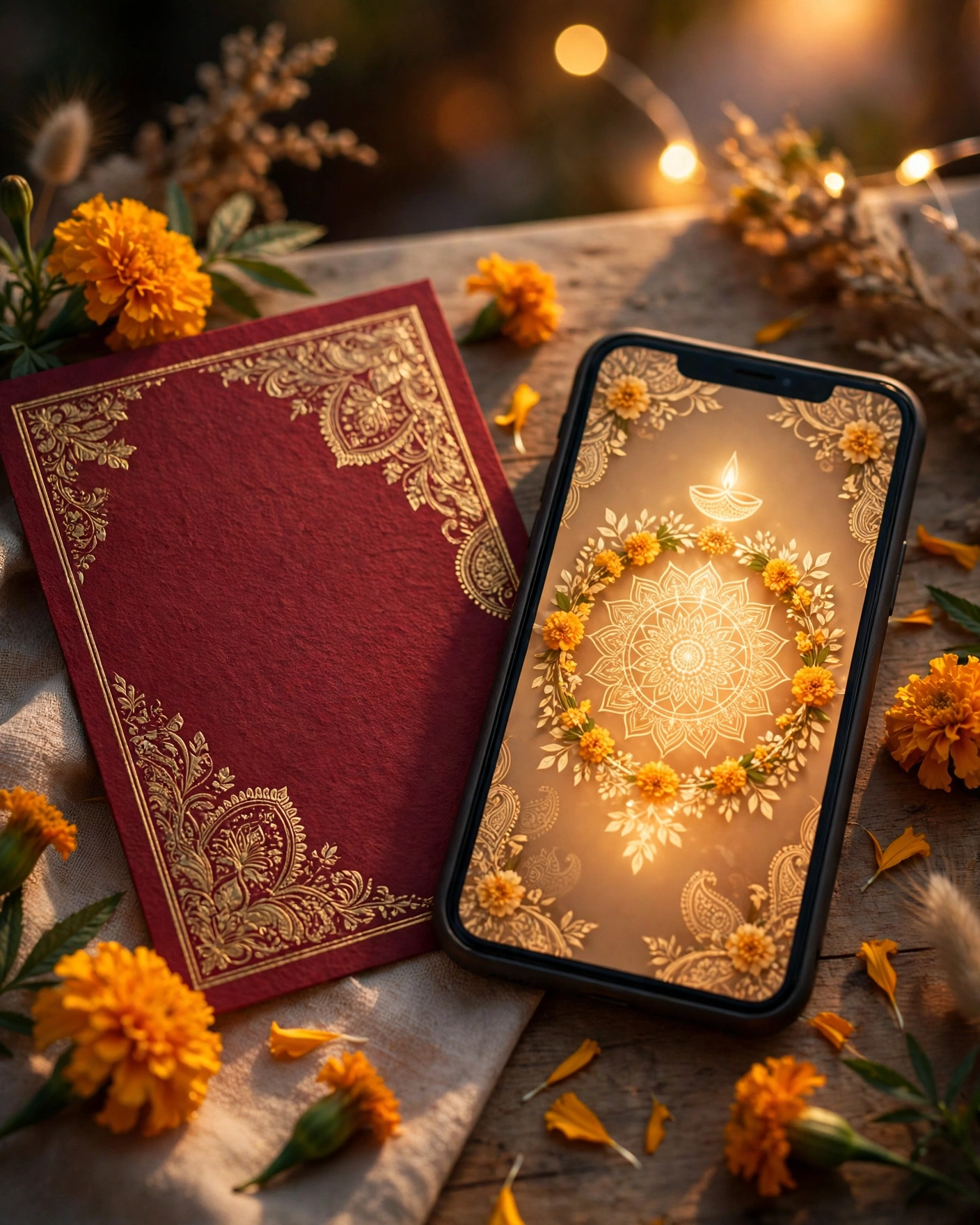
Give printed cards to elders, close family, and guests who value a keepsake.
Send a digital invite to everyone else, especially outstation and younger guests.
Keep one wording, one event list, and one date across both, so nobody gets two different stories.
Why a hybrid plan works
A hybrid plan means you print a small number of cards and send a digital invite to the rest of your list. The printed card is the keepsake.
This is not a compromise for couples who cannot decide. It is how many families already work. Grandparents keep a card on the mantelpiece. Cousins abroad open a link, check the venue, and confirm in a tap. Both groups feel properly invited, because each got the format that suits them.
Who gets print, and who gets digital
Start with your guest list and split it honestly. Printed cards go to parents, grandparents, uncles and aunts, close family friends, and anyone who has said they keep wedding cards.
Digital invites go to everyone else: friends, colleagues, cousins in other cities, and younger relatives who live on their phones. They will appreciate a link they can open anywhere, forward to a partner, and check again on the wedding morning.
There is a middle group worth thinking about: family friends who live nearby and would enjoy a card, but who also need the map and the RSVP. Give them both.
Keeping both versions identical
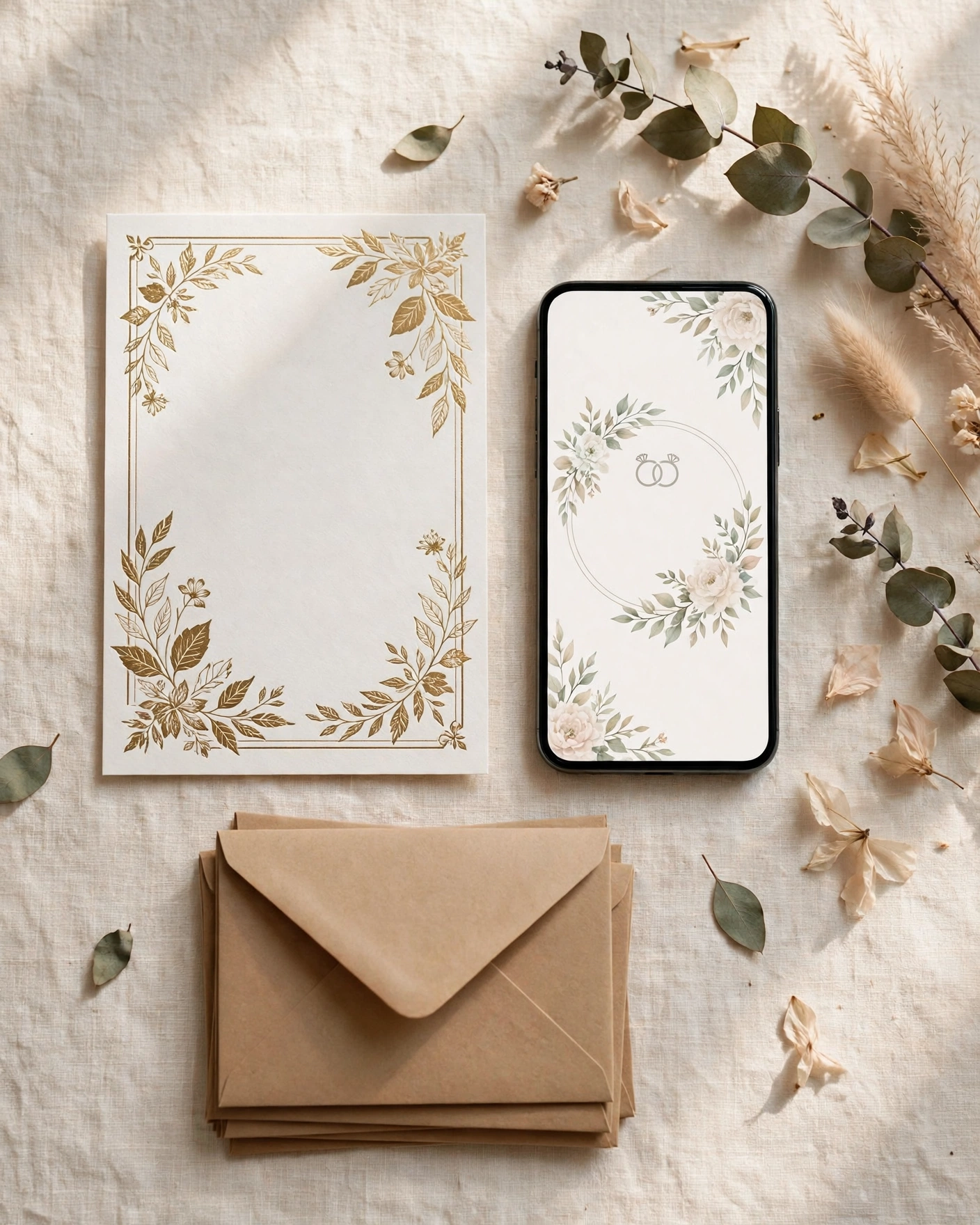
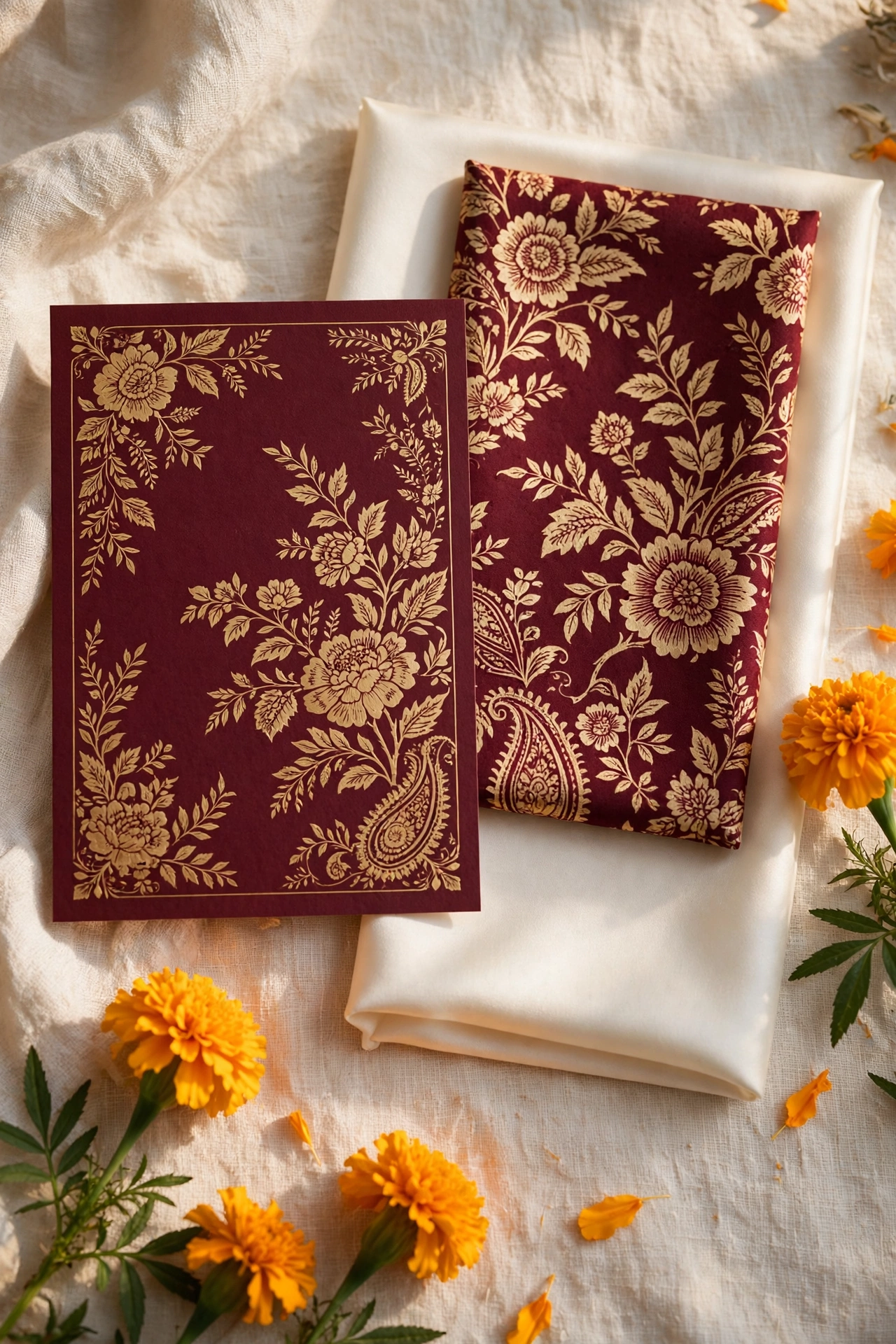
Match the printed card and the digital invite in colour and motif, so guests recognise them as one wedding. If the card is deep burgundy with gold, the digital invite should carry the same pairing.
Keep the wording identical in both formats. Names, dates, venues, and the order of events must match word for word.
Agree on one approved wording before you order print or build the digital invite. Write it down, share it with both families, and do not change it after that unless something genuinely moves.
The sending order that avoids confusion
Share printed cards in person where you can, since the visit is part of the invitation. Elders in particular value the visit as much as the card.
Send the digital invite to outstation guests first, so travel planning starts early. They need the dates, the venue, and the travel notes before they can book trains or flights. A digital invite that arrives late leaves them guessing, and guessing leads to wrong bookings.
Send to friends and colleagues next, in small batches you can track. Small batches let you answer questions as they come, and they let you spot a mistake early, before the whole list has seen it. A large broadcast hides mistakes until too many people have the wrong detail.
What to put in each version
The printed card should carry the essentials: the couple's names, the families, the wedding date and time, the venue, and the main events. Keep it clean and readable. A card crowded with every event and every note is hard to read and easy to misplace. The card is a keepsake, so let it breathe.
The digital invite should carry everything else: the full event schedule with timings, the map for each venue, photos, the dress code, travel notes, and the RSVP. Guests will open it on the wedding week to check a time or find a venue, so make those details easy to find.
Here are short lines you can use when you send the digital link to someone who also received a printed card.
- Your printed card is on its way, and here is the same invitation on your phone, with the map and timings.
- We wanted you to have the card to keep, and this link so the details are always handy.
- The card has the wedding details, and the link has every event, the map, and a place to reply.
Before you start checklist
- A final guest list, split into print guests and digital guests
- One approved wording for names, events, dates, and venues
- A colour and motif choice that works in print and on a phone screen
- Venue addresses and map links for every event
- A photo set for the digital invite, chosen before you order print
- A print quantity that covers the print list, plus a few spares
- A plan for who delivers each printed card, and by when
- An RSVP method that works for both print and digital guests
Common mistakes to avoid
The most common mistake is letting the two versions drift apart. A name spelled one way on the card and another way online, or an event listed in a different order, makes guests doubt both versions. Keep one master wording and check both versions against it before anything goes out.
Another mistake is printing too many cards. Couples often order a large batch out of habit, then find that half the cards sit unused because most guests were happy with a link.
A third mistake is sending the digital invite too late because the print order took longer than expected. The two tracks should run in parallel, not one after the other. Build the digital invite while the cards are being printed, so the outstation guests are not left waiting.
Using both: step by step
- Split the guest list into those who need print and those who don't.
- Order a small premium print run for elders and close family.
- Build one digital invite with every function, RSVP and maps.
- Match the printed card's design to the digital invite.
- Send the digital invite first, so outstation guests can plan.
- Hand-deliver printed cards to elders, with a personal visit or call.
- Track RSVPs in one place, whichever format guests received.
- Send reminders digitally, a day before each function.
Frequently asked questions
Which is better, a printed card or a digital invite?
Neither is better on its own. A printed card is a keepsake that elders and close family value, and a digital invite is the practical copy guests use for maps, timings and replies. Most Indian weddings now need both, in the right measure for each guest.
How many printed cards should we order?
Order for the people who will truly value a card: elders, close family, and guests who keep wedding cards. For many weddings that is a small batch, well under half the guest list. Count the names first, then order, rather than ordering a round number and finding people to fit it.
Should the digital invite look exactly like the printed card?
It should feel like the same wedding, with the same colours, motif and wording. It does not need to copy the card layout exactly, because a phone screen and a printed card read differently. Keep the identity the same and let each format use its own strengths.
What if a guest receives both versions?
That is fine, and often ideal. Give them the card in person, then send the link the same day with a short note saying the link has the map, the timings and a place to reply. Guests understand that the card is to keep and the link is to use.
How do we handle RSVPs from printed card guests?
Add a phone number on the printed card for replies, and collect them in the same list as the digital replies. One list matters more than one method. Ask a family member to keep the list updated, so the final count is accurate.
Related reading
See it on a real invite
Open any of these to see the full invite, then add your own names and preview it free.


Found this useful? Share it with someone planning a celebration.
Share