Digital vs Paper Invitations: An Honest Comparison
Cost, reach, keepsake value and guest experience, compared without the sales pitch, so you can decide what your family needs.
The honest short answer
Most families do not choose between digital and paper. They choose a mix, and the mix should be deliberate, not accidental. For most urban Indian weddings, the answer is this: a good digital invitation as the main invitation, and a short run of beautiful paper cards for the people who will keep them.
Neither format has to lose, and neither has to do a job it is bad at. Read the comparison below with your own guest list in mind, because the right answer depends on who your guests are, where they live, and how they read an invitation.
Cost, without the guesswork
Paper costs rise with every guest. You pay for design, printing, envelopes, and courier, and then you pay again for every extra card when the guest list grows. Premium paper, foil work, and boxed sweets push the cost higher still, and a last minute change to the venue or the date can mean reprinting a whole batch.
Digital costs very little per guest once the design is made. One design serves every guest, and there is no per guest printing or courier cost. A premium digital invitation, even a cinematic video plus an invite app with RSVP, costs a fraction of one paper print run. Paper is a cost per card, while digital is a cost per design, so the saving grows with the size of the guest list.
Reach and speed
Digital wins completely on reach and speed. A WhatsApp forwardable invite reaches outstation and international guests instantly, and you can see who opened it. Paper takes days to print and ship, and couriers lose things. If any meaningful part of your guest list lives outside your city, digital is not optional, it is the primary invitation, and paper becomes the keepsake.
Speed matters in another way too. Wedding plans change, and a venue can shift or a function can move by an hour. With digital, you update the invitation once and every guest sees the new detail. With paper, you start a phone call chain, and someone always misses the call.
The keepsake question
This is paper's strongest argument, and it is a real one. Elders keep wedding cards for decades. A beautifully printed card on good paper, kept in a drawer with the wedding photos, has an emotional weight a phone screen does not.
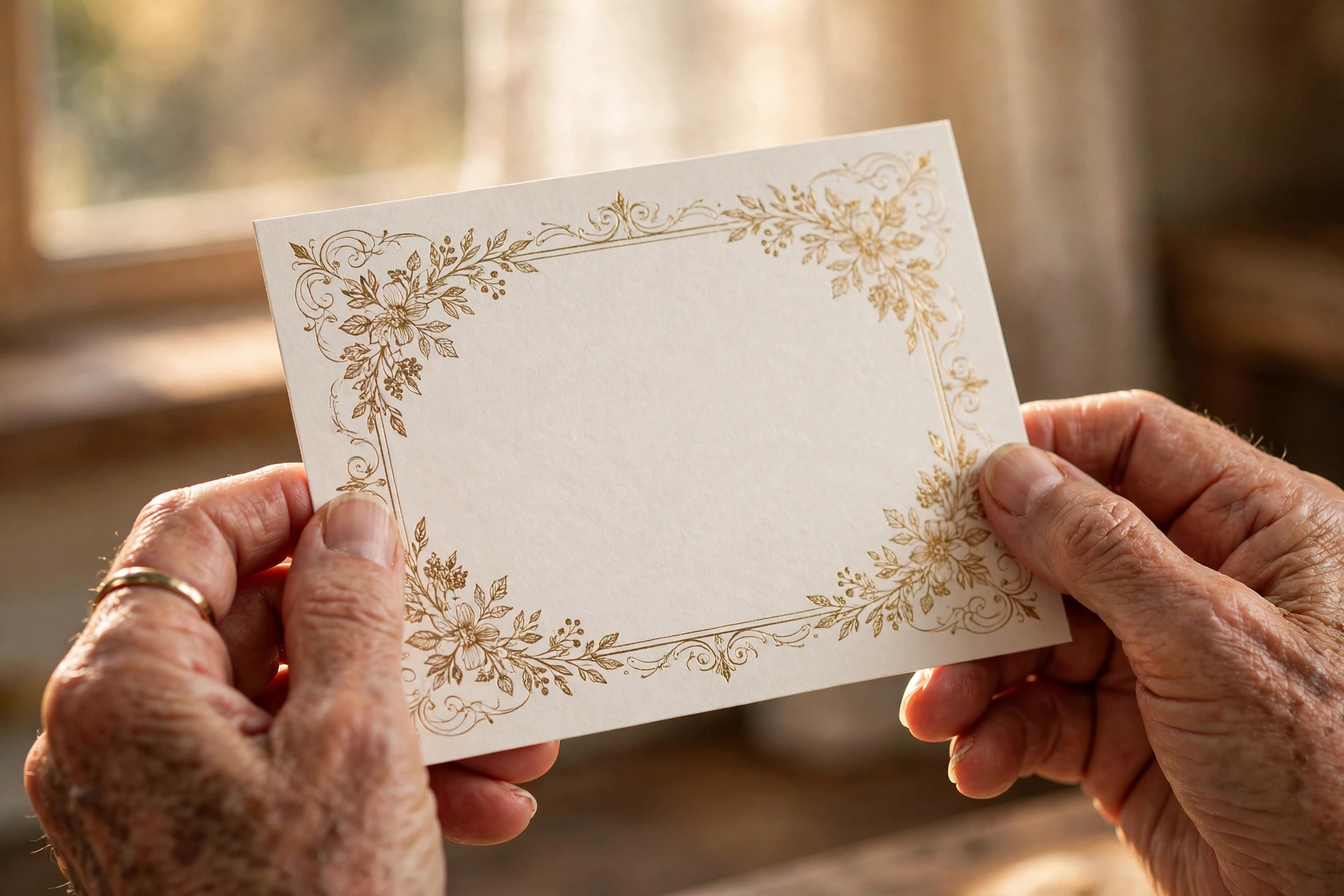
Digital has its own kind of keeping, but it is different. A video invitation can be saved and replayed, and a family can watch it together on a phone. What it does not do is sit on a shelf and wait to be found. The families who feel best about their choice print a short run of premium cards for elders, close family, and the family archive, and send digital to everyone else.
Guest experience
Paper is a single beautiful object. You open it, you read it, and you put it somewhere safe. It asks nothing of the guest except attention, and for guests who are comfortable with paper, that is enough.
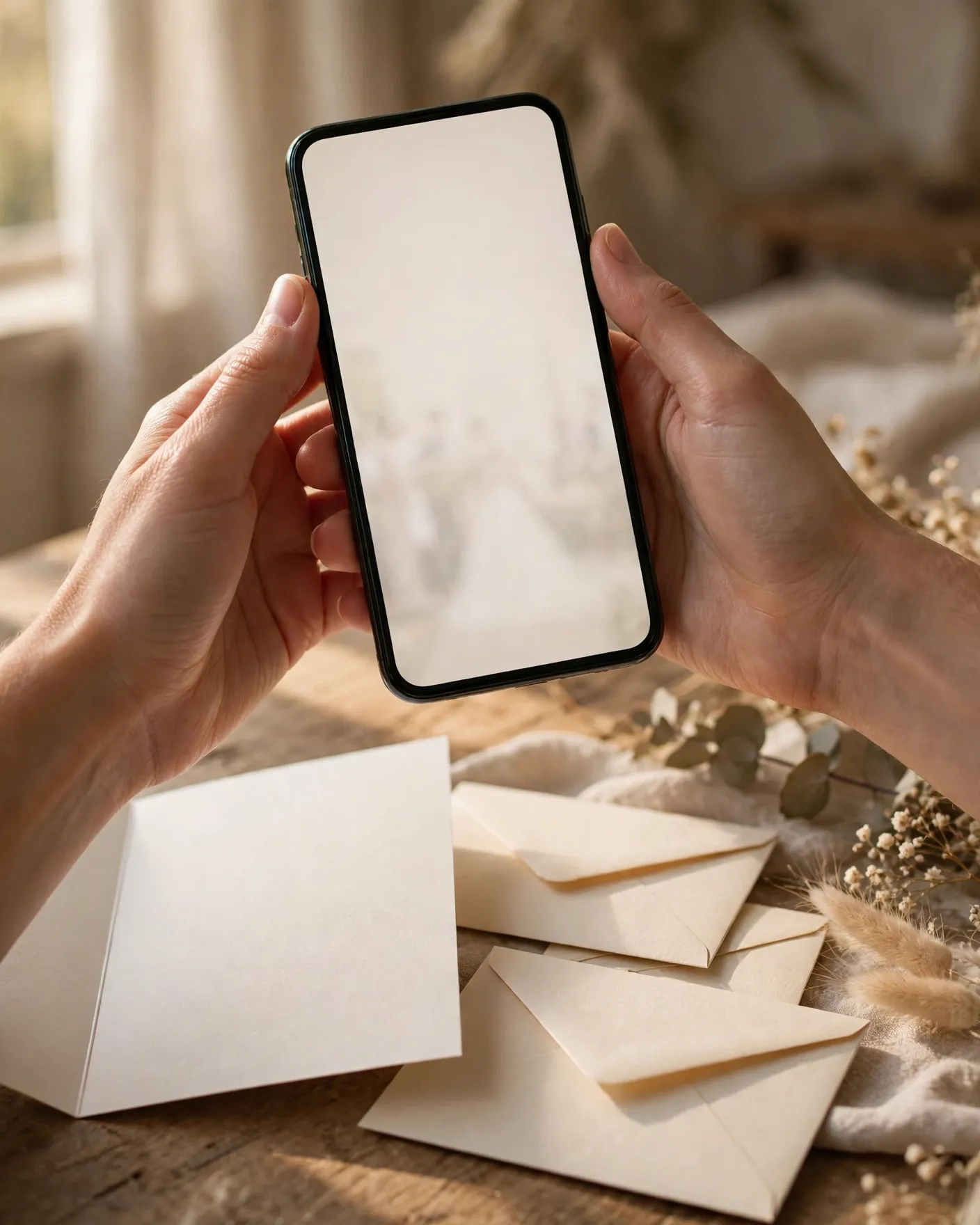
Digital can be an experience rather than an object. The card, a video invite, the full schedule, venue maps, RSVP, dress codes, plus live updates if plans change. A guest can check the sangeet time on the morning of the sangeet, tap the map, and confirm their attendance in the same place. For older guests who are not comfortable with phones, paper plus a personal phone call remains the kindest combination.
The environment
Paper invitations for large weddings mean significant paper, foil, plastic coating, and transport. Digital has a footprint too, in the devices and servers that carry it, but it is far smaller for the same guest list.
If sustainability matters to your family, a mostly digital approach with a small premium print run is the defensible middle ground. Pick one clear step: fewer paper cards, better paper for the ones you do print, and no plastic coating or boxed extras you do not need.
Who should pick what
Ask three questions. First, how many of your guests are elders who would treasure a physical card? That sets your print run. Second, how many guests are outstation or abroad? That sets your digital priority. Third, do you want RSVP tracking and live updates? If yes, you need a digital layer regardless, because paper cannot track replies or send updates.
A family with mostly local guests and many elders may lean heavier on paper, and that is a fine choice. A family with guests across cities and countries should lead with digital, and keep paper for the keepsake list. A family planning a destination wedding should lead with digital almost always, because the details change more often and the guests travel further.
If you want a sense of the digital options, MyIndiAura has three. A Cinematic Invite costs ₹499, an Invite App costs ₹399, and an Invitation Suite costs ₹99. Pick the form that matches how much detail and motion you want, not the most expensive one by default.
Common mistakes
The first mistake is printing the full guest list on paper and then sending digital as an afterthought, which doubles the work and doubles the cost. Decide the split first, then do each format properly. The second mistake is sending digital with no personal line, so it reads like a broadcast. Add the guest's name and one warm line, and replies come faster.
The third mistake is forgetting the elders. If a guest cannot open a link comfortably, a link is not an invitation, and a phone call plus a paper card is the fix. The fourth mistake is letting the two formats disagree. Keep one master list of dates, times, and venues, and check both formats against it before anything goes out.
Deciding: a checklist
- List how many guests live outside your city
- List the elders who will expect a printed card
- Set a budget for a small premium print run
- Choose one digital invite with every function, RSVP and maps
- Send digital first, then hand-deliver or post the printed cards
The comparison at a glance
- Cost: digital is a fraction of a full print run.
- Reach: digital reaches every guest instantly, anywhere.
- Speed: digital arrives in seconds; print takes days.
- Changes: digital updates in minutes; print needs a reprint.
- RSVP: digital collects replies in one place.
- Keepsake: print wins, especially for elders.
- The answer for most families: both, used deliberately.
Frequently asked questions
Is a digital invitation acceptable for an Indian wedding?
Yes, for most guests it is now the normal way to receive an invitation, and most families send the main invitation digitally. Keep a short paper run for elders, close family, and the family archive.
How do we decide how many paper cards to print?
Name the people who will keep a card, not a number. Elders, close family, and a few spares for the family archive. Count that list and print it.
What if some guests cannot open a digital invitation?
Send them a paper card and call them personally with the details. Do not rely on a link for a guest who struggles with a phone. A call in your own voice, plus a card they can hold, is the kindest combination.
Can we change details after sending a digital invitation?
Yes, and this is one of its biggest strengths. Update the invitation once and every guest sees the new detail. Paper cannot be updated, so keep the paper card to the details that will not change.
Is digital really cheaper than paper?
For a large guest list, yes, because digital has no per guest printing or courier cost. For a very small, local guest list, the difference is smaller, and a short paper run can feel reasonable.
Related reading
See it on a real invite
Open any of these to see the full invite, then add your own names and preview it free.



Found this useful? Share it with someone planning a celebration.
Share