Indian Wedding Planning Checklist: 12 Months to the Wedding Day
A month-by-month plan that keeps a multi-day Indian wedding under control, from booking the venue to the final family huddle the night before.

Start with the date, the venue, and the guest list
An Indian wedding is not one event. It is a week of events, each with its own guest list, outfits, food, decor, and mood. The families who enjoy their wedding the most are rarely the ones who spent the most. They are the ones who planned in the right order, so nothing important was left for the last week.
This checklist assumes roughly twelve months.
Twelve to nine months out: the big anchors
Book the wedding venue and lock the main ceremony date first. In many families, the auspicious date comes before the venue search, so ask the family priest for two or three options rather than one.
Fix your budget range next, and decide who pays for what between the two families. Awkward now is much better than resentment later.
Draft the guest list early, because Indian weddings grow. Start with a realistic number per function and add a small buffer. The venue capacity, the catering quote, and the invitation order all depend on this number.
- Ask the priest for two or three auspicious dates
- Book the wedding venue and confirm the date in writing
- Agree the total budget and who pays for what
- Draft the guest list per function, with a buffer for additions
Nine to six months out: vendors and outfits
Book the photographer and videographer now. The good ones book out a season ahead, and you want someone who has shot your community's rituals before.
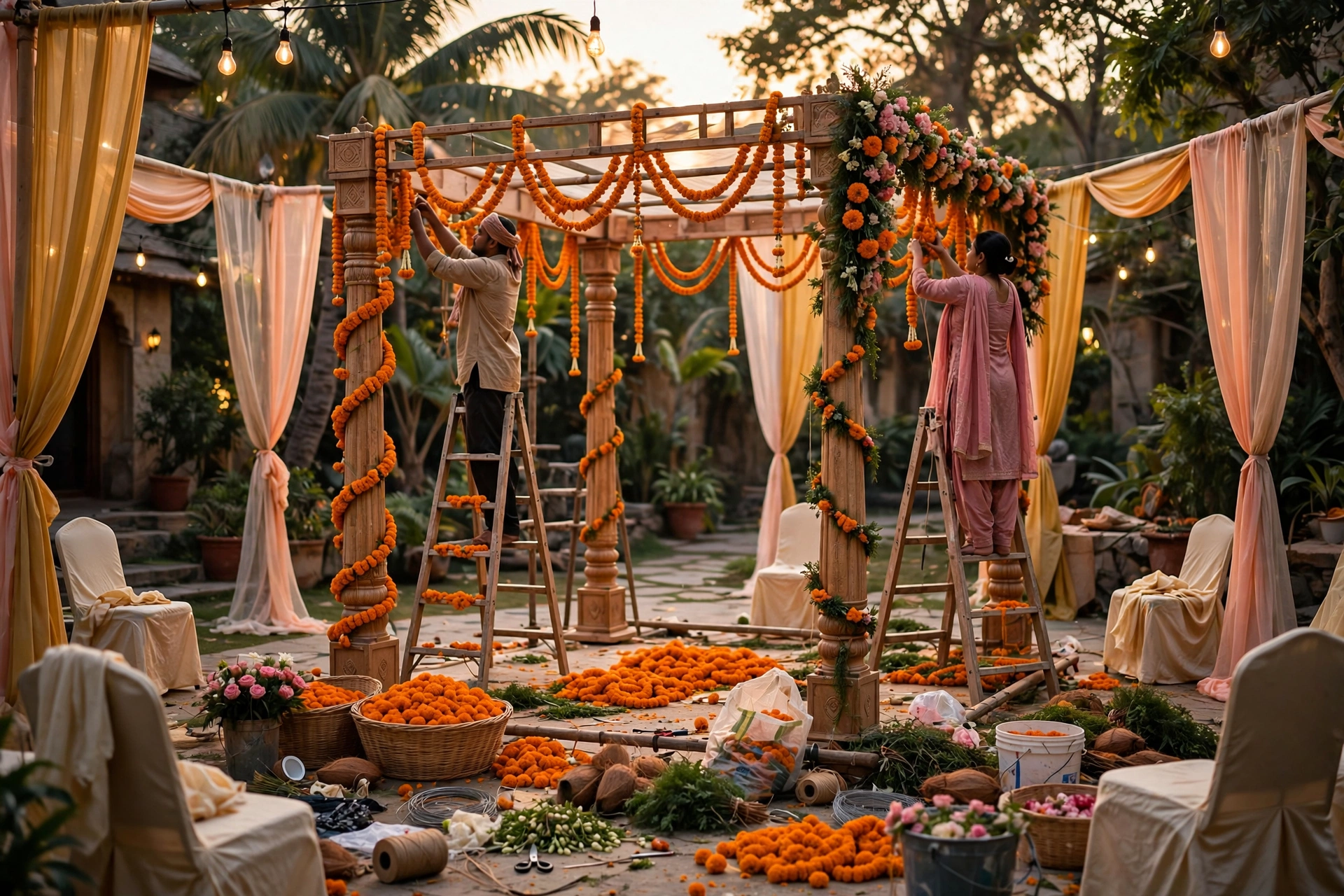
Book catering and decor, and taste the food before you sign. Agree the menu per function rather than one menu for the whole week, since guests eat at several functions and nobody wants the same dishes repeated.
Start outfit shopping. Bridal lehengas and sherwanis often need three to four months for tailoring, so buy the wedding day outfits first, then the function outfits, then accessories.
- Book the photographer and videographer after seeing full albums
- Book catering and decor, and taste the food before signing
- Buy the wedding day outfits and book the first fittings

Six to four months out: the details that shape the experience
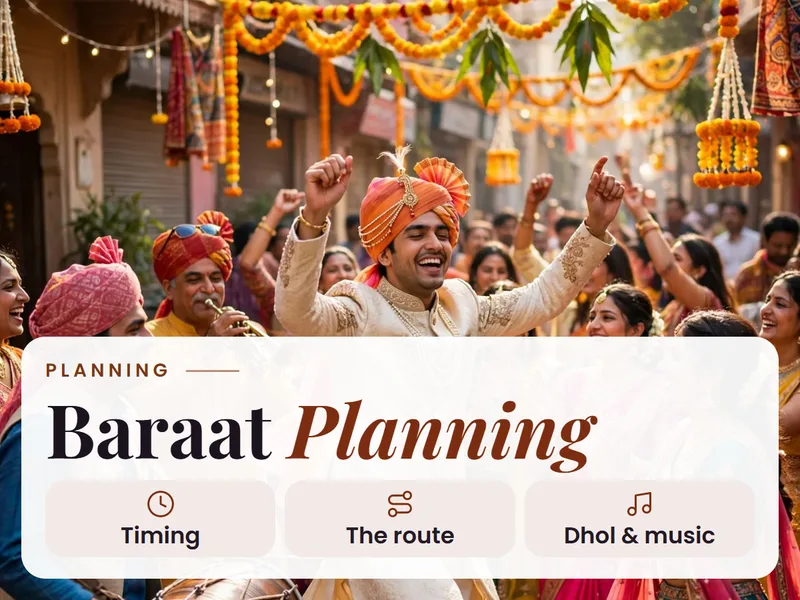
Finalize the mehendi artists, the sangeet choreographer, the baraat band or dhol players, and the makeup artists. One mehendi artist for every twenty to twenty five guests is a safe ratio, and a trial for hair and makeup is worth every rupee.
Book guest accommodation and transport. Outstation guests remember two things: whether the room was ready when they arrived, and whether someone told them where to go.
Plan the sangeet performances. Give families a deadline for signing up to perform, and cap the total runtime. A sangeet that ends at eleven at night with everyone dancing is better than one that drags past one in the morning.
- Book mehendi artists, choreographer, band, and makeup artists
- Do the hair and makeup trial
- Book guest rooms and arrange transport to the venue
Four to two months out: confirmations and paperwork
Send the invitations. Digital invites go first, paper follows. Include a clear RSVP mechanism and a deadline, and chase RSVPs personally for the wedding and reception.
Finalize the menu, the bar plan if any, and the dessert table, and confirm the final guest counts with the caterer. Get the marriage registration paperwork sorted now, not after the wedding. Check what your state requires: notice period, witnesses, and documents from both sides.
- Send invitations, digital first, then paper
- Chase RSVPs for the wedding and reception
- Finalize the menu and confirm counts with the caterer
- Sort the marriage registration paperwork and documents
One month out: lock everything down
Do the final vendor confirmations in writing. Dates, times, quantities, payment balances, and the point of contact for the day. If it is not in writing, it does not exist.
Prepare the ceremony details with your priest: which rituals, in what order, and how long each takes. Share this with the photographer so they know where to stand and when the key moments happen. Pack an emergency kit and name one person who owns it: safety pins, fashion tape, painkillers, band aids, extra buttons, a sewing kit, breath mints, phone chargers, and cash for tips.
- Confirm every vendor in writing with times, quantities, and balances
- Share the ceremony order with the priest and the photographer
- Pack the emergency kit and name its owner
The final week and the wedding day
This week is for people, not tasks. Confirm the vendor arrival times one last time, then stop planning. The couple should not be running errands three days before the wedding. That is what the wedding party is for.
Hold a short family huddle the night before the first function. Walk through the next day's schedule: who reaches where, by when, wearing what, and carrying what. On the wedding day, eat breakfast, and assign one trusted person as the couple's shadow for the day, handling phones, water, and small fires.
Common mistakes to avoid
The most common mistake is booking the venue before fixing the guest list, then discovering the hall holds fewer people than the families want to invite. The second is leaving the invitations too late: paper invites need six to eight weeks for printing plus delivery, and digital invites need two to three weeks for design and revisions. The third is skipping the trials: hair and makeup, food tasting, and a decor visit.
Another quiet mistake is letting one person carry the whole plan in their head. Write it down, share it, and name an owner for every task.
The months at a glance
- 12 to 9 months: budget, guest list, venue, date.
- 9 to 6 months: photographer, caterer, decorator, outfits.
- 6 to 4 months: invitations, music, mehendi artist.
- 4 to 2 months: send invitations, confirm vendors.
- 1 month: final payments, seating, schedules.
- The final week: rehearsals, packing, rest.
Frequently asked questions
When should we start planning an Indian wedding?
Twelve months is comfortable for a full week of functions. Fix the date, venue, budget, and guest list first, then vendors, then outfits, then invitations.
How far in advance should we book the venue?
As early as you can once the date is fixed, because popular venues and good dates go first.
When should we send the invitations?
Send digital invitations first, then paper, around four to six weeks before the wedding, and earlier for outstation guests who need to book travel.
How do we keep the guest list under control?
Fix a number per function with both families before anyone starts adding names, and keep one master list that both sides edit. Add a small buffer for late additions.
What should be in the emergency kit?
Safety pins, fashion tape, painkillers, band aids, extra buttons, a sewing kit, breath mints, phone chargers, and cash for tips.
Related reading
See it on a real invite
Open any of these to see the full invite, then add your own names and preview it free.



Found this useful? Share it with someone planning a celebration.
Share