Pheras Decoded: What Each of the Seven Vows Really Means
The saptapadi is the heart of a Hindu wedding. Here is what the couple promises with each circle around the sacred fire.
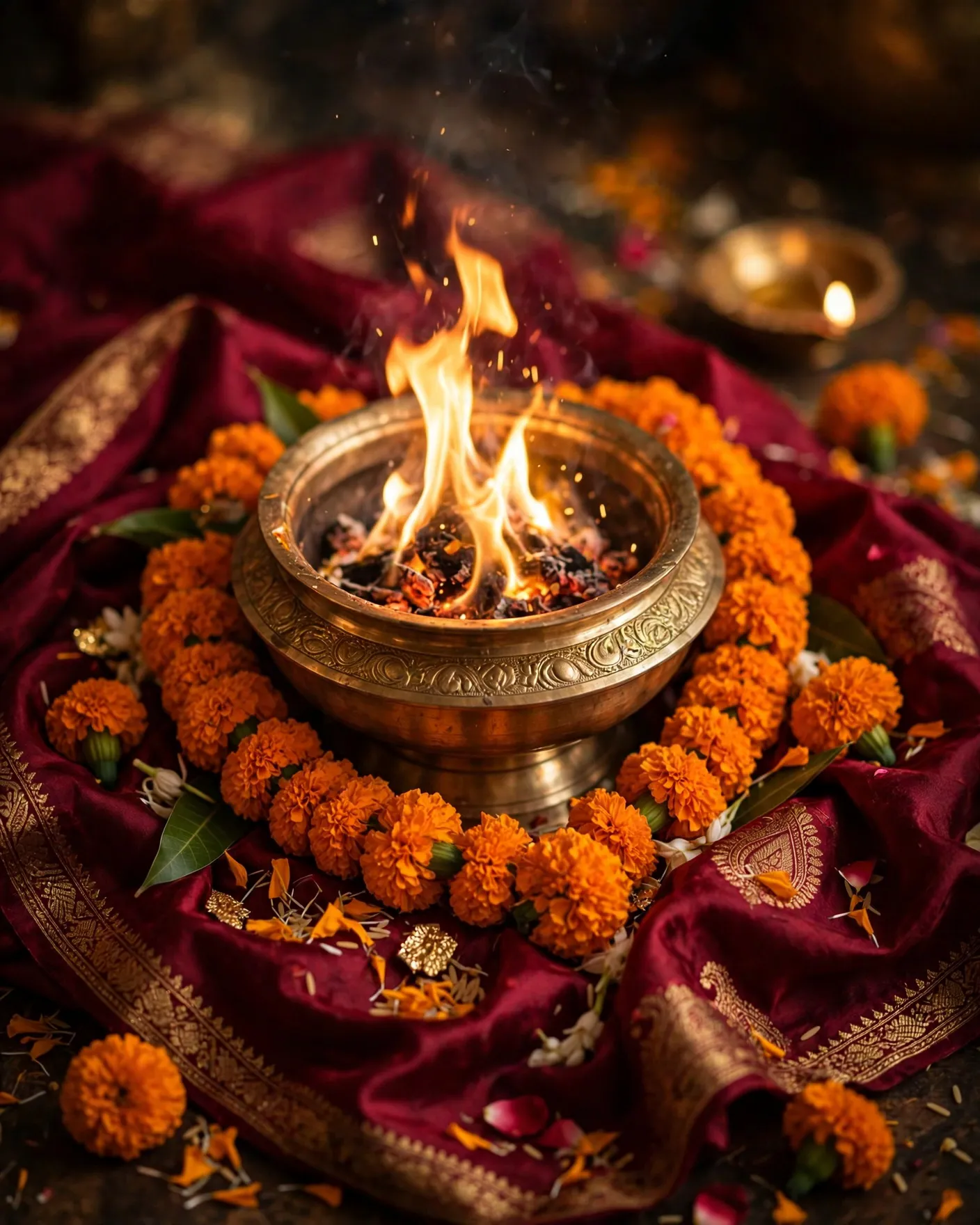
Seven steps around the fire
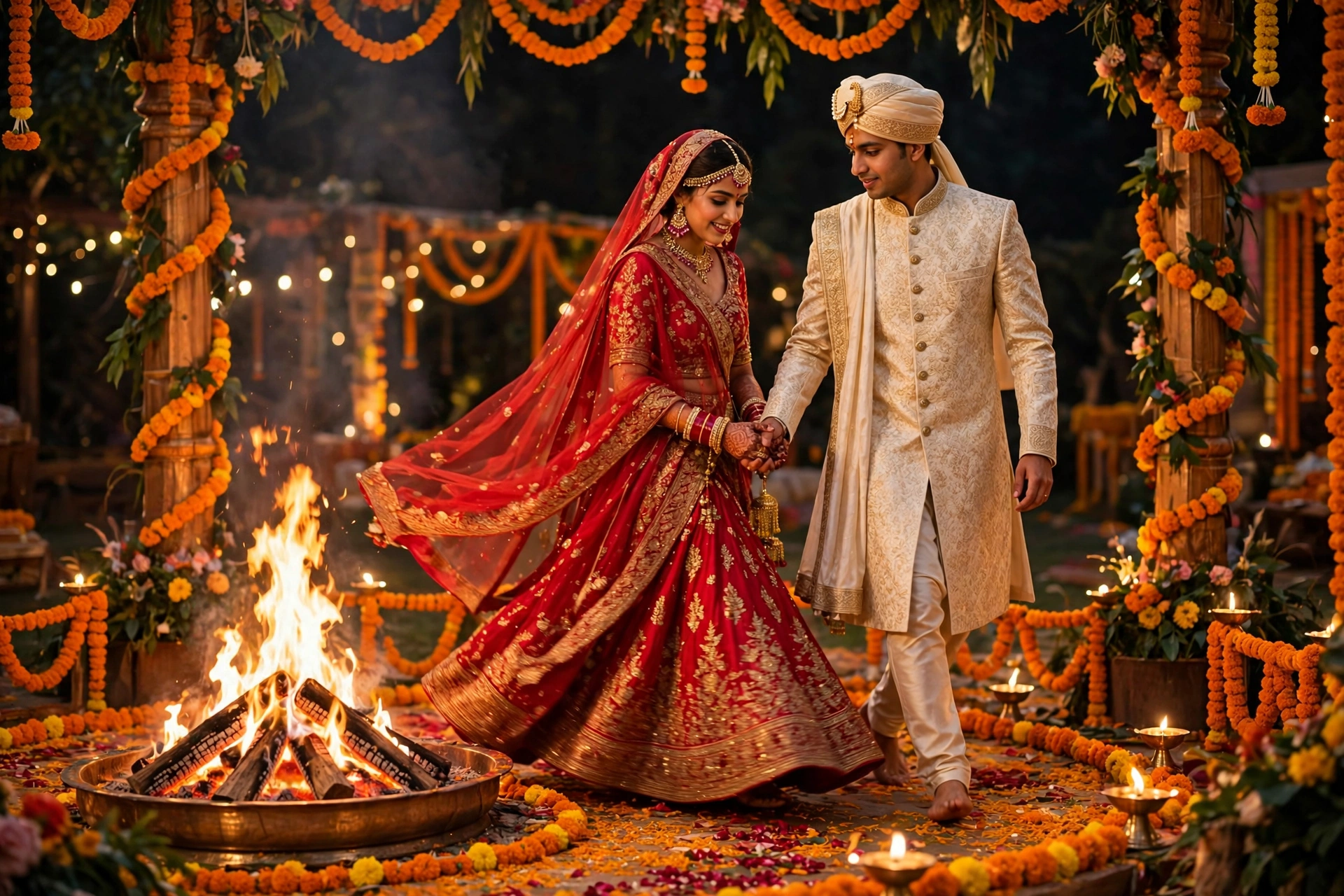
The seven pheras, also called saptapadi, are the seven steps the couple takes together around the sacred fire. In most traditions, the marriage is considered complete only after the seventh step. The fire is the witness, and each round carries a promise the couple makes to each other, out loud, in front of their families.
If you are watching as a guest, here is what you will see. The couple stands by the fire, the priest recites each vow, and the couple walks slowly around the fire, usually with the bride's saree or dupatta tied to the groom's scarf. The whole sequence takes a while, and that is the point.
Different regions and priests word the vows differently, and some traditions have the bride lead the first three or four rounds and the groom lead the rest. The meanings below follow the most commonly recited version. If your priest's wording differs slightly, that is normal.
The first three vows: the foundations
The first three vows are about the ground the marriage stands on: food, strength, and money. They come first because a marriage needs its basics settled before anything else.
The first vow: nourishment
Together we will provide for our household and share what we have. This is a promise about the basics of life: food, shelter, and the honest effort to earn them. The couple takes their first step together around the fire, often with the groom leading, and the priest's words set a plain, practical tone for everything that follows.
The second vow: strength
Together we will build the physical and mental strength to face life's difficulties. Illness, setbacks, and hard years come to every family. This vow says we will face them as a unit, and we will keep each other standing.
The third vow: prosperity
Together we will work for prosperity and use it wisely. This is not just about earning. It is about managing money as a team, spending thoughtfully, and remembering that wealth is a tool for the family's wellbeing, not a scoreboard.
The middle vows: family and the future
The middle vows turn outward, from the couple to the family around them and the future ahead of them. This is where the pheras stop being only about two people and become about the household they are building together.
The fourth vow: family and happiness
Together we will care for our families and build a home filled with harmony. In the Indian context this explicitly includes parents and elders on both sides. The couple promises to be the bridge between two families, not a wall.
The fifth vow: children and the future
Together we will nurture the next generation with love and values. For couples who plan to have children, this is the promise to raise them well. For all couples, it is a promise to think beyond themselves and contribute to the family's future.
The last two vows: health and friendship
The final two vows are the quietest and the most lasting. They are about how the couple will live day to day, and about what holds a marriage together when everything else changes.
The sixth vow: health and balance
Together we will live in harmony with nature's rhythms and care for each other's health. Traditionally this vow references the six seasons. In modern terms, it is a promise to look after each other's wellbeing, rest, and the simple disciplines that keep a household running.
The seventh vow: friendship
Above everything, we will be friends. The seventh step is often described as the vow of eternal companionship. Passion changes shape over the decades. Respect, honesty, and friendship are what carry a marriage through all of them. When the couple completes this round, the saptapadi is done, and the hall usually stirs, because everyone knows the marriage is now complete.
What happens after the seventh phera
Once the saptapadi is complete, the groom typically applies sindoor to the bride's hair parting and ties the mangalsutra around her neck, though customs vary widely by community. These are the visible marks of the married state, and the moment the hall usually erupts in applause.
A practical tip for couples: ask your priest beforehand how long the pheras will take and what each round involves. Knowing the structure lets you be present for the meaning instead of wondering what comes next. Some couples print a small card with the seven vows for guests, so a ritual many watch passively becomes one everyone understands.
For guests, the best thing you can do is stay seated, stay quiet, and watch. Phones held up for the whole ceremony block the view of the people behind you, so take a few photos at the start and then put the phone away.
The pheras usually take between twenty minutes and an hour, depending on the priest, the region, and how much explanation is given between rounds. If you are planning the day, leave generous time for this part rather than squeezing it between other events.
The pheras, step by step
- The couple is seated by the sacred fire, and the priest begins with prayers to Agni.
- The bride's dupatta or saree is tied to the groom's scarf, the gathbandhan.
- The couple rises and takes the first round, with the priest reciting the first vow.
- The second and third rounds follow, for strength and prosperity.
- The fourth and fifth rounds, for family and the future.
- The sixth round, for health and balance through the seasons.
- The seventh round, for friendship; the saptapadi is complete.
- The couple is seated again for sindoor and the mangalsutra.
Before the pheras: a checklist for couples
- Ask the priest how long the pheras will take
- Agree whether the bride or groom leads which rounds
- Keep the gathbandhan scarf and dupatta pinned securely
- Tell the photographer when the seventh round begins
- Print a small card of the seven vows for guests, if you'd like
Frequently asked questions
What are the seven pheras?
The seven pheras are the seven steps the couple takes around the sacred fire during a Hindu wedding, each step carrying a vow. The vows cover nourishment, strength, prosperity, family, children and the future, health, and friendship. In most traditions the marriage is complete after the seventh step.
Who leads the pheras, the bride or the groom?
It varies by region and family tradition. In many traditions the bride leads the first three or four rounds and the groom leads the rest, while in others the groom leads throughout. Ask your priest beforehand, so neither of you is surprised on the day.
How long do the pheras take?
Usually between twenty minutes and an hour, depending on the priest and how much each vow is explained. Priests who explain each vow in plain language take longer, but guests follow the ceremony far better.
Do all Hindu weddings include the pheras?
Most do, but the details vary widely by community and region. Some families include all seven rounds with full explanations, others keep them brief, and a few traditions use a different number of rounds or a different order. The priest for your community is the right person to confirm what your ceremony will include.
What should guests do during the pheras?
Stay seated and quiet, and watch rather than filming the whole time. Take a few photos at the start, then put the phone away. Follow the families at the front for when to stand or applaud, and do not walk between the couple and the fire.
Related reading
See it on a real invite
Open any of these to see the full invite, then add your own names and preview it free.


Found this useful? Share it with someone planning a celebration.
Share