Valaikappu: The Tamil Bangle Ceremony and Its Beautiful Meaning
Glass bangles, neem leaves, and the blessings of married women. What the seemantham's most joyful ritual is really about.
A morning of bangles and blessings
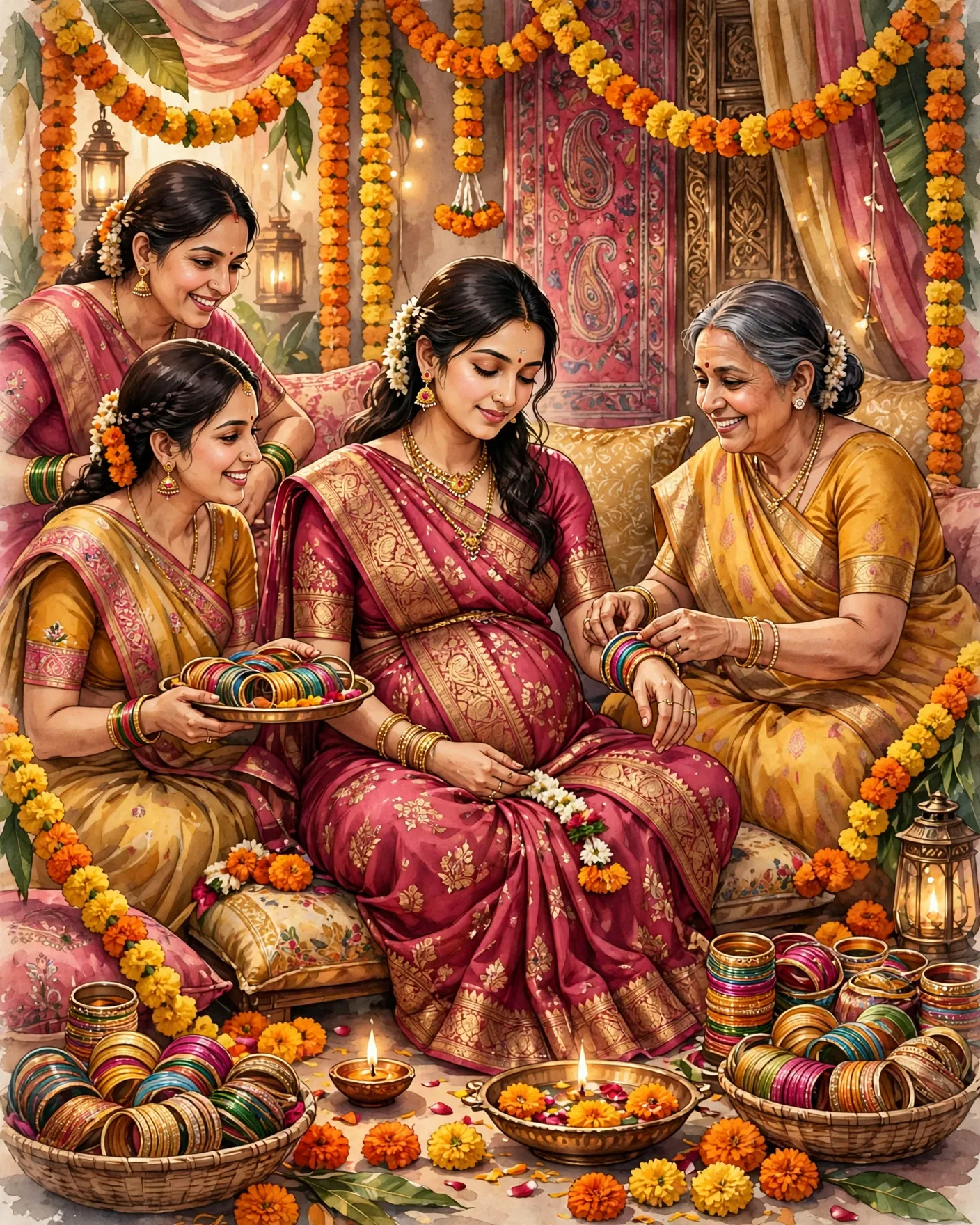
Valaikappu is the bangle ceremony held during a Tamil baby shower, usually called the seemantham. It takes place in the seventh or eighth month of pregnancy, and while the seemantham has its own rituals, the valaikappu is the moment everyone remembers: the mother to be seated like a queen while married women slip glass bangles onto her wrists, one after another, to the sound of laughter and blessings.
The ceremony is typically held at the expectant mother's parental home or the in laws' home, in the morning on an auspicious day. The woman is dressed in a new saree, often with fresh flowers in her hair, and seated on a decorated chair or manai.
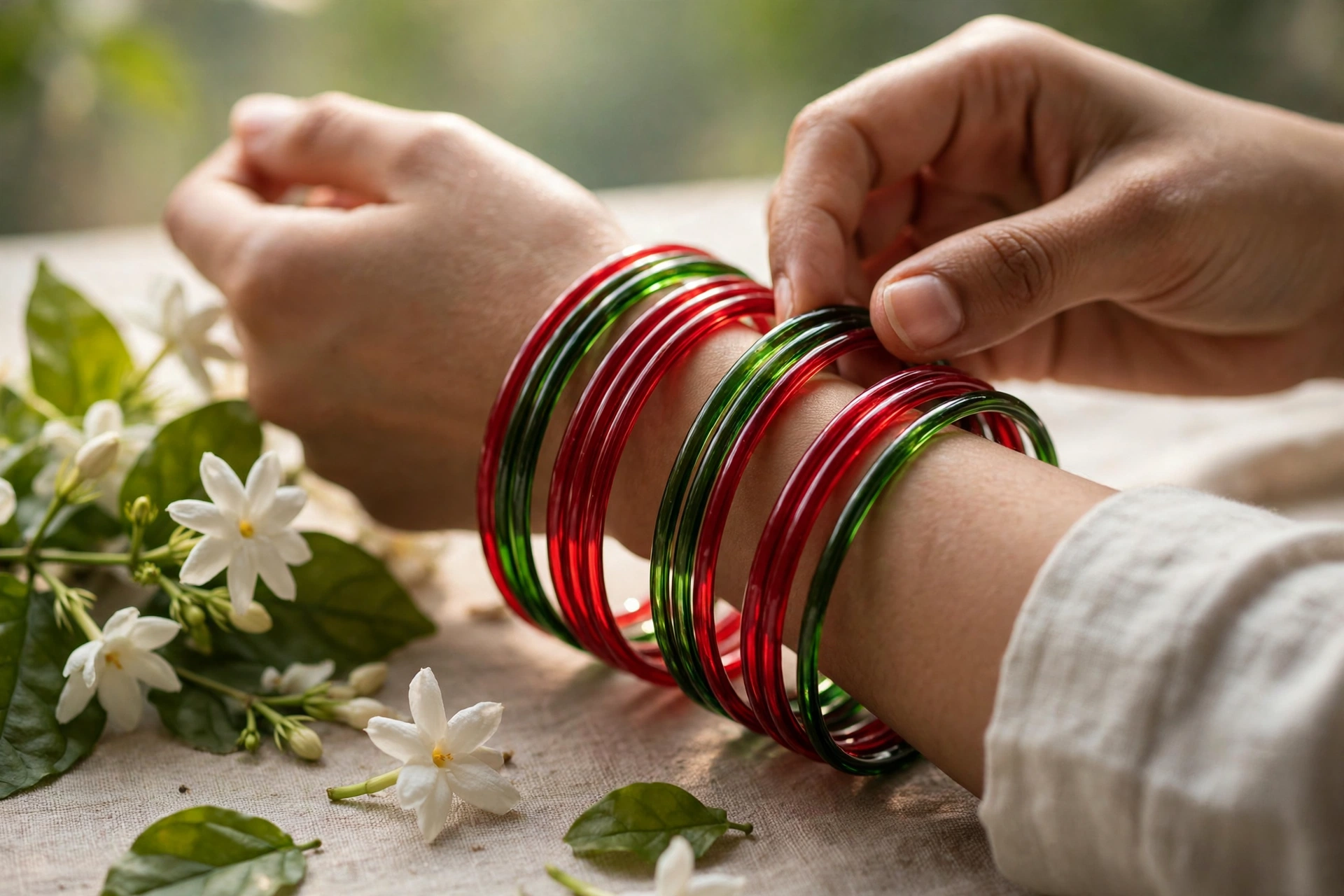
If you have never been to one, here is the shape of it. The mother to be is seated in the place of honour. Married women from the family come forward in turn, slip bangles onto both her wrists, apply kumkum on her forehead, and offer blessings for a safe delivery and a healthy child.
The bangles and what they mean
The bangles are usually red and green glass bangles, colours associated with fertility and prosperity, though families choose their own combinations. The glass matters: it is the sound of glass bangles that is considered auspicious, and tradition holds that the gentle chiming soothes and stimulates the baby in the womb.
Whether or not you believe the old explanations, the ritual does something real. It surrounds the expectant mother with the women of her family, each one physically placing a blessing on her wrists. The valaikappu turns it into a communal celebration where the mother is the centre of attention for an afternoon.
The women who place the bangles are usually married women from the family, called sumangalis.
Neem, flowers, and the other details
Neem leaves play a part too. A small branch of neem is often placed near the mother to be, and neem leaves may be tucked into her saree. Neem is valued in Tamil tradition for its protective and medicinal properties, and its presence is a wish for the mother's health.
Fresh flowers are everywhere. Jasmine in the mother's hair, marigold and rose petals scattered around her seat, and garlands for the women who bless her.
The order of the day
The day begins with the family preparing the space: a decorated seat for the mother to be, flowers, the bangles laid out in trays, kumkum and turmeric in small bowls, and the neem branch placed nearby. Guests arrive in the morning, and the mother to be is seated once everyone is present.
Then the bangle ceremony itself begins. One by one, the married women come forward, slip bangles onto the mother's wrists, apply kumkum, and bless her. The bangles go on both wrists, and the stack grows until her arms are full.
Then comes the feast.
The feast that follows
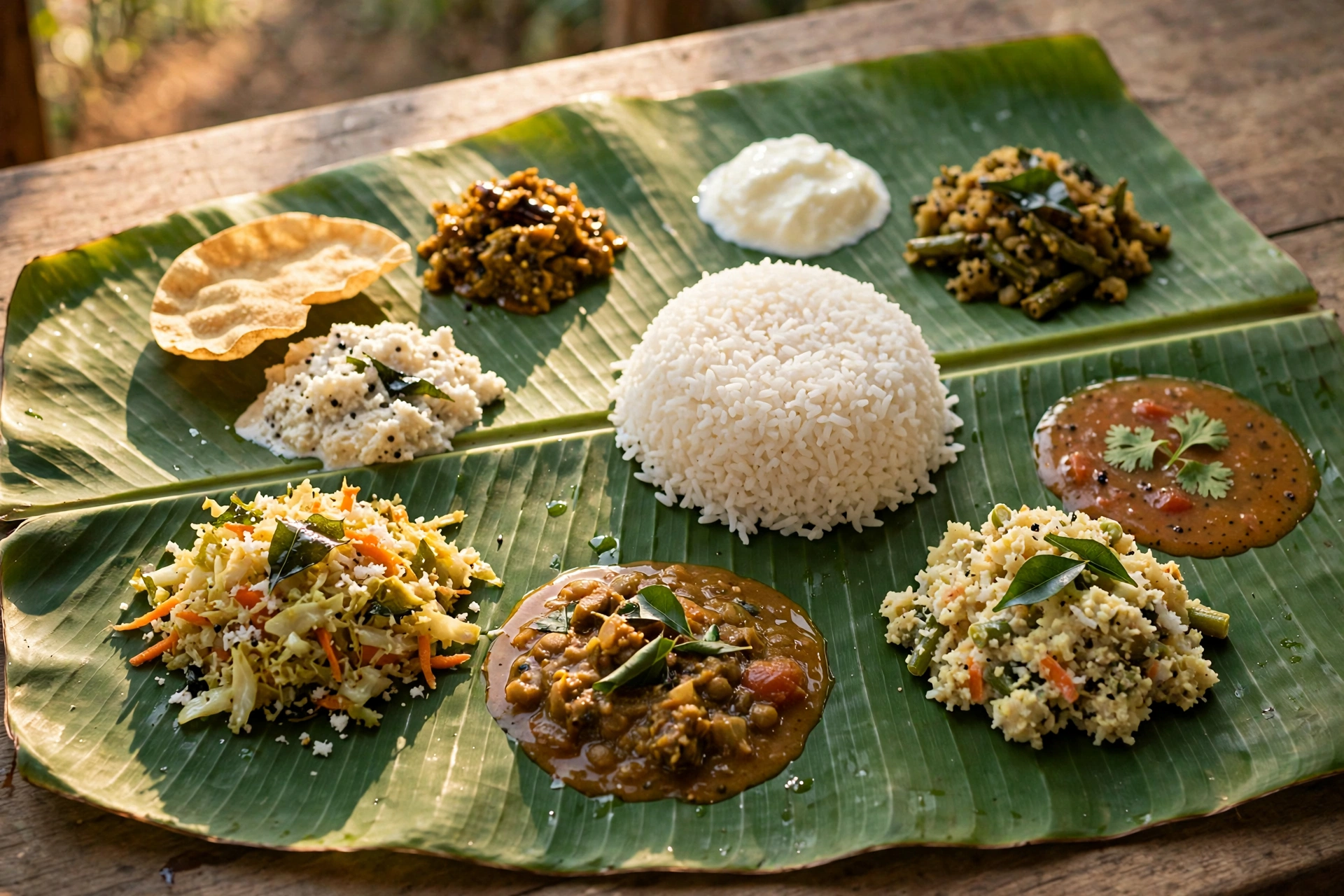
No Tamil ceremony ends without food. The valaikappu lunch is a full banana leaf meal, served with the mother to be eating first or in the place of honour. Families often prepare her favourite dishes, and it is worth planning the menu around what she can comfortably eat in the third trimester rather than pure tradition.
If the mother to be has food aversions or heartburn, which many women do in the third trimester, keep the spicier dishes to one side and make sure there is plenty she can eat comfortably.
Planning tips for the family hosting it
Keep the guest list intimate. This is a women's ceremony at heart, and a smaller gathering keeps it warm rather than chaotic. Invite the women who matter most to the mother to be, and let the men of the family help with the arrangements and join for the meal.
Buy the bangles early, and buy them a size comfortable for slightly swollen wrists. Keep a few extras, because glass bangles break, and nobody wants a pause in the middle of the blessings to hunt for replacements.
Plan the seating with care. The mother to be needs a comfortable chair with back support, not a low stool, and she should be able to rest her feet.
If family members cannot travel, many families now do a video call during the bangle moment so grandmothers and aunts can watch and bless from afar.
- Fix the date with the family priest and confirm the venue
- Buy glass bangles in a comfortable size, plus a few extras
- Arrange a comfortable seat with back support and water nearby
- Plan the banana leaf menu around what the mother to be can eat
- Set up a video call for family who cannot travel
- Keep the guest list intimate and send invitations in good time
What to wear, and what to bring as a guest
If you are invited, wear a saree or a comfortable festive outfit in a bright colour.
A thoughtful gift is a saree, a set of bangles, or a small piece of jewellery for the mother to be, along with fruits and sweets for the family.
The ceremony, step by step
- The mother-to-be is dressed in a silk saree and seated in the place of honour.
- Elders apply sandalwood paste and kumkum on her face and hands.
- Glass bangles in many colours are slipped onto her wrists, one by one.
- Each woman who places bangles offers her blessing for mother and baby.
- Aarti is performed to ward off the evil eye.
- A feast of varied rice dishes is served to the guests.
Planning checklist
- Fix the date with the family, often in the seventh or ninth month
- Buy plenty of glass bangles in assorted sizes and colours
- Prepare return gifts, such as bangles, betel and fruit
- Keep the ceremony short and seated for the mother-to-be's comfort
Frequently asked questions
When is valaikappu held?
Usually in the seventh or eighth month of pregnancy, as part of the seemantham, on an auspicious morning chosen by the family. The exact month varies by family custom, so the priest or the elders in the family are the best people to confirm the timing.
Who places the bangles on the mother to be?
Married women from the family, called sumangalis, take turns slipping glass bangles onto both her wrists. Grandmothers, mothers, aunts, and sisters each have a turn, often in order of seniority, and each one offers a blessing as she does it.
Why are the bangles usually red and green?
Red and green are colours associated with fertility and prosperity in Tamil tradition, and they are the most common choice. Families do choose their own combinations, and some add gold bangles among the glass.
How many bangles should we buy?
Buy enough to fill both wrists comfortably, plus a few extras in the same colours and size. Glass bangles break easily, and a pause in the middle of the blessings to find replacements breaks the flow of the ceremony.
Can family who cannot travel still take part?
Yes. Many families set up a video call during the bangle moment, so grandmothers and aunts can watch and bless from afar.
Related reading
See it on a real invite
Open any of these to see the full invite, then add your own names and preview it free.

Found this useful? Share it with someone planning a celebration.
Share