The Mundan Ceremony: A Parent's Guide to Your Baby's First Haircut
When to do it, what to expect, and how to keep the day joyful instead of stressful, for you and the baby.

What mundan is, and when families do it
The mundan, or chudakarana, is the ceremonial first haircut of a child, one of the sixteen samskaras in Hindu tradition. It is usually performed in the first, third, or fifth year, on an auspicious date chosen by the family priest. The head is shaved, often leaving a small tuft called the shikha, and the hair is offered as a symbol of letting go of the past and praying for the child's health and good fortune.
Many families perform the mundan at a temple or a holy place, Tirupati and Varanasi being famous for it, while others hold it at home with the family priest.
If this is your first child, here is the simple version. You pick a date with the priest, you reach the temple or your home in the morning, the priest does a small puja, the barber shaves the head in a few minutes while you hold the baby, and then the family celebrates with a meal.
Choosing the timing and the place
Ask your priest for two or three auspicious dates rather than one, so you have flexibility. Morning slots are almost always better.
Avoid scheduling the mundan right after vaccinations or during teething peaks if you can. A baby who is already uncomfortable will not enjoy being held still for a shave.
Choosing between a temple and home comes down to what your family values most. A temple mundan carries the weight of the place itself, and many families travel to Tirupati or Varanasi for it. A home mundan is quieter, easier on the baby, and lets grandparents and close family be present without travel.
What happens on the day, step by step
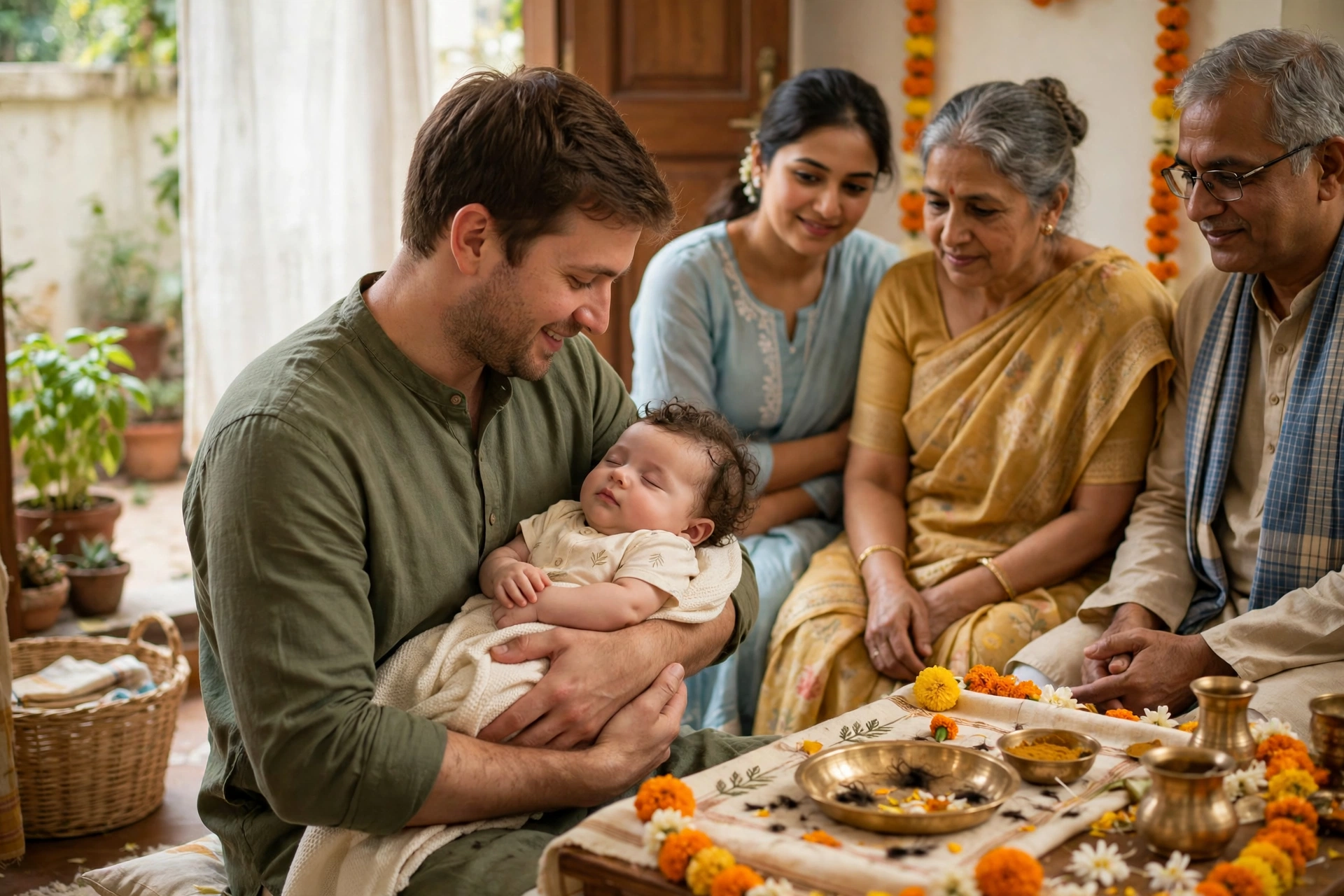
The priest begins with a small puja, applying turmeric and kumkum to the child's forehead. The family gathers around, and the baby is held by a parent or grandparent while the prayers are said.
Then comes the shave. The barber, traditionally called specifically for this, shaves the head while a family member holds the baby securely. It takes only a few minutes, though it can feel longer when your baby is crying. Holding the baby upright against your chest, with a familiar person in front offering a toy or a song, helps more than anything else.
After the shave, sandalwood paste or turmeric is often applied to the head, which is soothing and traditional. The hair is collected and, in temple mundans, offered as per the temple's custom.
Keeping the baby comfortable
Feed the baby just before the ceremony, not during. A full, rested baby is a cooperative baby. Bring a change of clothes for the baby and for whoever is holding them, because tiny hairs get everywhere.
Keep the gathering small during the actual shave. A crowd of onlookers with cameras makes babies anxious. Do the ritual with close family, then celebrate with everyone.
If the baby starts crying, do not panic and do not rush the barber. A crying baby is not a failed ceremony. Hold the baby close, speak softly, and let the barber finish at their own pace.
A checklist for parents
Use this the week before, so nothing is left to the morning of the ceremony.
- Confirm the date, time, and place with the priest
- Book travel and stay if the mundan is at a temple far from home
- Arrange the barber, or confirm the temple provides one
- Buy new clothes for the baby for after the ceremony
- Pack a bag: change of clothes, toy, blanket, snacks, wipes, and a cap or scarf for the baby's head
- Name one person to take photos, and ask everyone else to put phones away
- Confirm who is holding the baby during the shave
- Arrange the meal or celebration afterwards, and confirm the guest list
After the ceremony
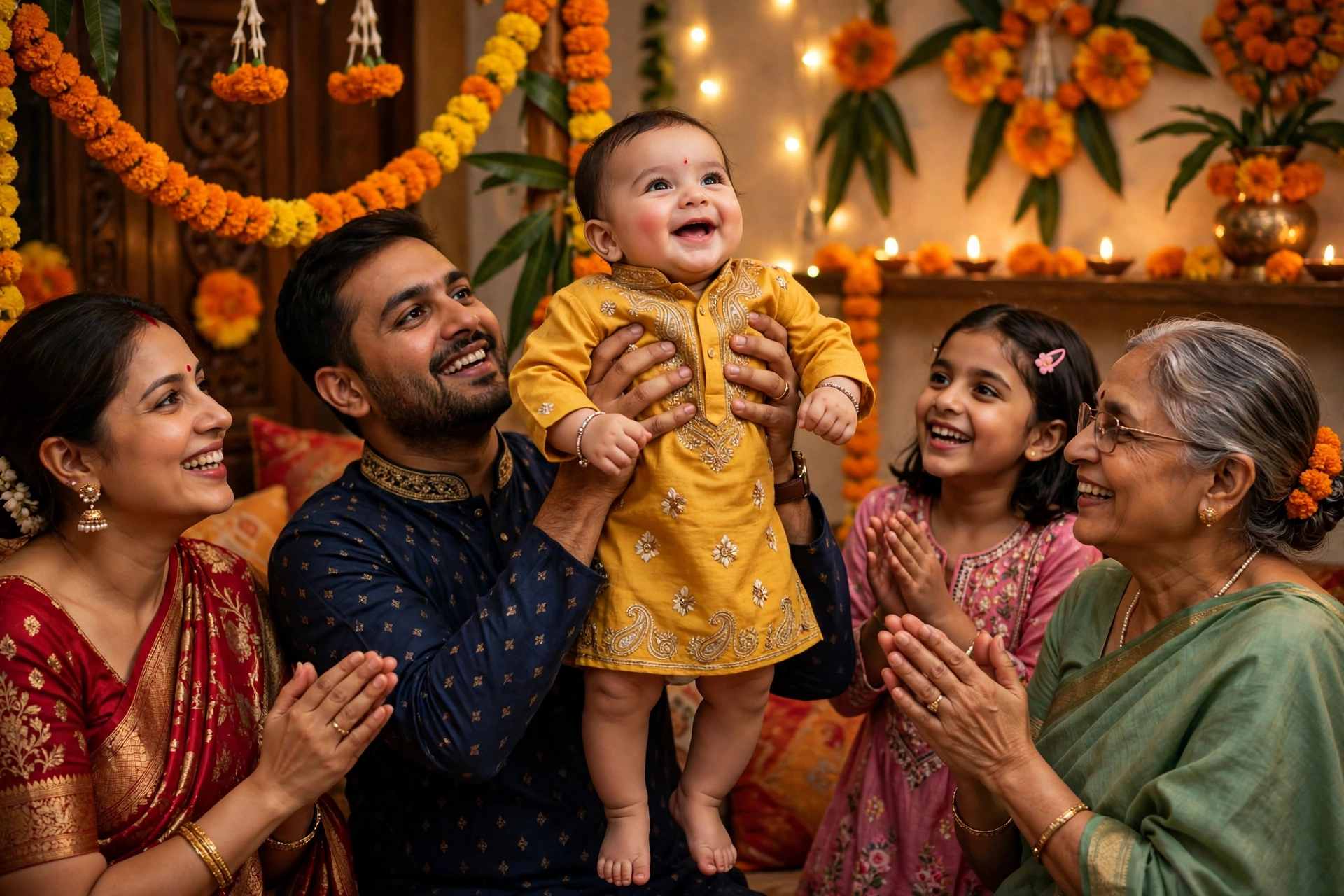
The celebration afterward is half the point. Many families host a lunch or small party, and the freshly mundan-ed baby in new clothes is the guest of honour.
Some families also do the ear piercing ceremony on the same day for girls, though that is a separate decision worth discussing with your pediatrician. A baby who has just had their head shaved has had enough for one day.
Common mistakes to avoid
The most common mistake is inviting too many people to the shave itself. A large crowd, bright lights, and five cameras pointed at the baby will unsettle even the calmest child.
The second mistake is timing. A mundan scheduled right after vaccinations, during teething, or in the middle of nap time is a hard morning for everyone.
The third mistake is forgetting the practical things: no change of clothes, no cap for the baby's bare head in the sun, no snack for afterwards, and nobody named to take photos.
Finally, do not let the photography take over the ceremony. The baby needs a parent's arms and a familiar face, not a ring of phones.
The mundan, step by step
- The family chooses an auspicious date and venue with the priest.
- A short puja is performed, often a havan or Ganesh puja.
- The baby is seated in a parent's lap, facing the right direction for the ritual.
- The barber or priest shaves the baby's hair, sometimes leaving a small tuft.
- The scalp is soothed with sandalwood or turmeric paste.
- The hair is offered at a temple or river, as the family's custom says.
- The baby is bathed and dressed in new clothes for the blessings.
Parents' checklist
- Book an experienced barber who is used to babies
- Keep the baby fed and rested before the ceremony
- Carry a soft towel, a change of clothes and soothing paste
- Plan the ceremony in the morning, before the baby tires
Frequently asked questions
At what age is mundan usually done?
Most families do it in the first, third, or fifth year, on a date chosen by the family priest.
Does the mundan hurt the baby?
The shave itself does not hurt, though most babies protest at being held still and at the strange sensation. Barbers who do temple mundans regularly are fast and gentle, and the whole shave takes only a few minutes. Holding the baby upright against your chest helps more than anything else.
Should we do the mundan at a temple or at home?
Both are common. A temple mundan carries the weight of the place, and many families travel to Tirupati or Varanasi for it. A home mundan is quieter and easier on the baby. The ritual is the same either way, so choose the setting that suits your family and your child's temperament.
What should we bring on the day?
A change of clothes for the baby and for whoever holds them, the baby's favourite toy and blanket, snacks and wipes, and a cap or scarf for the baby's head afterwards. If the mundan is at a temple, bring the offerings the priest asks for, and confirm the list with them the day before.
Can we do ear piercing on the same day?
Some families do, but it is a separate decision, and it is worth discussing with your pediatrician first. A baby who has just had their head shaved has had enough for one day.
Related reading
See it on a real invite
Open any of these to see the full invite, then add your own names and preview it free.


Found this useful? Share it with someone planning a celebration.
Share