Anand Karaj Explained: The Sikh Wedding Ceremony, Step by Step
No fire, no idols, just the couple, the Guru Granth Sahib and four sacred hymns. A clear walkthrough of the Sikh wedding ceremony.
The shape of the day
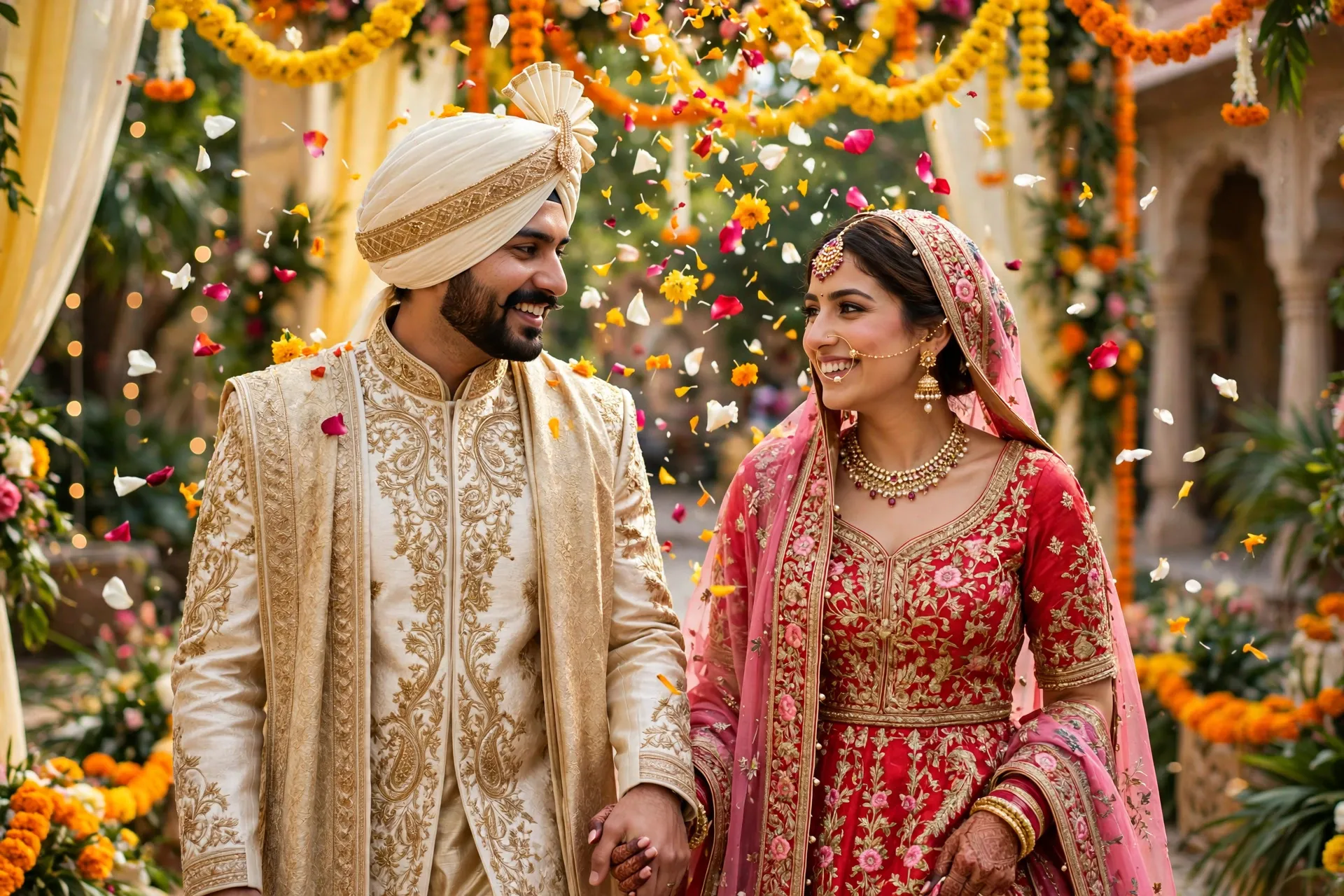
Anand Karaj means the ceremony of bliss. The Sikh wedding is strikingly simple compared to most Indian weddings: there is no sacred fire and no elaborate stagecraft. The couple sits before the Guru Granth Sahib, hymns are sung, and the marriage is solemnized through four verses called the laavaan. The whole religious ceremony usually lasts about an hour, which surprises guests who expect a multi-hour event.
The day runs in a clear order. First the groom's procession arrives and is received by the bride's family. Then the congregation gathers, hymns are sung, and the ceremony opens with prayer. Then come the four laavaan, the heart of the wedding, where the couple walks around the Guru Granth Sahib once for each verse. Then closing hymns, a final prayer, and karah prasad for everyone. Many Sikh weddings continue afterwards with a reception or doli ceremony at a separate venue.
The mood is calm and meditative throughout, and the congregation takes its lead from the couple and the granthi.
Before the ceremony: the milni
The groom's procession arrives at the gurdwara and is received by the bride's family in the milni, a formal meeting of the two families. Elders exchange garlands and embrace, and the two sides greet each other properly before anything else begins.
Guests should arrive early for the milni, because the ceremony follows soon after and the laavaan begin when the granthi begins, not when the last guest arrives.
On entering the gurdwara, cover your head, remove your shoes, and dress modestly. Head coverings are usually available at the entrance if you do not bring your own, and a simple scarf or handkerchief is fine. Everyone sits on the floor facing the Guru Granth Sahib.
The ceremony begins: kirtan and ardas
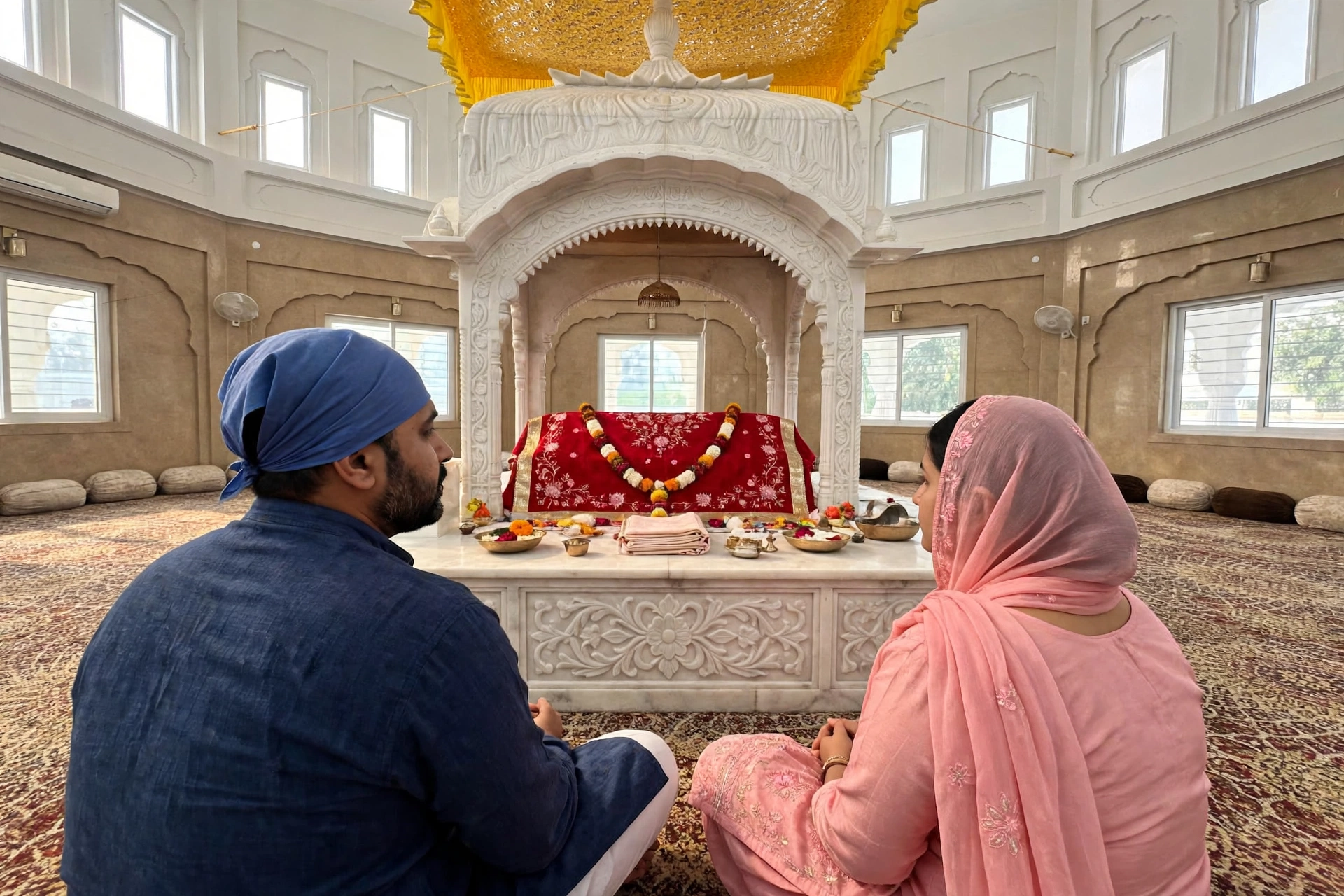
The congregation gathers in the darbar hall. The raagi jatha sings kirtan, devotional hymns, as everyone settles. The music is not background sound. The couple takes their seats in front of the Guru Granth Sahib, the bride usually to the groom's left, and the families sit close behind them.
An ardas, the standing congregational prayer, formally opens the ceremony. Everyone stands for it, with hands folded, and the prayer asks for blessings on the couple and the families.
The four laavaan, one by one
This is the heart of the Anand Karaj. The granthi reads one verse of the laavaan, a hymn composed by Guru Ram Das, and the raagis sing it. Then the couple rises and walks clockwise around the Guru Granth Sahib while the verse is sung, the groom leading and holding one end of a sash, the bride holding the other. They complete one round per verse, then sit again before the next verse begins.
The pace is unhurried.
The first laav: beginning the journey
The first verse speaks of beginning the journey together, turning toward a life of righteousness and leaving behind past attachments.
The second laav: love that deepens
The second verse describes the growing love between the couple, deepening through remembrance of the divine and mutual devotion.
The third laav: steady, selfless love
The third verse speaks of detachment from worldly distractions and a love that becomes steady, selfless, and calm.
The fourth laav: bliss and fulfilment
The fourth verse describes the bliss of complete union, where the couple finds peace and fulfilment in their life together.
Closing: shabads, ardas, and prasad
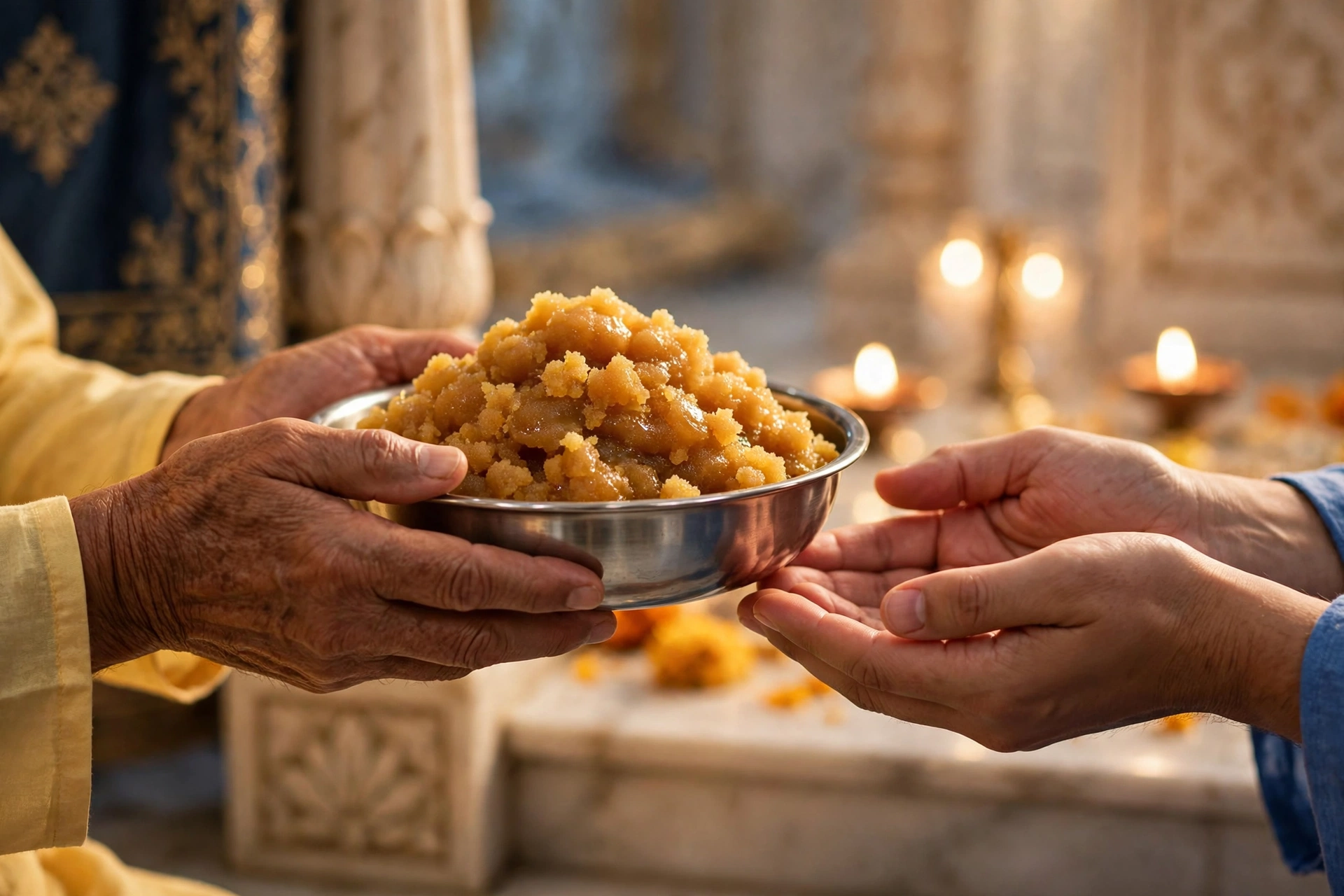
After the laavaan, additional shabads are sung, including verses blessing the union. The congregation stands for the final ardas, followed by the hukamnama, the day's order from the Guru Granth Sahib. Then karah prasad, the blessed semolina sweet, is distributed to everyone present. Accept it with both hands.
The prasad is served to every person in the hall, guest or family, Sikh or not. Take it with both hands, eat it where you sit, and do not refuse it.
After the ceremony
The couple may then greet guests outside the darbar hall. This is the time for congratulations, photographs, and meeting the families. Many Sikh weddings continue with a reception or doli ceremony at a separate venue, often with lunch and music, and the mood lifts considerably once the religious ceremony is over.
If you are a guest, this is also the time to greet the couple's parents and elders. A short word of congratulations is enough.
Practical notes for guests
Head covering is required inside the darbar hall for everyone, men and women. Bring a scarf, a handkerchief, or a rumal, and keep it on for the whole ceremony. Shoes are removed before entering and left in the racks provided, so wear shoes that are easy to slip off and on again.
Dress modestly and comfortably, because you will sit on the floor for about an hour. Avoid short hemlines and tight clothing, and choose something you can sit cross legged in without discomfort.
Do not take photographs during the laavaan unless the family has said it is fine. A few discreet photos before the ceremony begins are usually welcome, but walking around with a camera during the rounds disturbs the congregation and the couple.
Timing is the last thing to get right. The ceremony usually starts in the morning, and the invitation will give a time that is closer to the real start than most Indian wedding invitations. Arrive twenty to thirty minutes early, settle in, and let the kirtan do what it is meant to do.
The Anand Karaj, step by step
- The milni: the families meet and embrace, often exchanging garlands.
- Kirtan: hymns are sung in the presence of the Guru Granth Sahib.
- The ardas: a prayer asking for blessings on the marriage.
- The palla: the bride's father places the groom's scarf in the bride's hand.
- The first laav, as the couple walks around the Guru Granth Sahib.
- The second, third and fourth laavan, each with its hymn.
- Closing shabads and the final ardas.
- Karah prasad is shared with everyone present.
Before the Anand Karaj: a checklist
- Confirm the gurdwara booking and the ceremony time
- Remind guests to cover their heads and remove shoes
- Arrange scarves for guests who may not bring one
- Plan the langar or lunch after the ceremony
- Tell guests the ceremony usually begins in the morning
Frequently asked questions
How long does an Anand Karaj ceremony last?
The religious ceremony usually lasts about an hour, from the opening ardas through the four laavaan to the final prayer and prasad.
Do non-Sikh guests need to cover their heads?
Yes. Everyone covers their head inside the darbar hall, Sikh or not. Bring a scarf or handkerchief, or use one of the coverings usually available at the entrance. Keep it on for the whole ceremony.
What is the significance of the four laavaan?
The laavaan are four verses by Guru Ram Das, sung one at a time while the couple walks around the Guru Granth Sahib. Each verse deepens the meaning of the union: beginning the journey, love that deepens, steady selfless love, and finally bliss and fulfilment. The marriage is solemnized when the fourth round is complete.
Can guests take photos during the ceremony?
It depends on the family, so ask or follow their lead. A few discreet photos before the ceremony are usually fine, but photographing during the laavaan disturbs the congregation. When in doubt, keep the phone away.
What should we do with the karah prasad?
Accept it with both hands and eat it where you sit. It is a blessed offering, not a snack to carry away, and accepting it graciously is part of being present.
Related reading
See it on a real invite
Open any of these to see the full invite, then add your own names and preview it free.


Found this useful? Share it with someone planning a celebration.
Share