Baraat Planning: Music, Timing and Keeping the Energy Up
The baraat is the groom's parade and the wedding's opening act. How to plan the route, the music and the momentum.
Timing is the one decision that matters most
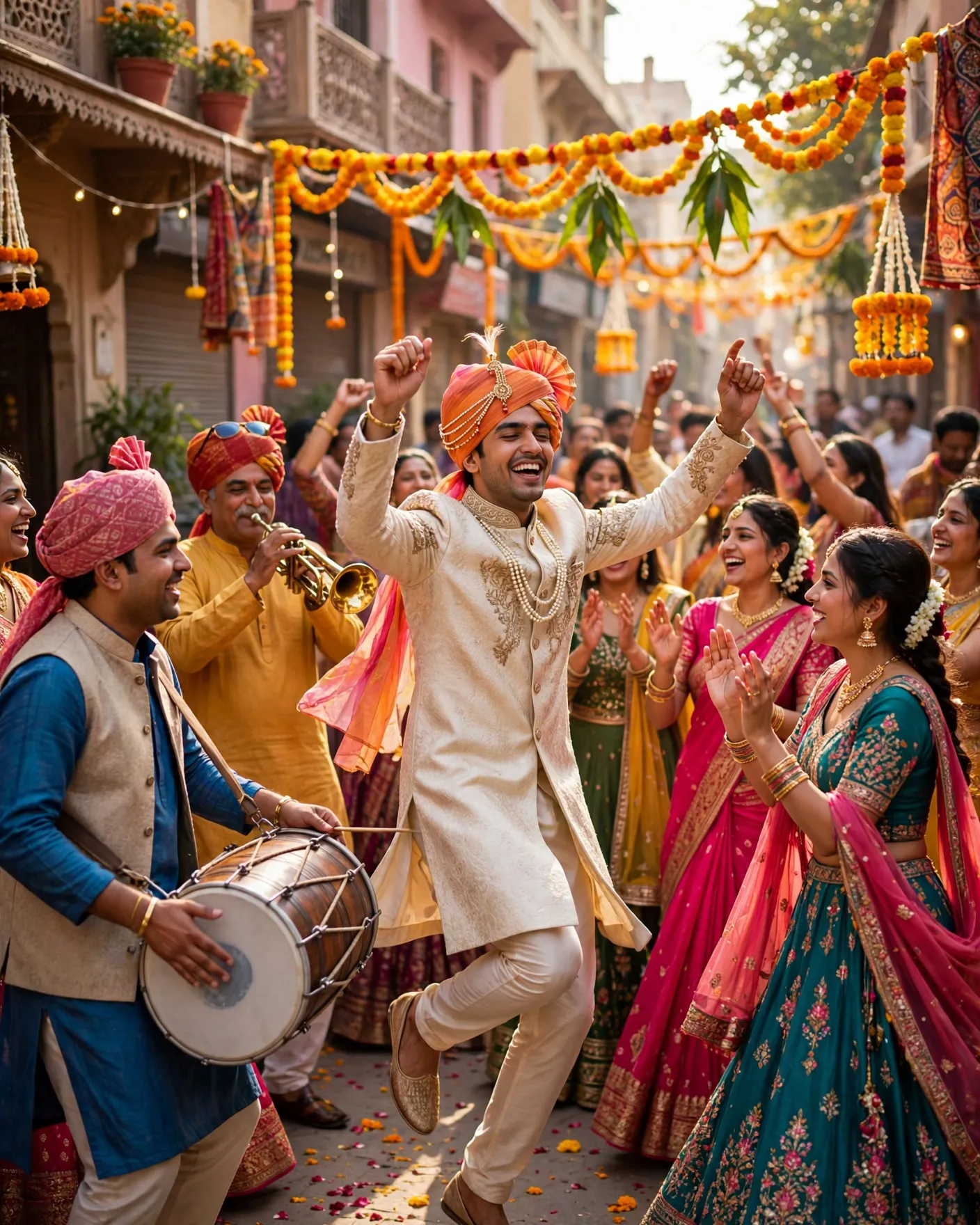
The baraat is pure joy: the groom's procession dancing its way to the wedding venue with dhol, music, and half the family on the road. It is also the part most likely to run two hours late and exhaust everyone before the ceremony starts.
Decide the departure time by working backward from the ceremony. If the pheras must start at 8 pm and the procession takes 45 minutes, the baraat leaves at 6:45, not 7:30. Build in a 30 minute buffer for the dancing to build momentum.
In winter, an afternoon baraat that arrives before sunset photographs better and keeps older guests comfortable. A late evening baraat in winter means dancing in the cold, and the energy drops fast.
Work backward from the ceremony
Start with the pheras time and work backward. Write down the ceremony start, the arrival and welcome time, the procession time, and the departure time, in that order. If the welcome takes 20 minutes and the procession takes 45, and the pheras start at 8, the baraat leaves by 6:55.
Tell the dhol team, the driver, and the groom's closest friends the departure time separately. Name one person as the timekeeper, with the authority to start the music on time.
Walk the route in advance
Walk the route in advance, ideally at the same time of day as the wedding. Check road width, traffic, parking for the cars that follow, and where the procession will stop and dance. Share the route with the dhol players and the driver beforehand, so nobody is guessing on the day.
Keep the distance short. A baraat that covers 500 meters of dancing is electric, while a baraat that marches 3 kilometers is a trek. If the venue is far, transport everyone close first, then dance the final stretch, where the photos happen and the bride's family waits.
Check for narrow spots and turns where the crowd will bunch up, because a crowd that stops moving loses its rhythm fast.
Music: dhol plus a plan
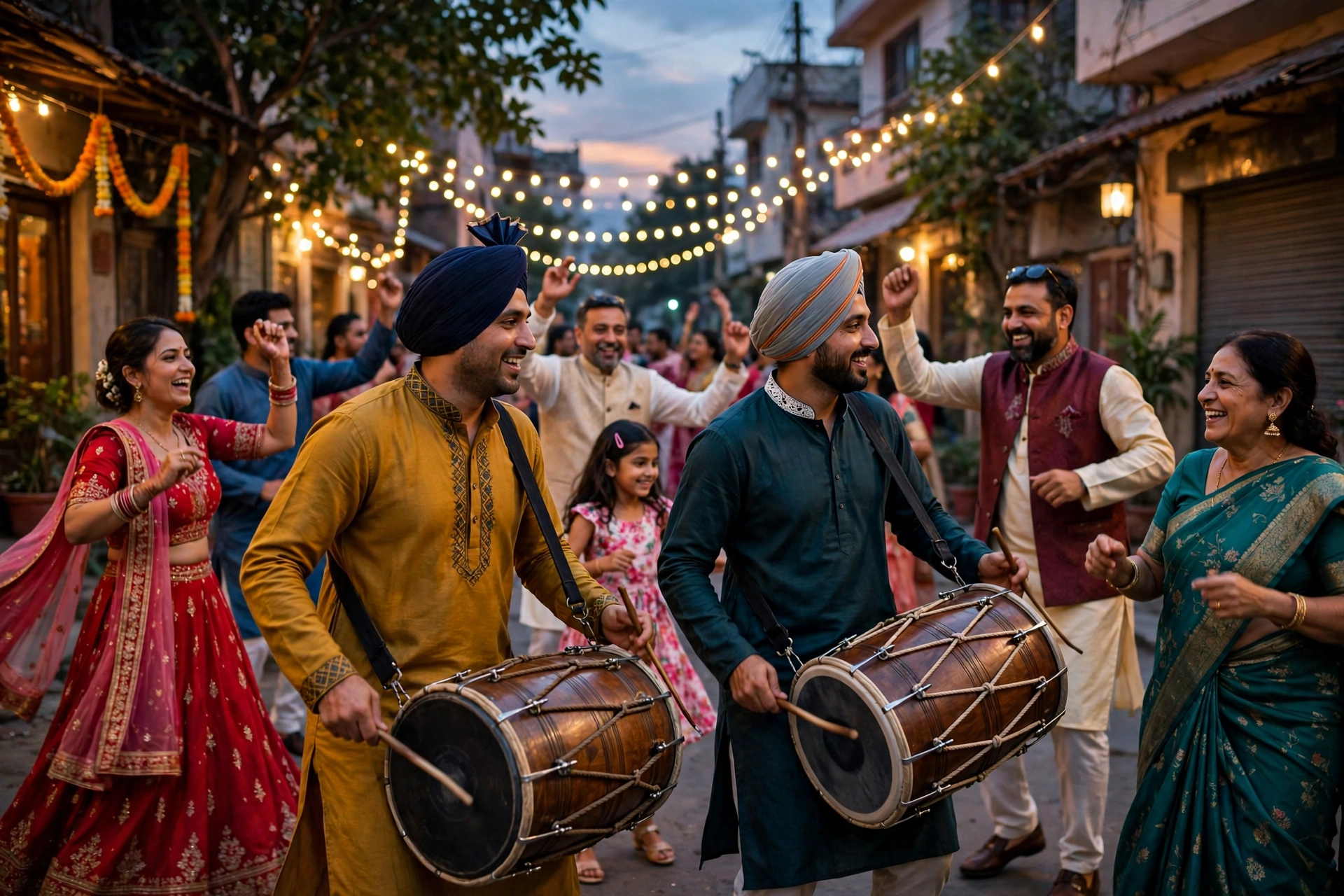
A good dhol team is non negotiable. It is the heartbeat of the baraat, and everything else follows it. Decide whether you want a DJ truck, a brass band, or just the dhol, because one strong sound source beats three competing ones.
Give the music team a short list of must play songs and a clear stop time. The baraat should end on a high, with everyone wanting more, not trail off because the playlist ran out.
If you hire a DJ truck, check the power and where the truck will stop, because a truck that cannot turn on a narrow road will hold everyone up. If you hire a brass band, agree on the songs in advance and keep the band close to the groom.
Keeping the energy up
Hydration stations along the route matter more than people expect. Dancing for an hour in wedding clothes is a workout, so put water, nimbu pani, or coconut water at two points along the route.
Assign the groom's closest friends as energy captains. Their job is to keep the dancing circle tight around the groom's car, pull shy relatives in, and keep the momentum through the slow patches. Pick friends who actually dance, because a baraat with no dancers in chief dissolves into a walking crowd within twenty minutes.
Plan for the slow patches, when the road narrows or the music pauses. A quick circle dance or a familiar song can restart the whole procession, so do not let a pause stretch into five minutes of standing around.
Keep a car near the front for elders who want to ride part of the way, and keep the pace gentle enough that they can walk beside it.
The arrival and welcome
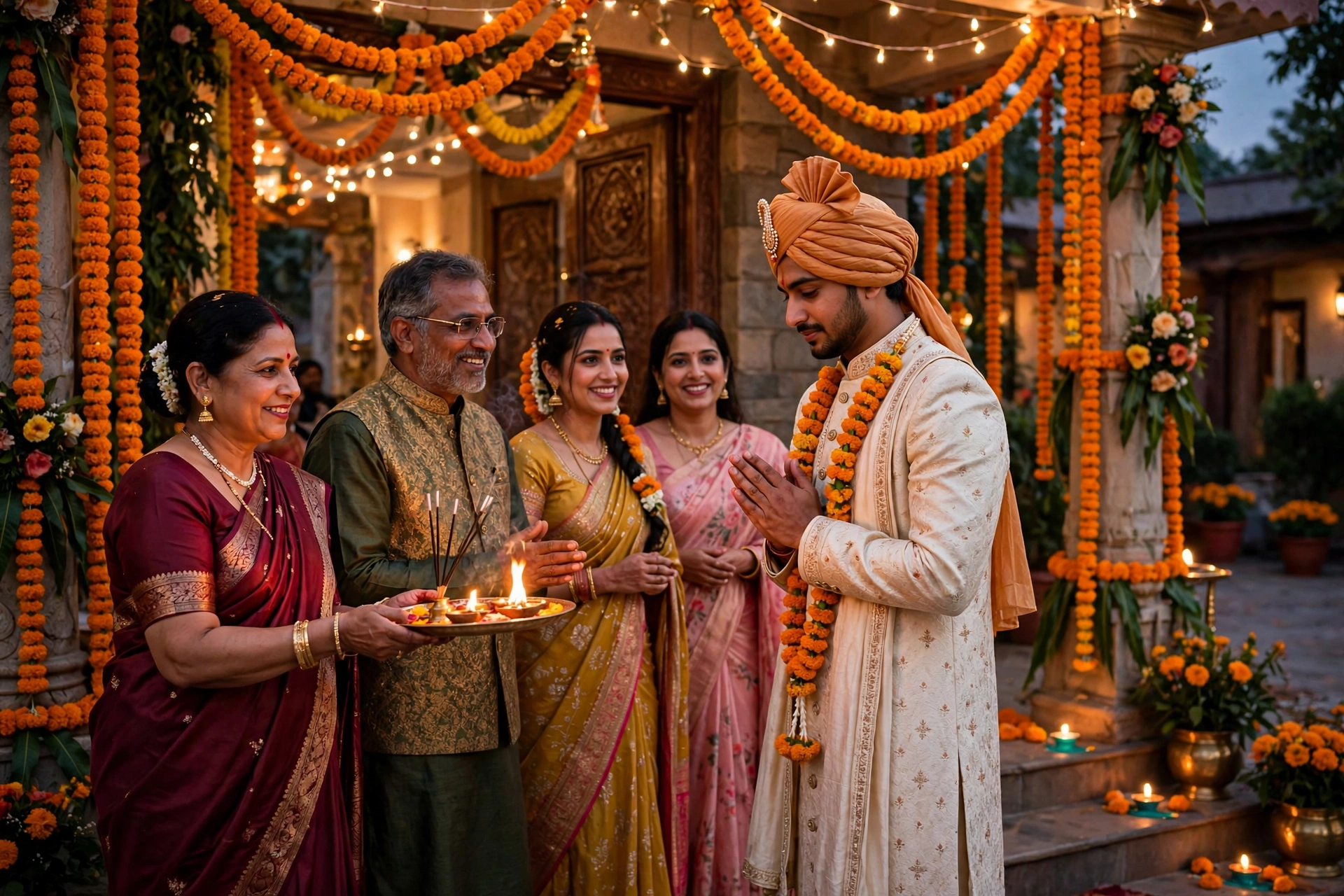
Plan the welcome in advance: who receives the baraat, where the aarti happens, and where the groom goes next. The move from road chaos to ceremony calm should feel intentional. Give the groom five minutes with water and his parents before the ceremony begins.
The bride's family should know exactly where to stand and what happens first. The aarti, the garland exchange, the welcome drinks, and the walk to the stage all need an order, and someone needs to own it. A short rehearsal of the arrival, even just a walk through with both families the day before, is worth more than any decoration at the gate.
Keep the welcome short and warm. The guests have been dancing, they are hungry, and the ceremony is waiting, so pick the rituals that matter and move inside.
Before the day checklist
- Departure time worked backward from ceremony
- Timekeeper named, with authority to start
- Route walked, parking checked
- Dhol team booked, songs and stop time agreed
- DJ truck, brass band, or dhol alone decided
- Hydration stations at two points on route
- Energy captains picked from groom's friends
- Car arranged for elders who want to ride
- Arrival plan agreed with bride's family
- Baraat time on invitation, with map link
Common mistakes
The first mistake is starting late and hoping the ceremony will wait. The second mistake is a route that is too long, which feels grand in planning and exhausting on the day. The third mistake is three sound sources competing at once, so pick one and let it lead.
The fourth mistake is forgetting water, because a crowd without water slows down fast. The fifth mistake is no arrival plan, so walk the arrival through with both families before the day.
Baraat day, step by step
- Fix the assembly point and time, and share them with the groom's side.
- Brief the dhol and band on the route and the start time.
- Bring the ghodi or car to the assembly point early.
- Start the procession on time, with the groom's closest family in front.
- Pause for dancing at planned spots, not everywhere.
- Send a runner ahead to tell the bride's side the baraat is close.
- Arrive at the venue for the milni and welcome.
Frequently asked questions
How long should a baraat last?
A final stretch of dancing that lasts 30 to 45 minutes is usually right. If the venue is far, travel first and dance the last part.
What time should the baraat leave?
Work backward from the ceremony, subtract the welcome and the procession time, and add a 30 minute buffer. That is your departure time.
Do we need a DJ truck or is dhol enough?
Dhol alone is enough for most baraats, and it is often the best choice. One strong sound source beats three competing ones.
How do we keep older guests comfortable?
Keep the pace gentle, keep a car near the front for elders who want to ride, and keep water within reach.
What should the invitation say about the baraat?
Put the baraat start time, the starting point, and the venue address on the invitation, with a map link.
Related reading
See it on a real invite
Open any of these to see the full invite, then add your own names and preview it free.
Found this useful? Share it with someone planning a celebration.
Share