Wedding Invitation Etiquette for Indian Families
Etiquette is not old fashioned fuss. It is the set of courtesies that keeps two families, and hundreds of guests, feeling respected through a wedding.
Agree the rules before any invite goes out
Wedding invitation etiquette is the shared set of courtesies around inviting guests to an Indian wedding. It covers the order of names, the order of events, who receives which invite, how plus ones and children are handled, and how news is shared across two families.
Etiquette matters because weddings are emotional. A guest who learns about a wedding from someone else, or finds their name misspelled, or discovers a plus one was not included, remembers it. Most etiquette mistakes are not about rudeness. They are about rushing, and they are preventable with a little planning.
Agree these with both families first, in writing: names order, event order, and a plus one and children policy applied evenly. Then build a guest list split by which events each person is invited to, and a VIP list for personal calls before mass invites.
Names, and who is named first
Both families host together
The most common arrangement today. Both sets of parents are named, usually the bride's family first, then the groom's, or in the order the families agreed. Suits weddings where both families are planning together. Tip: write the order down once, and use it on every card, message, and screen, so no guest sees two different orders.
The bride's family hosts
The traditional arrangement in many communities, where the bride's parents issue the invitation and the groom's parents are named as the groom's family. Suits traditional weddings and families who follow older custom. Tip: name the groom's parents clearly too, so their side of the family feels included rather than mentioned.
The couple hosts themselves
The couple's names lead, with parents thanked in a line below. Suits modern weddings, second weddings, and couples paying for the celebration themselves. Tip: keep the parents' line warm and visible, since elders notice when they are left out entirely.
Elders and grandparents named with respect
Grandparents and beloved elders can be named in a blessing line, such as "with the blessings of" followed by their names. Suits families where an elder is the emotional centre of the wedding. Tip: check the spelling of every elder's name with the family, since a misspelled elder's name causes real hurt.
Elders first, in every sense
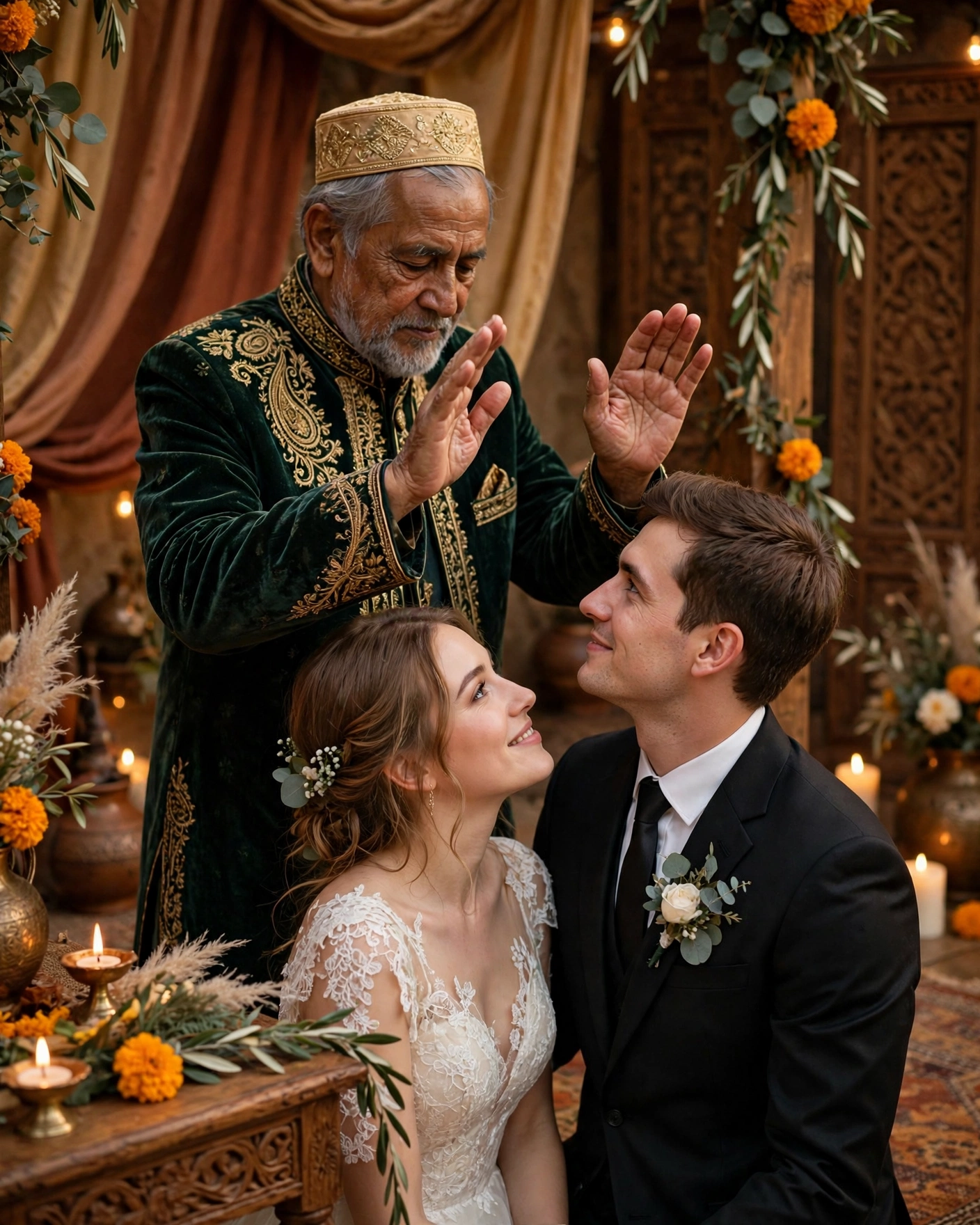
Put elders first in every sense: told first, named with respect, and given printed cards where they value them. An elder who receives a digital link with no call feels like an afterthought, however beautiful the invite. A five minute call before the link changes the whole experience.
Tell elders and close family personally before any mass message goes out. Send in this order: parents and close family first, so they hear it from you, then outstation guests, since they need the most time to plan travel, then friends and colleagues in small batches you can track.
Plus ones, children, and the even rule
Decide the plus one and children policy once, and apply it evenly. Many families invite partners of married guests, and ask that children stay home for evening events. Other families welcome children everywhere. Either choice is fine. What hurts is an exception: one cousin's partner invited, another's not, with no reason anyone can see.
Say the policy on the invite, kindly and plainly. "We would love to celebrate with you, and we kindly ask that this invitation is for you alone" is clearer than silence, and guests prefer clarity to guessing. When a guest asks about a plus one after the invite, answer with the same rule you gave everyone else.
When the two families disagree
When the two families disagree on etiquette, the couple should mediate early and privately, not by letting two different invites go out. One wedding, one names order, one event order, one plus one rule. Guests compare invites, and inconsistencies become family stories that outlive the wedding.
The couple is the bridge between the families, so the couple should carry the decision. Listen to both sides, decide together, and then present one plan. A decision made kindly and early is forgiven. A decision avoided until the invites go out is not.
Before any invite goes out
- Names order and event order agreed by both families, in writing
- A plus one and children policy, applied evenly to everyone
- A guest list split by which events each person is invited to
- A VIP list for personal calls before any mass message
- One person from each family proofreading the invite
- Elders told personally, with a call before any link is sent
Mistakes that linger after the wedding
The first mistake is two different invites. When each family sends its own version with its own names order, guests compare them, and the comparison becomes a story. The second mistake is telling the wider circle before the elders. An elder who learns about the wedding from a neighbour has been disrespected, however unintentionally. The third mistake is a quiet exception to the plus one rule. Exceptions are noticed, and remembered, and they cost more goodwill than the seat ever saved.
The etiquette at a glance
- Invite elders and senior relatives first, in person or by phone.
- Use the order of names both families have agreed, everywhere.
- Send save the dates to outstation guests three to six months ahead.
- Send the full invitation six to eight weeks before the wedding.
- Address each invitation to exactly the people who are invited.
- Follow every WhatsApp invite to elders with a personal call.
- Give the RSVP date and one clear way to reply.
- Send a gentle reminder a week before, and on the day of each function.
Frequently asked questions
Whose name comes first on an Indian wedding invitation?
Usually the bride's family hosts and is named first, but many families now name both families together, or let the couple lead. The right order is the one both families agreed, written down, and used everywhere without variation.
Should elders get a printed card or a digital invite?
A printed card where they value it, with a personal call before it arrives. Elders often keep the card and show it to visitors, so paper carries meaning a link cannot. Send the digital invite too, so they have the map and the details on their phone.
How do we tell guests about plus ones politely?
Say it on the invite in one plain line, and apply it evenly. Guests accept a clear rule far more easily than a vague invite that leaves them guessing. If someone asks, repeat the same rule kindly.
What if our families follow different customs?
Pick one shared plan for the invitation, and let each family's customs shine in the ceremonies themselves. The invitation is one document for one wedding, so it needs one order, one set of names, and one rule for guests.
Is it rude to limit the guest list?
No, when the limit is applied fairly and explained honestly. A wedding with a clear, even rule is respected. A wedding with quiet exceptions is not. Tell close family early, so nobody is surprised by the list.
Related reading
- What Information Should a Wedding Invitation Include?
- How to Invite Office Colleagues to Your Wedding
- Wedding Invitation Messages from Bride's Parents
Create your wedding invitation on MyIndiAura, and let every guest feel that their presence was considered, not assumed.
See it on a real invite
Open any of these to see the full invite, then add your own names and preview it free.

Found this useful? Share it with someone planning a celebration.
Share