Wedding Budget Planner: Essential Expenses to Include
A wedding budget is a list of choices, not a single number. This planner walks through the expenses couples most often forget, so every part fits one honest plan.
Start with one honest total
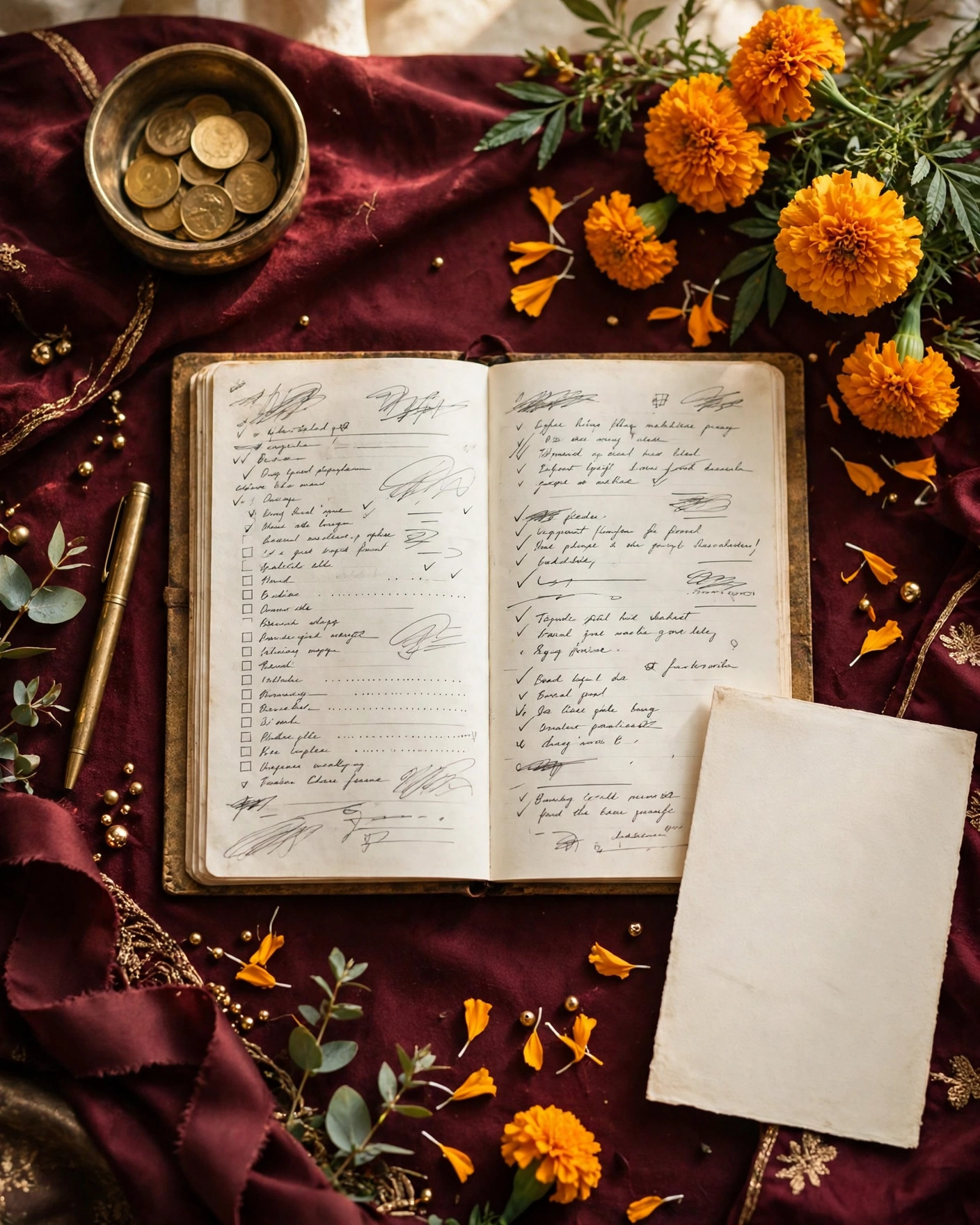
A wedding budget is a list of choices, not a single number. Before you book anything, sit together as a couple and with the family members who are paying, and agree on one total you are all comfortable with. Write it down. Say it out loud. That single figure is the anchor for every decision that follows, from the venue to the flowers to the invitation.
A good planner is not a spreadsheet full of guesses. It is a short list of expense heads, each with a number, a name beside it, and a date by which it must be paid. Keep it in one place, on paper or on a shared sheet, and update it on the day each booking is made, while the figure is still fresh in your mind.
The big heads that shape the whole wedding
Most weddings, whatever their size, spend money under the same broad heads. List them first, before you add the smaller items, so the shape of the whole celebration is visible at a glance.
Venue and food. The hall or lawn, the catering, and the service charges. In many families this is the largest share of the total, so fix it first. Ask for the full quote in writing, including taxes, service charges, and any charge for extra hours, so the number on your sheet is the number you will actually pay.
Clothes and styling. Outfits for the couple and close family, plus makeup, hair, and accessories for the main events. Outfits often need alterations, and trials take time, so budget for fittings and for a second outfit if a ceremony runs long.
Photography and film. The photographer, the videographer, and any extra coverage such as a drone. Agree the delivery timeline in writing, and ask what is included, how many edited photos you receive, and when the film arrives.
Decor and music. Flowers, lighting, stage decor, sound, and the artists for each function, from mehendi to reception. Decor is often quoted per function, so list each function separately instead of lumping them into one vague figure.
Guests and transport. Rooms for outstation guests, local transport, and welcome arrangements. Guest numbers drive food, seating, and rooms, so settle the guest count early and revisit it whenever a new name is added.
Invitations and stationery. Digital invitations, any printed cards, and thank you messages after the wedding. Give the invitation its own line from the very start. An invitation ordered late, after the big bookings, often finds its budget already spent, and then the design is chosen in a rush.

The forgotten expenses that quietly add up
The big heads rarely cause the shock. The shock comes from the small items that were never listed, each one reasonable on its own, arriving together in the last month.
Food beyond the main meals. Breakfast for the family on the wedding morning, tea and snacks between functions, late night food after the reception, and meals for vendors and artists who work through the day. These are small per head, but they repeat across several days.

Running the sheet from booking to wedding day
A budget only works if someone runs it. Follow this order, and the sheet stays honest from the first booking to the last payment.
- Agree the total and the guest count together, before any venue visit. Write both numbers at the top of the sheet.
- Book the venue and the caterer first, and record the full quoted figure, including taxes and service charges, on the same day.
- Get written quotes for photography, decor, music, and clothes within the next two weeks, while the venue dates are still fresh.
- Add a line for every function, from engagement to reception, with its own small budget head, so no function borrows silently from another.
- Set aside a reserve for changes, and keep it untouched until the last month. Many families keep a small reserve, and it is the line that saves the plan when a price moves.
- Review the sheet once a week in the last month, when small expenses arrive fastest. Update every figure on the day it is paid, and note who paid it.
- After the wedding, close the sheet within a week, recording what was actually spent against each head.
Common mistakes that break a wedding budget
Booking before agreeing a total. The venue is chosen on feeling, the total is guessed afterwards, and every later choice feels like a cut. Agree the total first, even if it is only a rough range, and let the venue fit inside it.
Counting guests loosely. A guest list that grows by fifty people changes food, seating, rooms, and return gifts all at once. Freeze the list early, and agree who can add a name and what it means for the budget.
Forgetting the functions between the big days. Haldi, mehendi, sangeet, and the reception each need food, decor, music, and clothes. A budget that only covers the wedding day will run out long before the week is over.
Leaving the invitation to the last week. The invitation carries the date, the venue, and the first impression of the celebration. When it is ordered late, the choice is rushed, the details are checked once, and mistakes slip through. Give it a line and a date early, and check it twice.
Your budget checklist, head by head
- The total budget the family is comfortable with, agreed before bookings begin
- The guest count, split into close family, extended family, and friends
- The venue shortlist, with dates and full quoted costs in writing
- Written quotes for photography, decor, music, and clothes
- A budget head for every function, from engagement to reception
- Rooms, transport, and welcome arrangements for outstation guests
- Gifts, shagun, and return gifts, with a count of how many are needed
- A weekly review in the last month, with every payment recorded on the day
Frequently asked questions
When should we start the wedding budget?
Start before the first venue visit, as soon as the families have agreed a rough total and a guest count. A budget made after bookings begin is a record of what was spent, not a plan for what to spend.
What is the largest expense in most Indian weddings?
In many families the venue and food take the largest share, followed by clothes and photography, but the order varies with the size of the guest list and the number of functions. List your own heads first, and let your numbers tell you where the money goes.
How much should we keep aside as a reserve?
Many families keep a small reserve for changes in the last month, when prices move and guest numbers shift. Keep it separate from the other heads, and agree in advance who can approve using it.
What do couples forget most often in a wedding budget?
Guest transport and stays, food between the main meals, decor extras, return gifts, and tips for helpers and drivers. Small cash needs on the day are also easy to miss, so keep a float with the family member handling payments.
Should the invitation have its own budget line?
Yes. Give the invitation its own line from the first draft of the plan, with its own send date. One beautiful design, sent on time, with correct details, beats a costly card that arrives late or carries a spelling error.
Related reading
- Indian Wedding Planning Checklist: 12 Months to the Wedding Day
- Digital vs Paper Invitations: An Honest Comparison
Plan the money honestly on MyIndiAura, and let the invitation carry the celebration, not the worry.
See it on a real invite
Open any of these to see the full invite, then add your own names and preview it free.


Found this useful? Share it with someone planning a celebration.
Share