The First 30 Days: A Wedding Planning Checklist for Starting Late
Starting late does not mean panicking. It means doing the first 30 days in the right order: date, venue, guest list, and invitations, before anything decorative.
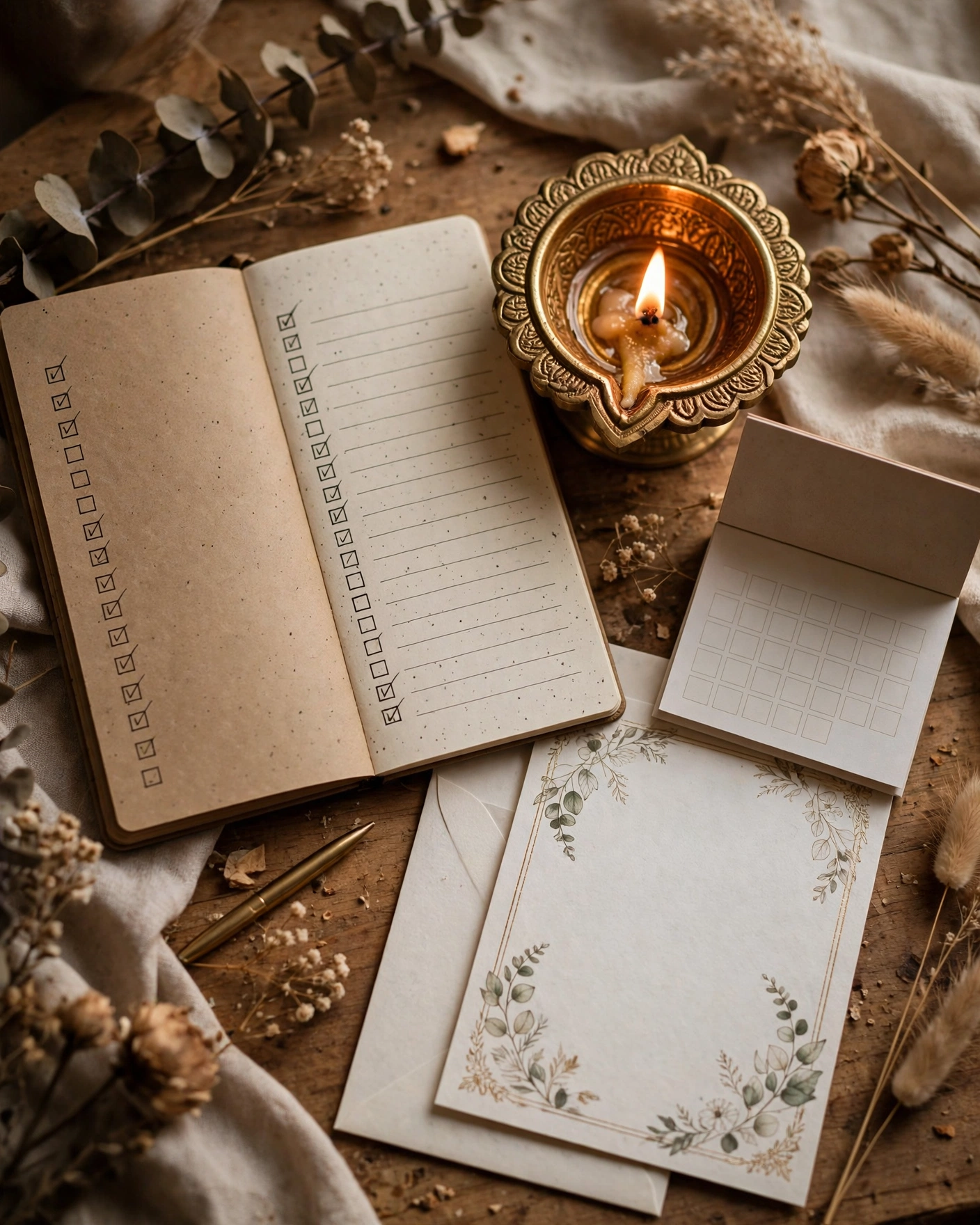
The first 30 days, in order
A first 30 days checklist is a short, urgent plan for the opening month of wedding planning. It ignores decoration, favours, and styling, and focuses on the bookings that disappear fastest: venues, photographers, and popular dates. Everything else waits until these are locked.
Starting late changes priorities, not standards. You still get a beautiful wedding, but you make fewer, faster decisions, and you accept good options instead of hunting perfect ones. The couples who cope best with a short timeline are the ones who decide quickly and then stop revisiting decisions.
Why the first 30 days decide everything
Venues, photographers, and popular dates go first. A couple who spends the first month choosing flowers will find the venue gone and the photographer booked. A couple who spends the first month on dates, venues, and vendors will find everything else falls into place, because every later decision answers to those three.
Tell your families the timeline honestly. When everyone knows time is short, they decide faster and argue less. Share the week by week plan with both families, so nobody is surprised by the pace, and so help arrives where it is actually needed.
Week one: date, venue, and budget
- Agree a date range of two or three acceptable dates, not one fixed day. A range gives you a venue. A single date gives you a disappointment.
- Agree a budget ceiling with both families, in writing, before any venue visit. A ceiling agreed late is a ceiling ignored.
- Shortlist venues with availability checked before visits. Do not visit a venue that is already booked on your dates.
- Visit the shortlist, and book the first venue that fits date, size, and budget. In a short timeline, the first good venue is the right venue.

Week two: guest list and save the dates
- Finalise the guest list with a hard maximum number, agreed by both families. Guests drive food cost, venue size, and invitation effort, so the number matters more than any other decision this week.
- Write the save the date message the day the venue is booked, not weeks later. Outstation guests need time to book travel, and every week of delay costs them money.
- Send save the dates at once, to outstation guests first, in every round. A save the date needs only the couple names, the wedding dates, and the city.
- Start the invitation design in parallel, so the full invite is ready to send the moment the event list is final.
Weeks three and four: vendors and invitations
- Book photographer, videographer, and caterer in that order, from shortlists made earlier. Good ones book early, and a short timeline leaves no room for a second search.
- Book decor and music next, with the venue photographs in hand, so vendors quote against the real space.
- Pick your invitation design and add your details. A digital first invite helps here, since printed cards need lead time you may not have.
- Send the full invitation early, starting with outstation guests, since guests also need travel time. The full invite carries every event, venue, and map link.
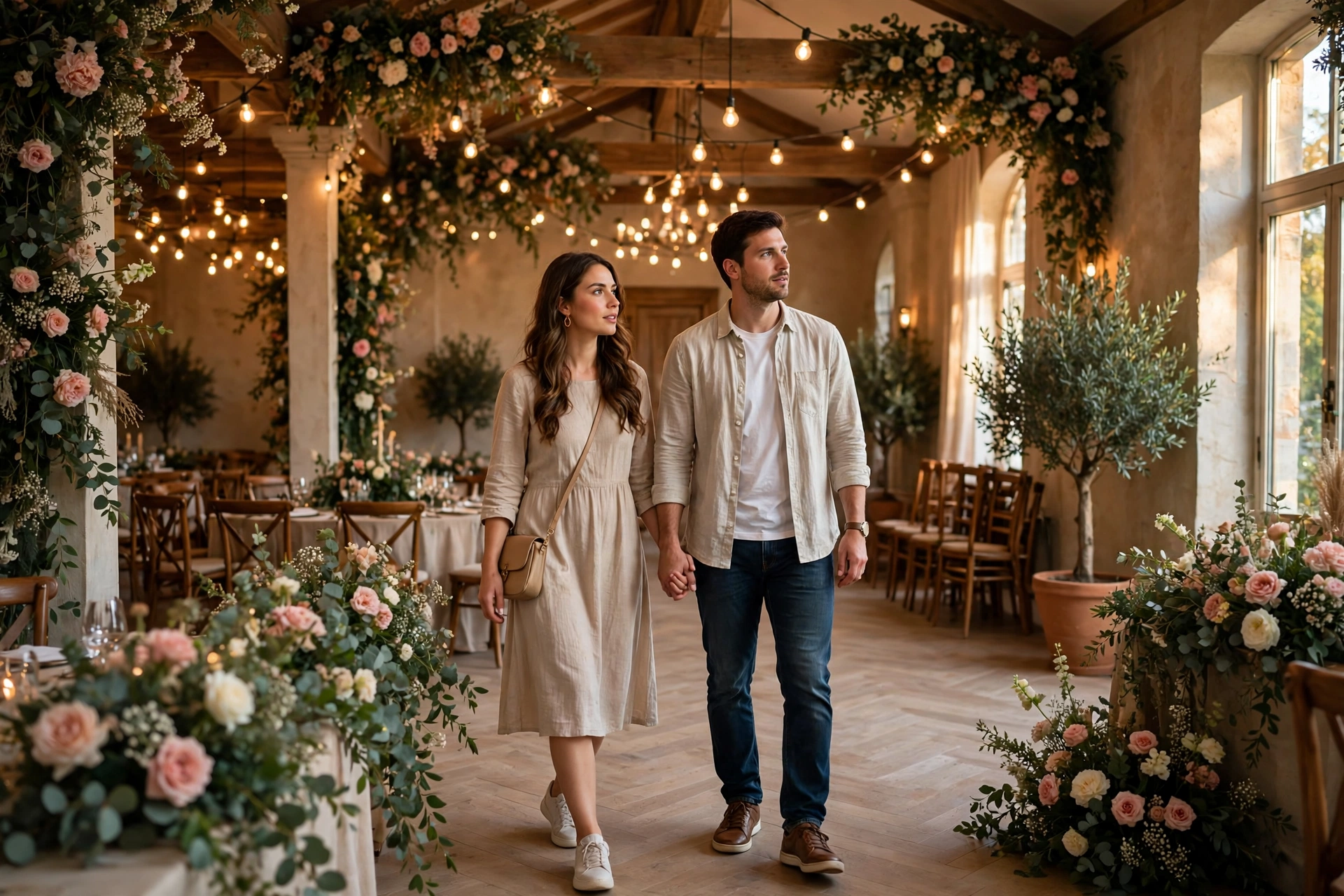
Decide fast, then protect the decision
Decide fast, then protect the decision. In a short timeline, the biggest risk is not a wrong choice. It is a choice revisited three times while venues get booked by other couples. Set a rule: once a vendor is booked, the search for that vendor ends.
Keep one final list, updated daily in the last month, not weekly. A list updated daily catches changes while they are small. A list updated weekly hides them until they are problems.
Your first 30 days, checked off
- A date range of two or three acceptable dates, agreed by both families
- A budget ceiling agreed in writing, before any venue visit
- A venue booked, with the date and size confirmed
- A guest list with a hard maximum, finalised in week two
- Save the dates sent, to outstation guests first
- Photographer, videographer, and caterer booked, in that order
- Decor and music booked, with venue photographs in hand
- The full invitation designed, with every event, venue, and map link
- One person owning the guest list, so replies land in one place
- Both families sharing the same week by week plan
Mistakes that cost a short timeline
The first mistake is hunting for perfect. A short timeline rewards the couple who decides, not the couple who searches longest. The second mistake is visiting venues before agreeing a budget. A beautiful venue you cannot afford wastes a week you do not have. The third mistake is sending save the dates late. Guests who learn the date late pay more for travel, and some will not be able to come at all.
Frequently asked questions
We are starting three months before the wedding. Is that too late?
No, but the order matters more than ever. Fix the date, book the venue, and agree the budget in the first week. Everything else follows, and a digital first invitation saves the weeks that printing would take.
What should we book first?
The venue, then the photographer, then the caterer. Those three disappear fastest, and every other decision answers to them. Decor, music, and outfits can wait until the venue is locked.
Should we still send save the dates if time is short?
Yes, and send them the day the venue is booked. A save the date needs only names, dates, and city, and it gives outstation guests the time they need to book travel. Skip the design polish and send the dates.
How do we keep both families deciding fast?
Share the week by week plan with both families, and agree the budget ceiling in writing before any venue visit. When everyone sees the same plan and the same deadline, decisions come faster and arguments shrink.
What if our first choice venue is already booked?
Take the next venue that fits date, size, and budget, and stop looking. In a short timeline, a good venue booked today beats a perfect venue that is already taken. Decor and lighting can make a good venue beautiful.
Related reading
- Indian Wedding Planning Checklist: 12 Months to the Wedding Day
- Indian Wedding Planning Timeline: From Engagement to Wedding Day
- How to Plan a Wedding on a Budget in India
Create your wedding invitation on MyIndiAura, and send it early, so your guests get the time you almost did not have.
See it on a real invite
Open any of these to see the full invite, then add your own names and preview it free.



Found this useful? Share it with someone planning a celebration.
Share