How to Choose a Wedding Theme
A theme is the thread that ties your venue, your clothes, your decor, and your invitation together. Pick it early, and every later decision gets easier.
A theme is a feeling, not a colour chart
A wedding theme is a single idea that runs through the whole celebration. It shows up in the colours at the venue, the flowers on the tables, the clothes the family wears, and the look of the invitation that arrives first. When the idea is clear, guests understand the celebration before they reach the venue.
The theme does not have to be grand or unusual. A quiet palace theme, a garden theme, or a theme built around one family tradition can all work beautifully. What matters is that the idea feels true to the couple, and that it can be carried through every part of the wedding without strain.
Start with the feeling you want guests to remember, not with a colour chart. Let the venue, the season, and your own story narrow the choice to two or three directions. Then test each one against your invitation, because the invitation is the first place guests meet the theme.
Narrow it in four steps
- Name the feeling in one word: royal, romantic, playful, or calm. A feeling narrows hundreds of options to a handful.
- Look at the venue. A palace suits rich colours and gold, a garden suits pastels and fresh flowers, a beach suits light fabrics and soft tones.
- Use the season. Summer weddings suit light colours and open air, winter weddings suit deep colours and warm lighting.
- Borrow from your story. The city where you met, a shared love of music, or a family craft can all become a theme.
Before you choose, gather one sentence that describes the feeling you want, in your own words, the venue name and a photo of the space so colours can be matched honestly, the dates and order of ceremonies, and photos you love for reference.
Twelve themes for the whole celebration
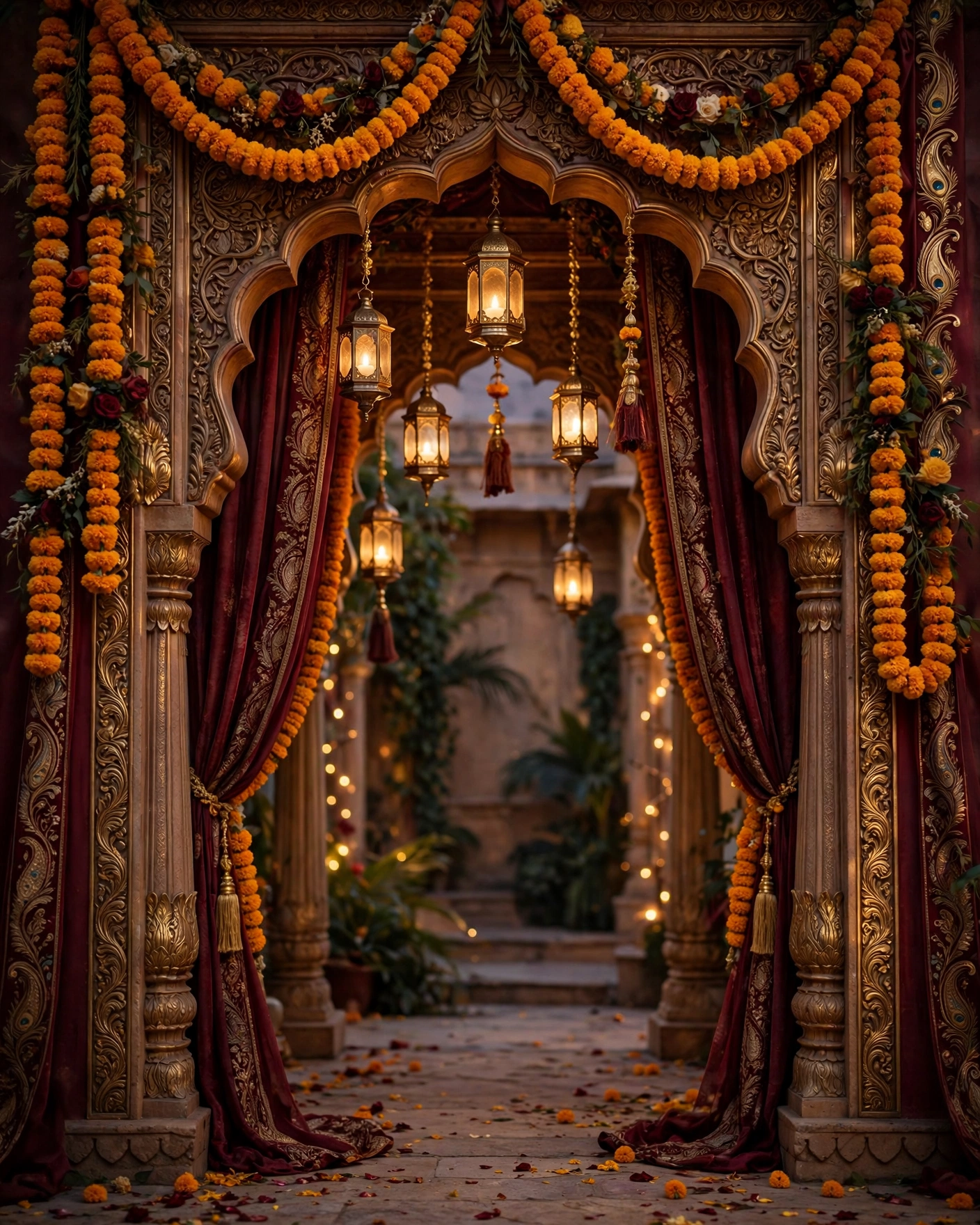
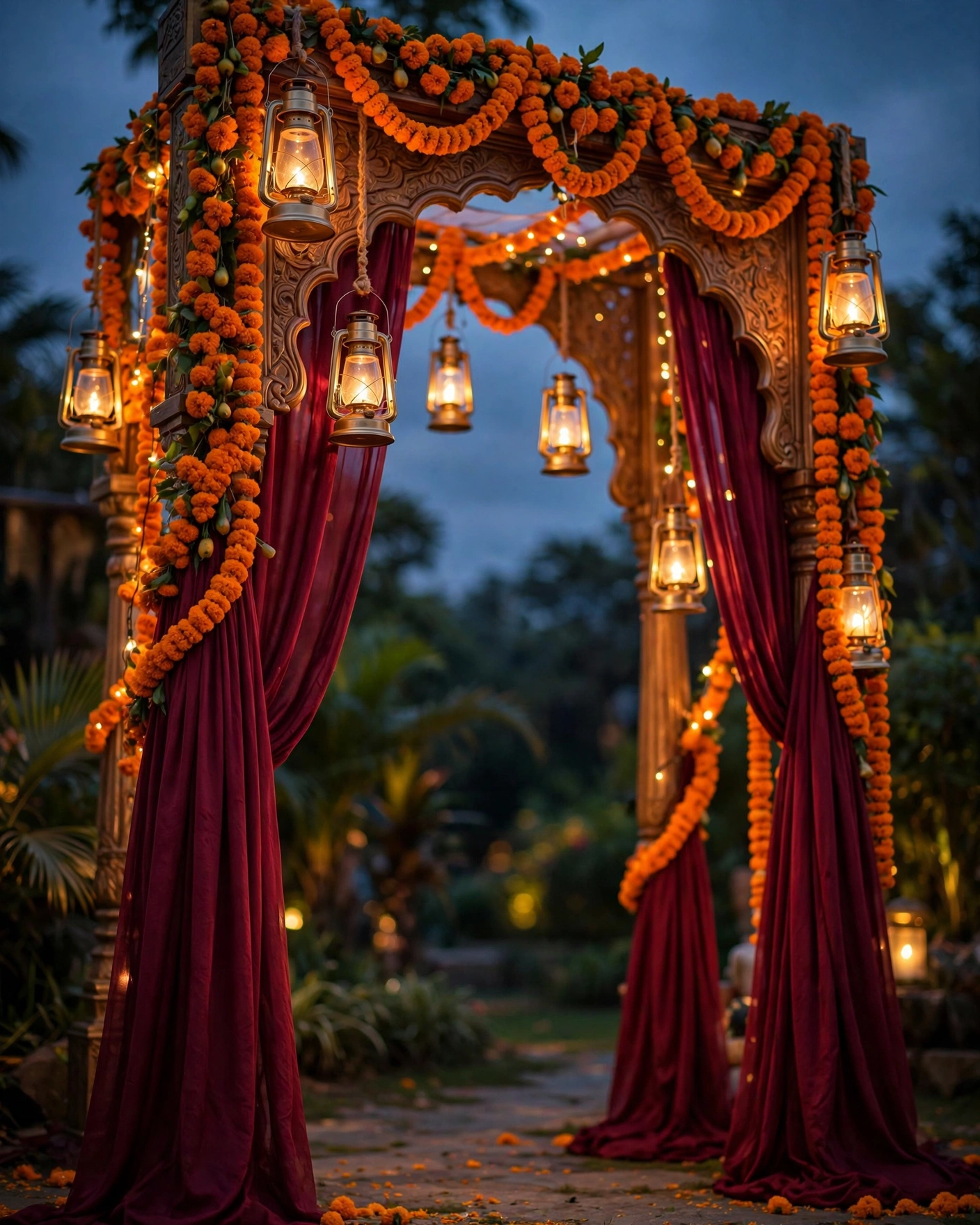
Palace heritage
Stone arches, brass lamps, deep burgundy, and antique gold, with the venue doing half the work. Suits forts and heritage hotels. Tip: a palace already gives you arches and stone, so spend decor money on lighting and flowers, not on covering the walls.
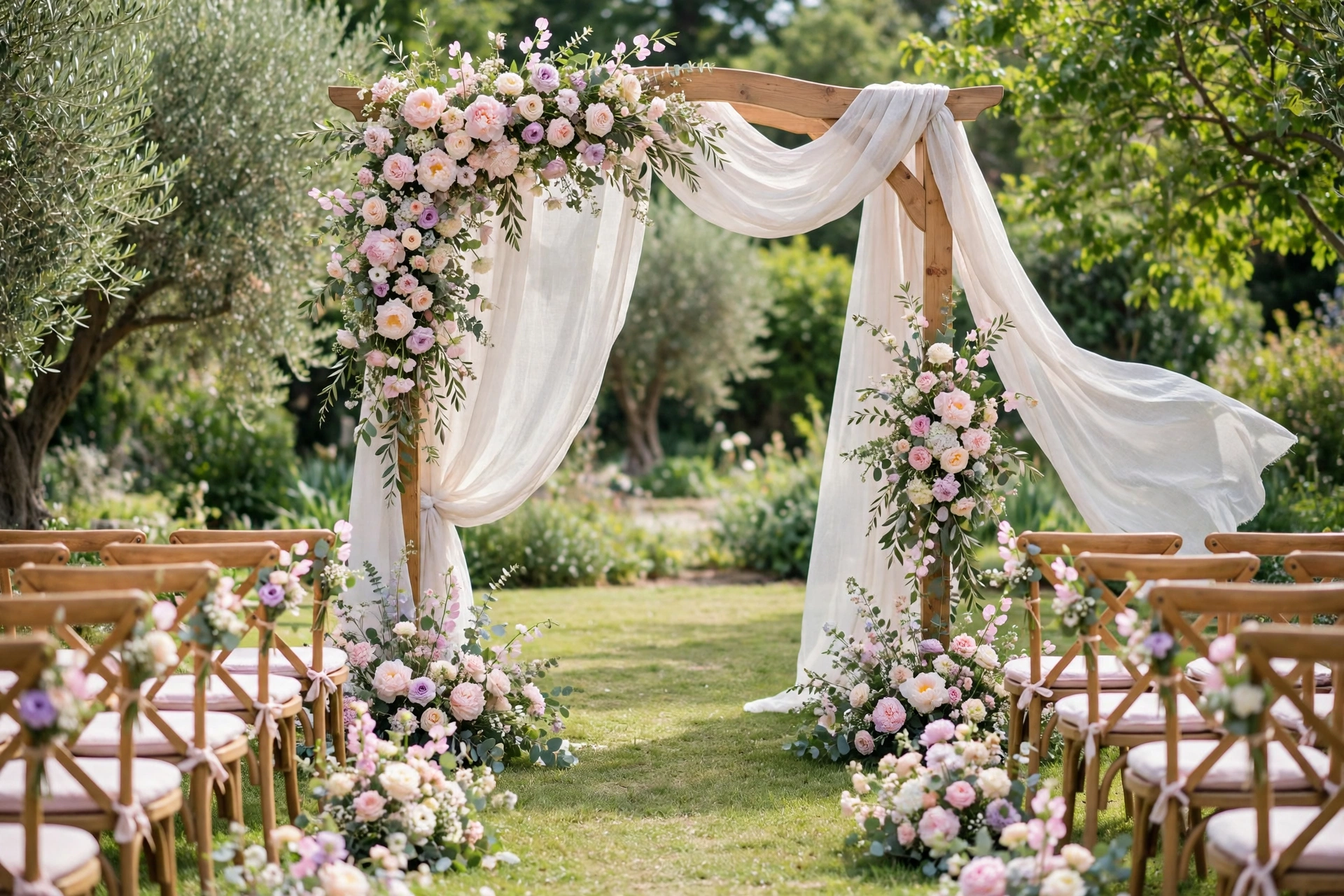
Garden morning
Pastel flowers, light drapes, and daylight, with the ceremony under open sky. Suits spring weddings and outdoor venues. Tip: check the shade at your ceremony hour, since guests remember heat far longer than they remember flowers.
Temple town
Marigolds, diyas, warm gold, and the sound of bells, with tradition leading every choice. Suits temple weddings and families who want the rituals at the centre. Tip: keep the decor simple and let the temple itself carry the grandeur.
Sangeet carnival
Bright colours, live music, dancing, and a celebration that feels like a festival. Suits families who love to perform and friends who love to dance. Tip: give the carnival one quiet corner, so elders and small children have somewhere calm to sit.
Vintage Bollywood
Old film songs, retro posters, black and white photographs, and a sangeet that feels like a premiere. Suits couples who grew up on classic cinema. Tip: pick songs both generations know, so grandparents sing along instead of sitting out.
Rustic courtyard
Earthen pots, handloom fabric, string lights, and food served family style at long tables. Suits home weddings and courtyards. Tip: rustic works when everything is genuinely simple. One plastic chair ruins the whole effect, so check every detail.
Winter evening
Deep colours, warm lighting, shawls, and hot chai, with the celebration glowing against the cold. Suits December and January weddings. Tip: keep guests warm first and decorative second. Cold guests do not admire decor.
Monsoon romance
Rain on leaves, deep green, brass, and the smell of wet earth, with covered walkways and hot food. Suits monsoon weddings and garden venues. Tip: plan the indoor backup as carefully as the outdoor plan, and agree it in advance, not on the day.
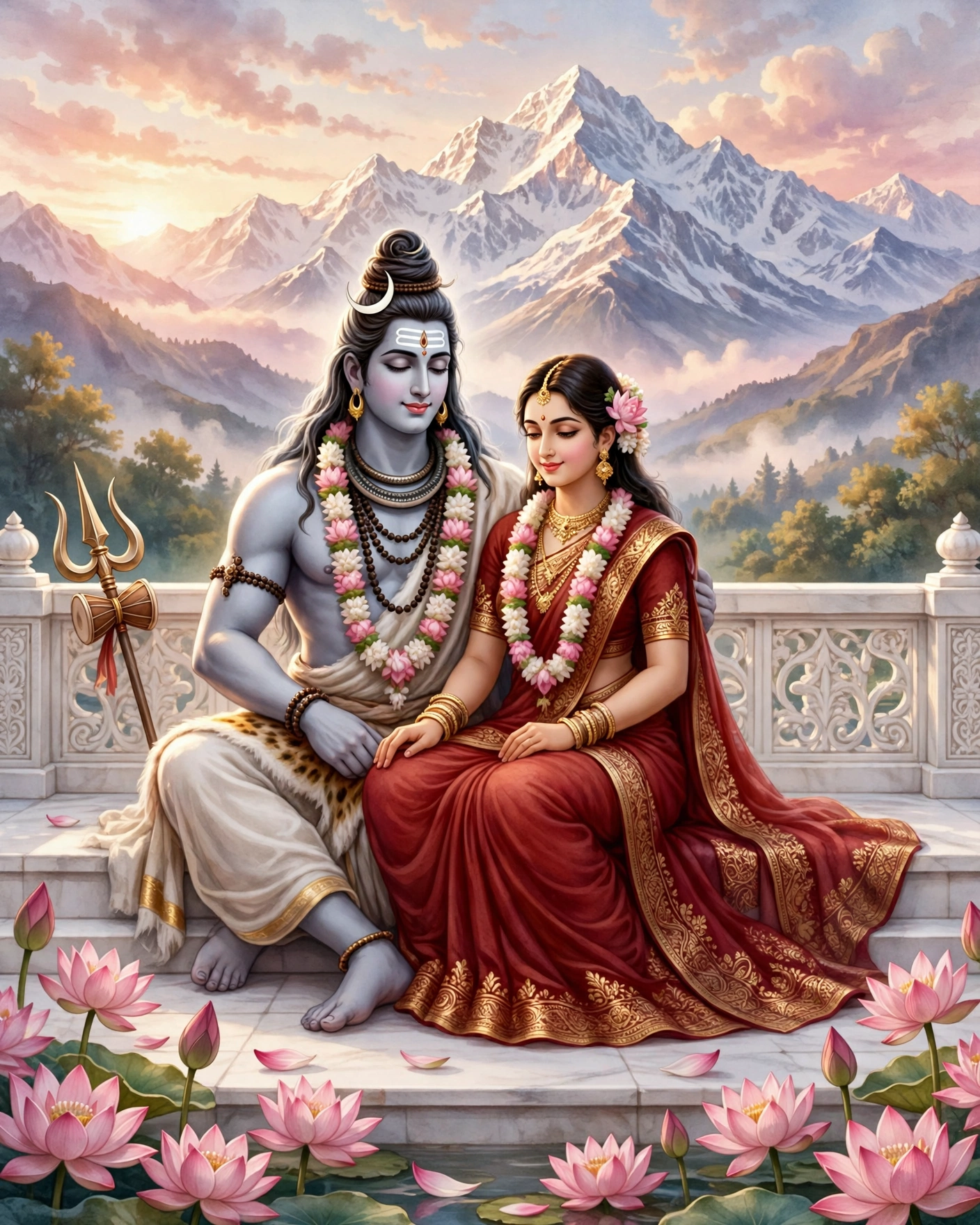
Mountain air
Cool air, pine, wool shawls, and views that need no decoration. Suits hill weddings and small guest lists. Tip: check travel times honestly, since elderly guests may struggle with hill roads and altitude.
Riverside calm
Water, soft light, white drapes, and a slow pace, with the ceremony near the riverbank. Suits backwaters and riverside venues. Tip: keep the sound low and the schedule unhurried.
Art deco city
Geometric patterns, gold lines, and a modern skyline, with the celebration feeling sharp and urban. Suits city hotels and couples who love design. Tip: art deco needs discipline. One pattern, repeated well, beats three patterns competing.
Folk craft
Block prints, mirror work, handloom, and the craft of one region, carried through every detail. Suits couples who want the wedding to honour where they come from. Tip: buy from real artisans where you can, and tell guests the story of the craft on the invitation.
The invitation test
The easiest test is the invitation test. Picture the design on your phone screen and ask whether it feels like your wedding. If the answer is yes at once, the theme is probably right. If you have to explain it, keep looking. Test it on paper first: if the theme looks right on the invitation, it will usually look right at the venue too.
Also check the theme against the people who matter most. Parents, siblings, and close friends will live inside this theme for days, so pick one everyone enjoys.
Before you finalise the theme
- One sentence describing the feeling you want, in your own words
- The venue name and a photo of the space, so colours match honestly
- The dates and order of your ceremonies, so the theme fits every event
- Two or three directions tested against your invitation on your phone
- Parents and siblings consulted, since they will live inside the theme
- The theme written down, so decor, outfits, and invitation follow one idea
Mistakes that make a theme fall apart
The first mistake is choosing a theme that fights the venue. A beach theme in a palace ballroom feels wrong to every guest, however beautiful the pictures were. The second mistake is two themes at once. A royal wedding and a carnival sangeet can share a week, but they need one thread between them, or the week feels like two weddings. The third mistake is deciding late. A theme chosen after decor shopping is decoration, not a theme.
Frequently asked questions
How early should we choose a wedding theme?
Before the invitation is made, and before decor shopping begins. The theme is the thread that ties your venue, your clothes, your decor, and your invitation together, so deciding it early makes every later decision easier.
Can we have different themes for different events?
Yes, if one thread ties them together. A royal wedding with a playful sangeet works when the colours or the motif carry across. Two unrelated themes feel like two weddings, so keep one colour, one flower, or one motif running through the week.
What if our venue already has a strong style?
Let the venue lead. A palace gives you arches and stone, a garden gives you flowers and light, and a beach gives you sky and sea. Choose a theme that uses what the venue already offers, rather than fighting it with decor.
Does a theme have to be expensive?
No. A theme is an idea, not a budget. A courtyard theme with handloom fabric and string lights can cost less than a generic hotel wedding, and feel far more personal. The money goes further when every rupee serves one idea.
How do we know the theme is right?
Preview it on your invitation, with your own names and photo. If it feels like your wedding at once, it is right.
Related reading
- Indian Wedding Planning Checklist: 12 Months to the Wedding Day
- Wedding Invitation Wording: Examples for Every Function
Create your wedding invitation on MyIndiAura, and let the theme be the feeling your guests carry home.
See it on a real invite
Open any of these to see the full invite, then add your own names and preview it free.
Found this useful? Share it with someone planning a celebration.
Share