Wedding Schedule Template for Indian Ceremonies
A wedding schedule turns a week of ceremonies into one clear plan. This template covers the usual Indian ceremonies, in order, with space to adapt it to your family.
The short answer: one plan, shared with everyone
A wedding schedule turns a week of ceremonies into one clear plan. It lists every event in order, with the date, the time, the venue, and one note for guests, so nobody has to ask the same question twice.
The template below covers the ceremonies many families hold, in the usual order. It is a starting point, not a rule. Families differ: some add a mata ki chowki, a cocktail night, or a family dinner, and the order of events varies by region and tradition. Remove the events you do not hold, and keep the format: event, date, time, venue, and one note.
A week of ceremonies, ceremony by ceremony
Day one, mehendi, 4:00 pm to 8:00 pm
Henna, music, and colour, usually two days before the wedding. The bride's henna takes the longest, so start it first, and let guests join in while the songs play. Dress code is often bright and festive. Venue: the bride's home or a hall. Note for guests: henna is provided, so come with clean hands.
Day two, sangeet, 7:00 pm to 10:30 pm
An evening of dance and music, where the two families perform for each other. Keep each performance to three or four minutes, and leave time for open dancing at the end. Venue: a banquet hall. Note for guests: performances start at 7:30 pm, so arrive by 7:00 pm.
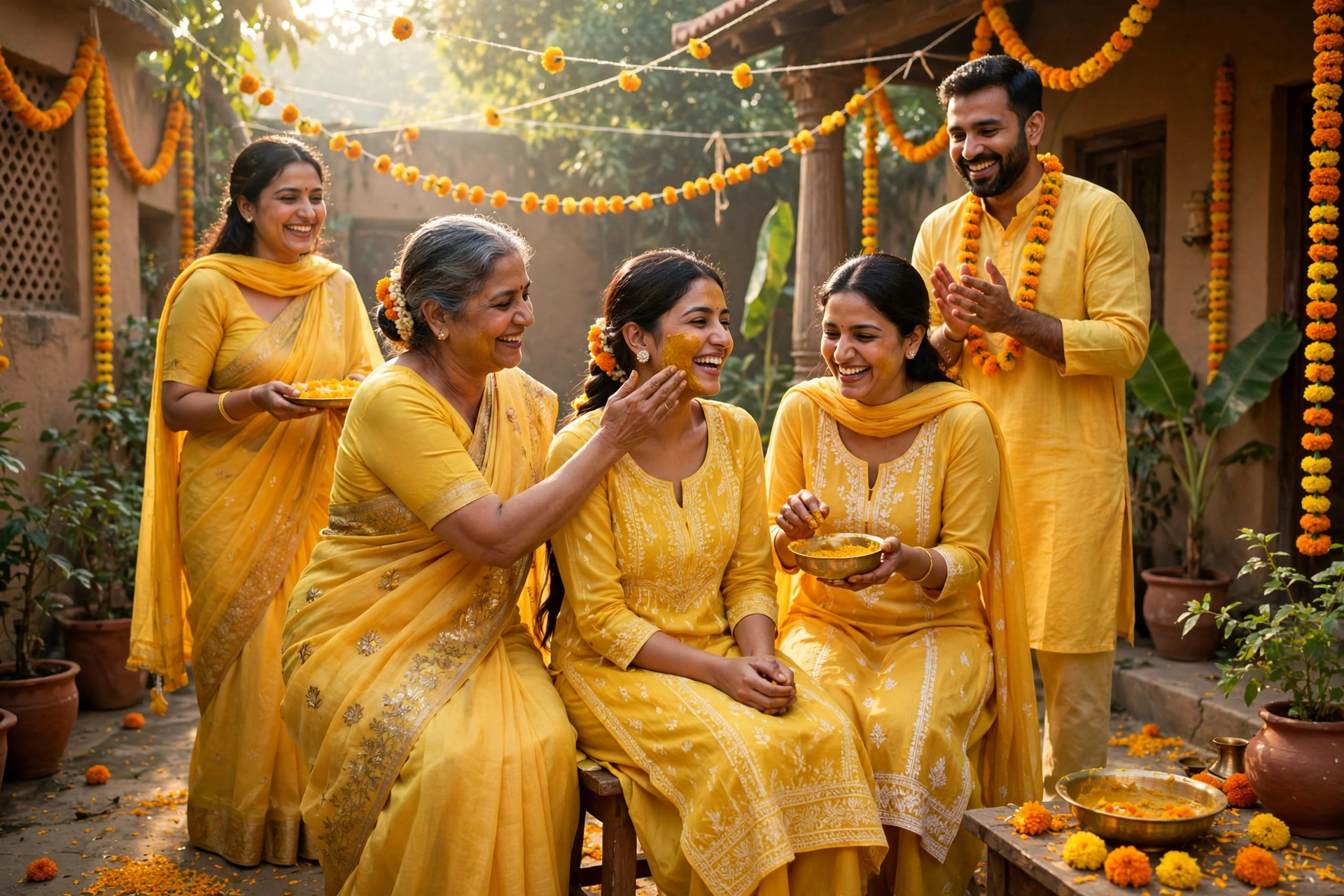
Day three, haldi, 10:00 am to 12:30 pm
A morning ritual with turmeric paste, blessings, and yellow clothes, held on the wedding day or the day before. Keep it short and joyful, with songs and a simple lunch after. Venue: home. Note for guests: wear yellow, and wear something you do not mind getting stained.
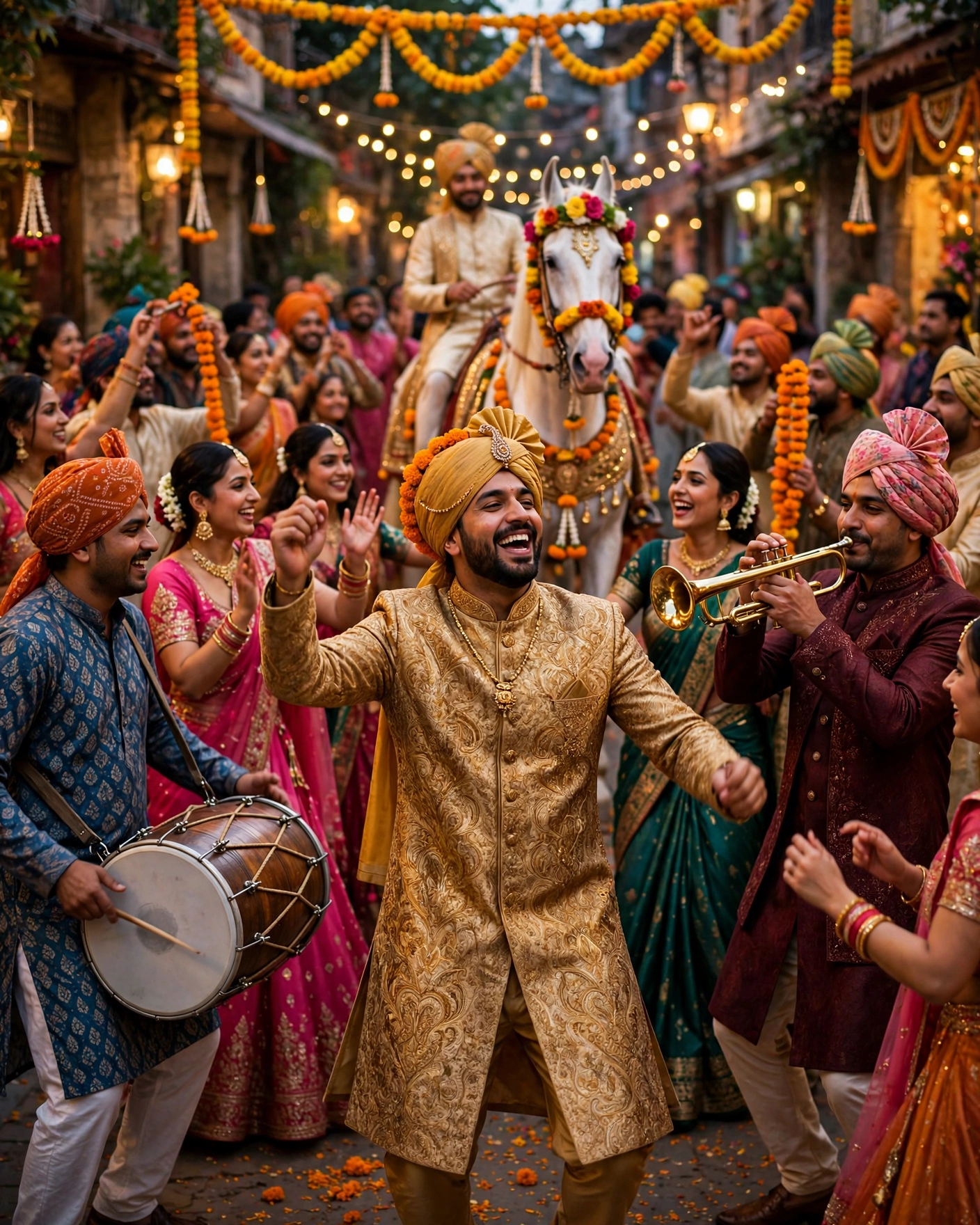
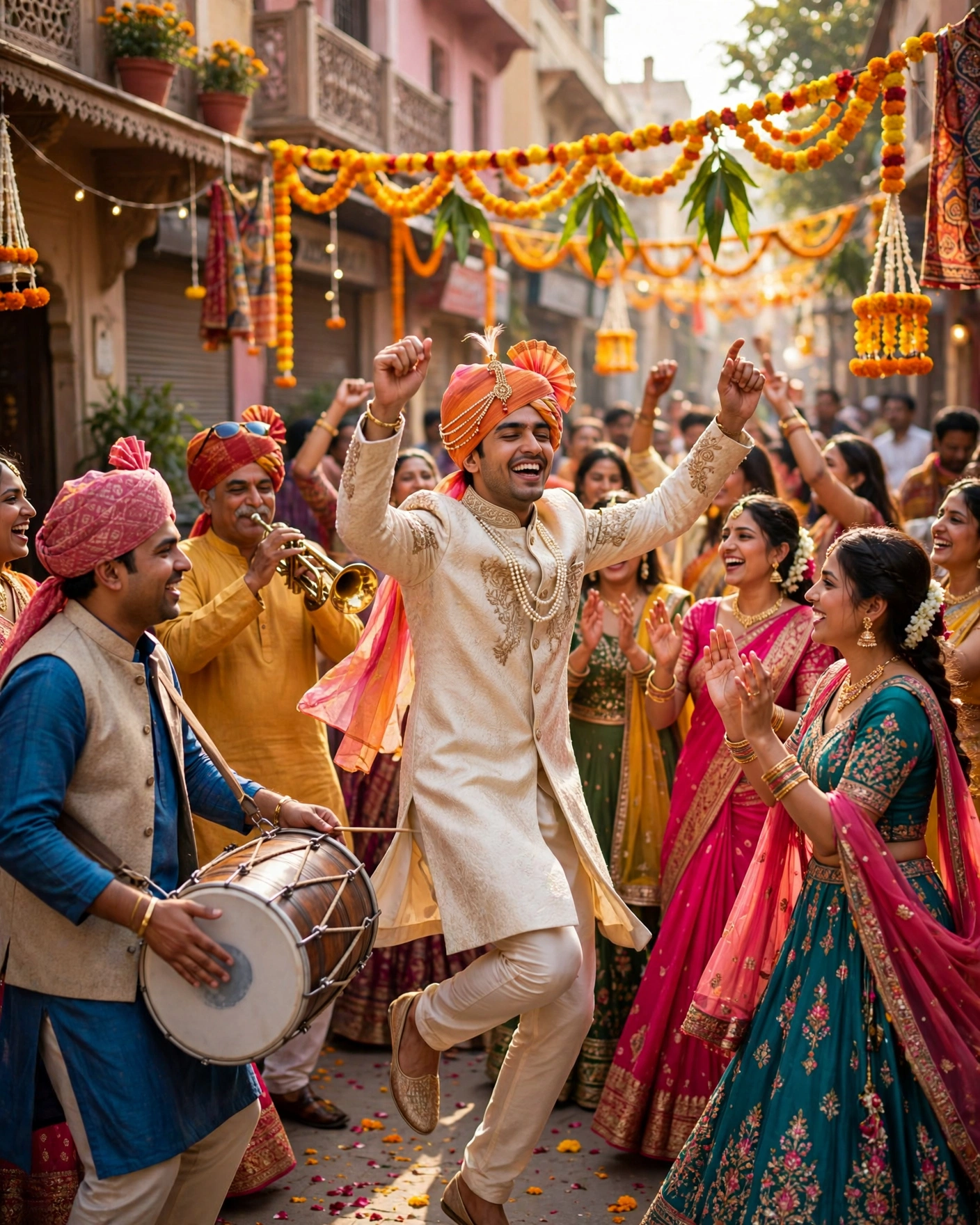
Day three, baraat, 5:00 pm to 6:30 pm
The groom's procession to the venue, with music, dancing, and the welcome at the gate. Allow ninety minutes, because a baraat that starts late still ends at the gate on time. Venue: from the groom's hotel to the wedding venue. Note for guests: dancing shoes, and a bottle of water for the walk.
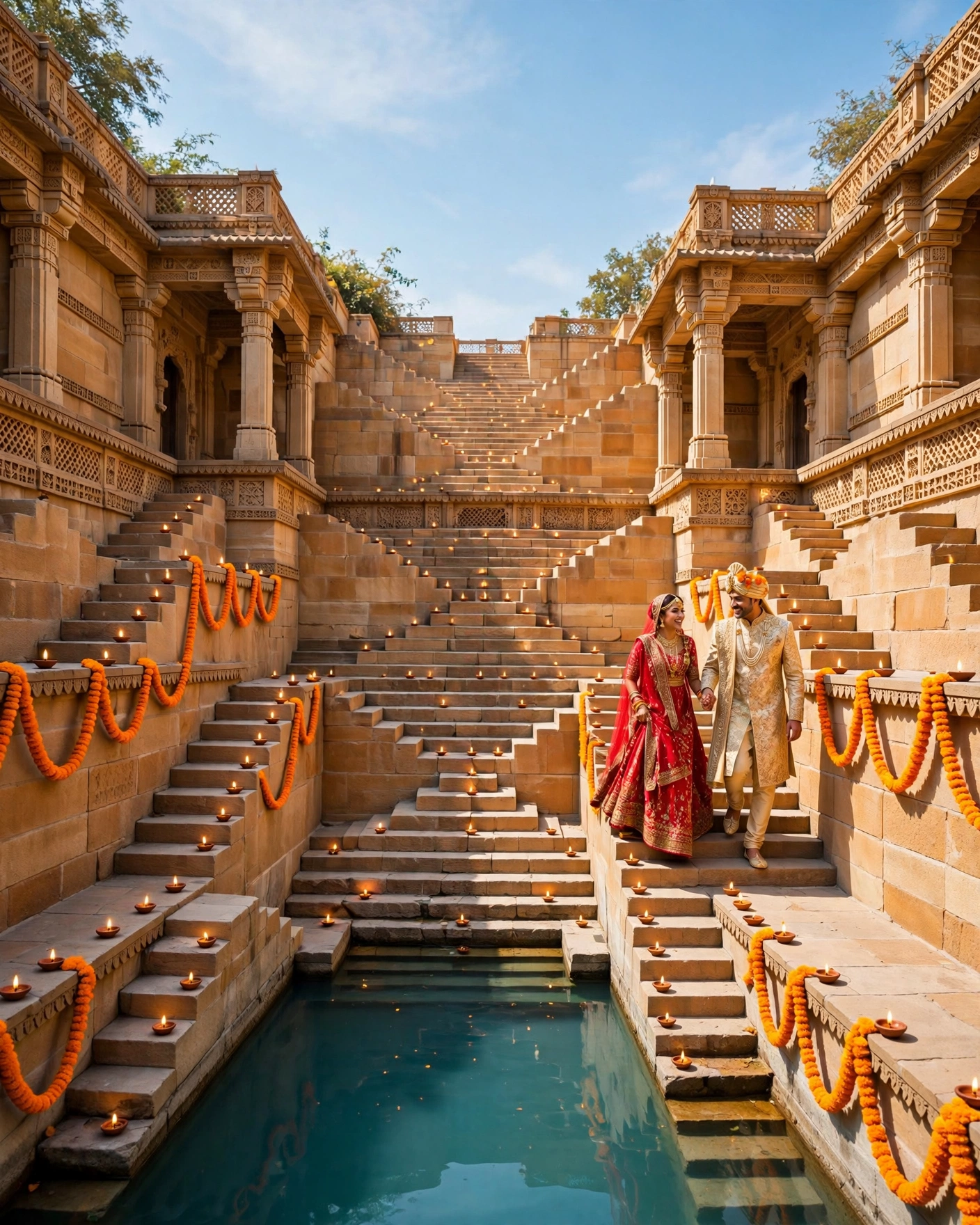
Day three, wedding ceremony, 7:00 pm to 10:00 pm
The main ritual, with pheras or your family's own tradition, at the agreed auspicious time. Seat guests before the muhurat, and let the priest explain the key moments briefly. Venue: the wedding venue. Note for guests: please be seated by 6:45 pm, as the ceremony starts on time.
Day four, reception, 7:00 pm to 10:30 pm
The celebration after the wedding, with dinner, short speeches, and dancing. The flow is covered in our reception guide, linked below. Venue: a banquet hall. Note for guests: the reception has its own venue, so check the address before you leave home.
Copy the template and fill it in
Copy the shape below into your own note, and replace the words in brackets with your own details. Keep one line per event, and keep the same order for every event, so guests can scan it in seconds.
- [Day], [Event], [Time], [Venue], [Dress code or note]
- Monday, Mehendi, 4:00 pm, [Venue], Bright and festive
- Tuesday, Sangeet, 7:00 pm, [Venue], Arrive by 7:00 pm
- Wednesday, Haldi, 10:00 am, Home, Wear yellow
- Wednesday, Baraat, 5:00 pm, [Hotel to venue], Dancing shoes
- Wednesday, Wedding ceremony, 7:00 pm, [Venue], Be seated by 6:45 pm
- Thursday, Reception, 7:00 pm, [Venue], Evening dress
Share the filled template in the invitation, so guests carry it on their phones. When a time changes, update the invitation, not only the family group, so everyone reads the same plan. Print a few copies too, for elders who prefer paper.
Build the schedule backwards
- Fix the ceremony time first. The wedding ceremony time is often set by auspicious timing, so write it down before anything else, and build every other event around it.
- Place haldi that morning. Haldi sits on the wedding day morning, or the day before, with at least two hours between haldi and the baraat, so the couple can rest and dress.
- Place sangeet the evening before. Sangeet belongs the night before haldi, and it should end by 10:30 pm, so the families are fresh for the morning.
- Place mehendi the day before that. Mehendi needs an afternoon, and the bride's henna needs hours to set, so give it a full day before the sangeet.
- Check travel between venues. Work out the drive time between each venue, at the actual hour of travel, and add thirty minutes of buffer after every event.
- Add buffers, then share. A schedule with no buffers fails by noon, because weddings run late. Add the buffers, check the plan with both families, and share it in the invitation.
Everything one schedule must carry
Every event on the schedule needs five things: the event name, the date, the start time, the venue with a full address, and one note for guests. The note is where the dress code, the arrival time, or the travel warning goes. Without the note, guests ask the same questions again and again.
Add a contact number at the bottom of the schedule, for guests with questions on the day. Add a map link for each venue, and a landmark guests can use, because a venue name alone is not enough in a new city.
Common mistakes to avoid
- No buffers between events. Weddings run late, and a schedule with no buffers is a schedule that fails by noon. Add thirty minutes after every event.
- Two schedules in two places. A schedule scattered across chats will be lost. Keep one schedule, in the invitation, and update it there when plans change.
- Missing the venue address. An event name and a time are not enough. Guests need the full address, a landmark, and a map link for every venue.
- Forgetting the dress code. Guests who arrive in the wrong clothes feel awkward all evening. Put the dress code beside the event, not in a separate message.
- Starting the sangeet too late. A sangeet that runs past midnight leaves tired families for the haldi morning. End by 10:30 pm.
- No contact number. Guests with a question on the day need one number to call. Put it at the bottom of the schedule, and make sure the person answers.
Schedule checklist
- Every ceremony listed in order, with date, time, and venue
- Dress code and one guest note beside each event
- Travel time checked between venues, with buffers added
- One contact number on the schedule, for questions on the day
- Schedule shared in the invitation, and printed for elders
Frequently asked questions
How far ahead should we share the wedding schedule?
Share it with the invitation, four to six weeks before the wedding, so outstation guests can plan travel. Send one update through the same invitation if any time changes.
What if our ceremonies are in a different order?
Adjust the template to your family's order and tradition. The shape stays the same, event, date, time, venue, and one note, whatever order your ceremonies follow.
How much buffer time should we add between events?
Add at least thirty minutes after every event, and more when venues are far apart. Check the drive time at the actual hour of travel.
Should the schedule include the reception?
Yes, include every event guests are invited to, including the reception, with its own date, time, and venue. Guests should never have to guess which event a timing belongs to.
What do we do when a time changes on the day?
Update the invitation first, then send one short message to the family group with the new time. Keep one group for live updates, so guests check one place, not five.
Related reading
- Indian Wedding Planning Checklist: 12 Months to the Wedding Day
- Mehendi Night Ideas: Themes, Decor and Timelines That Actually Work
Build the week backwards from the ceremony, and let MyIndiAura carry the schedule your guests follow.
See it on a real invite
Open any of these to see the full invite, then add your own names and preview it free.


Found this useful? Share it with someone planning a celebration.
Share