Creative Wedding Welcome Board Ideas
The welcome board is the first thing guests see at the venue. It should greet them warmly, tell them they are in the right place, and set the mood in one glance.
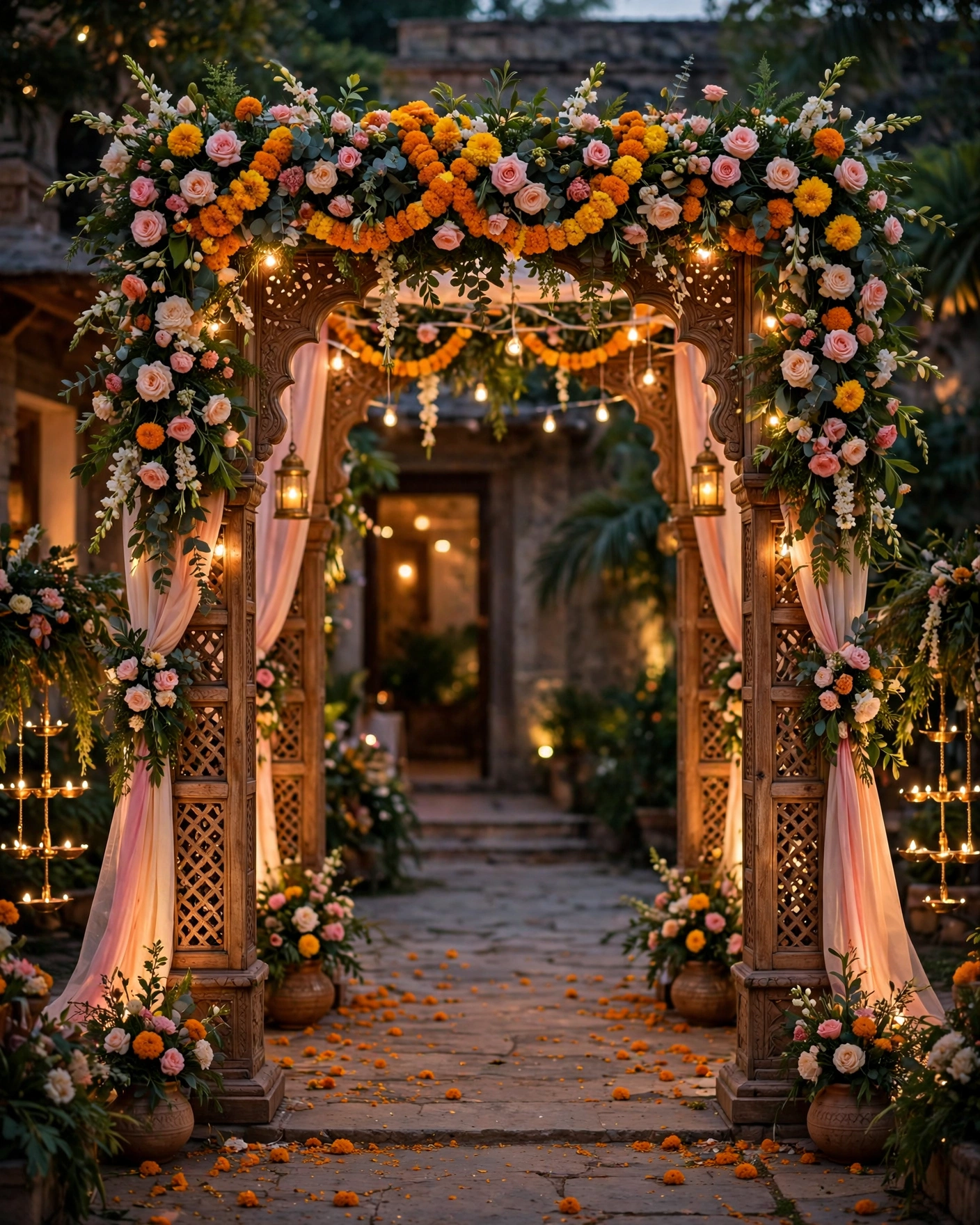
The first thing guests see
The welcome board is the first thing guests see at the venue. It should greet them warmly, tell them they are in the right place, and set the mood in one glance. A good board does that work in seconds, before anyone has to ask a relative where to go.
A welcome board can also carry a photo, a hashtag, a schedule highlight, or a personal message, but its core job has not changed: make guests feel expected and welcome.
Boards work best when they are readable from a distance. Guests arrive in groups, often in low light, and they glance rather than read. Large names, one warm line, and clear event details beat paragraphs of text every time.
Classic boards that warmly welcome
Classic boards suit traditional ceremonies, family weddings, and venues where elders are the first guests to arrive. They are warm, clear, and easy to read.
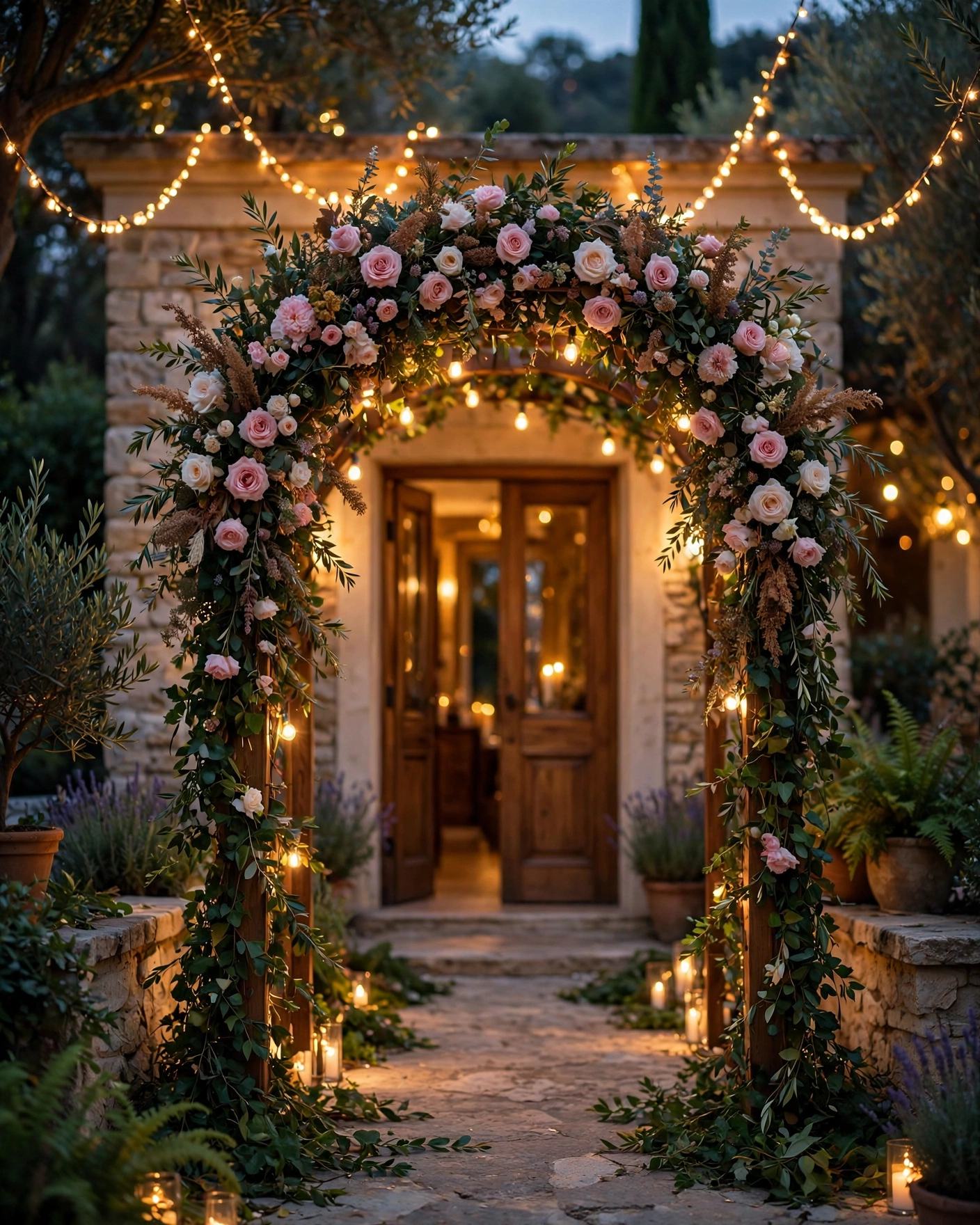
The floral frame board
Fresh flowers frame a simple board carrying the couple's names and the event name. It is classic, fragrant, and photogenic, and it suits morning ceremonies and garden entrances best. Ask the florist to use flowers that hold up in the day's heat.
The brass and marigold board
A board dressed with marigold garlands and small brass diyas at its base feels festive the moment guests arrive. It suits haldi, mehndi, and daytime family ceremonies, where bright colour and warm metal set the mood. Keep the garlands fresh.
The wooden board with hand lettering
A rustic wooden board with hand lettering suits garden and daytime weddings, and it feels personal rather than printed. Choose light wood with dark lettering, so the names read clearly from a few steps away.
The fabric draped board
Draped fabric in the wedding palette softens a plain board and ties it to the rest of the decor. It suits palace halls and evening venues. Keep the drapes simple, so the names stay the focus.
Modern boards for evening venues
Modern boards suit receptions, sangeet nights, and venues with low light, where glow and clean lines read better than flowers alone.
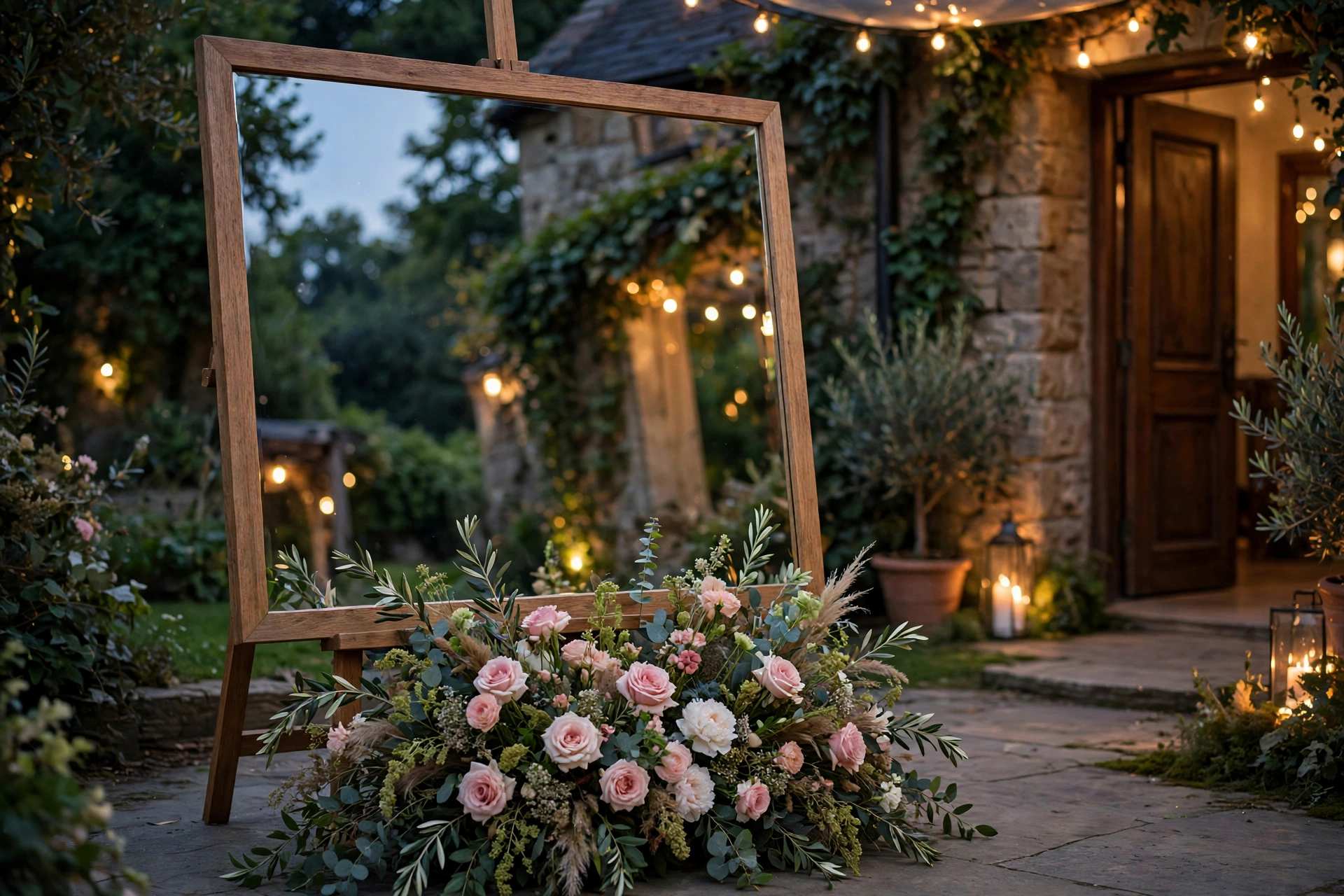
The mirror board
Names written on a mirror with flowers at the base look elegant at evening venues, where the mirror catches the lights around it. Keep the lettering large and the mirror clean, and place it where the lights fall on it.
The digital screen board
A screen showing names, photos, and the schedule is easy to update across events, and it suits multi day weddings with changing ceremonies. Set the text large and the slideshow slow, and keep a printed board as backup if power fails.
The neon name board
A neon sign with the couple's names or a short welcome line glows beautifully at night and photographs well. It suits sangeet and reception entrances, and it works best against a plain dark wall.
The acrylic board with fairy lights
A clear acrylic board with names in white or gold, backed by fairy lights, looks soft and romantic at dusk. It suits modern venues and evening ceremonies, though it needs a dark background behind it.
Personal boards that tell your story
A personal board turns a greeting into a memory. Guests stop, smile, and take a photo, and the board becomes part of the celebration rather than just a sign.
The photo board
A favourite photo of the couple, with names and a short welcome line, greets guests with a face, not just a name. Choose a photo where both faces are clear, and keep the welcome line to one sentence.
The story timeline board
A short timeline of the couple's story, how you met, the proposal, the engagement, in three or four small steps, gives guests something to read while they wait. Keep each step to a few words, so the board reads in seconds.
The hashtag board
A board carrying the wedding hashtag in large letters, with the couple's names above it, reminds guests to tag their photos from the first minute. It works best near the entrance, where everyone passes it on arrival.
The family welcome board
A board that names both families and welcomes guests on behalf of both sides feels generous and warm. It suits large family weddings, and it tells every guest that both families are glad they came.
Boards that help guests find their way
A welcome board can also do practical work. When the venue is large or the ceremonies run across rooms, a board that guides guests saves a dozen questions.
The schedule highlight board
A board showing the evening's key moments, the ceremony time, dinner, and the first dance, helps guests relax and enjoy the night. Show only three or four moments, in large type, so guests can read them at a glance.
The directions board
A small board with arrows and room names, the ceremony hall, the dining area, and the washrooms, helps guests at large venues and farmhouses. Keep the arrows large and the words short, and place the board where the paths split.
Words to put on the board
Keep the text short. Names, a warm line, and the event are enough. Copyable lines to start from:
- Welcome to the wedding of [Name] and [Name]
- We are so glad you are here. Please come in and celebrate with us.
- [Name] weds [Name], [Date]. Welcome, family and friends.
- You are in the right place. The celebration starts here.
- With love, the [Surname] and [Surname] families welcome you.
Match the board to the venue's light. A dark board disappears in a dim entrance, and a light board glares in bright sun. Visit the entrance at the ceremony hour and check readability, and match the board to the invitation, so guests feel continuity from phone to venue.
Placing the board so nobody misses it
Place the board where arriving guests cannot miss it, near the entrance, and angle it toward the path guests actually walk. Photograph it early, before crowds gather around it, and check it again at the ceremony hour, when the light changes. If the board stands outdoors, have a backup plan for rain.
Before you order the board
- The couple's names, spelled exactly as on the invitation
- The event name and date, in large readable lettering
- Palette and motif, matched to the invitation
- Board size and placement, checked at the venue entrance
- Flowers or lights, if the design uses them, ordered in season
- A backup plan for rain, if the board stands outdoors
- The hashtag, if the wedding has one, in large clear letters
Frequently asked questions
How big should a welcome board be?
Big enough to read from a few steps away. Names should be the largest text on the board, and the event name second.
What should a welcome board say?
The couple's names, the event name, the date, and one warm line. That is enough. A hashtag and a schedule highlight can join them, but paragraphs of text will not be read.
Should the board match the invitation?
Yes. When guests have seen the invitation's colours and motif, and then see the same on the board, the celebration feels designed rather than assembled.
Where should the board stand?
At the entrance, angled toward the path guests walk, where arriving guests cannot miss it. Check the light at the ceremony hour, and move it if the light makes it hard to read.
Can one board work for every ceremony?
A digital screen can, because it updates easily. A printed board usually needs one version per ceremony, or a simple design with the couple's names only.
Related reading
- Wedding Invitation Wording: Examples for Every Function
- Indian Wedding Planning Checklist: 12 Months to the Wedding Day
Keep it large, keep it warm, and let your welcome board greet every guest the way MyIndiAura greets your celebration.
See it on a real invite
Open any of these to see the full invite, then add your own names and preview it free.

Found this useful? Share it with someone planning a celebration.
Share