South Indian Wedding Invitation Designs
South Indian weddings are temple bright: silk, jasmine, gold, and the music of nadaswaram. The card should glow like that.
The celebration and the card
South Indian weddings, across Tamil, Telugu, Malayalam, and Kannada traditions, share a love of silk, gold, jasmine, and temple art, while each community keeps its own rituals. The invitation usually covers the muhurtham ceremony and the reception, and sometimes the pre wedding events.
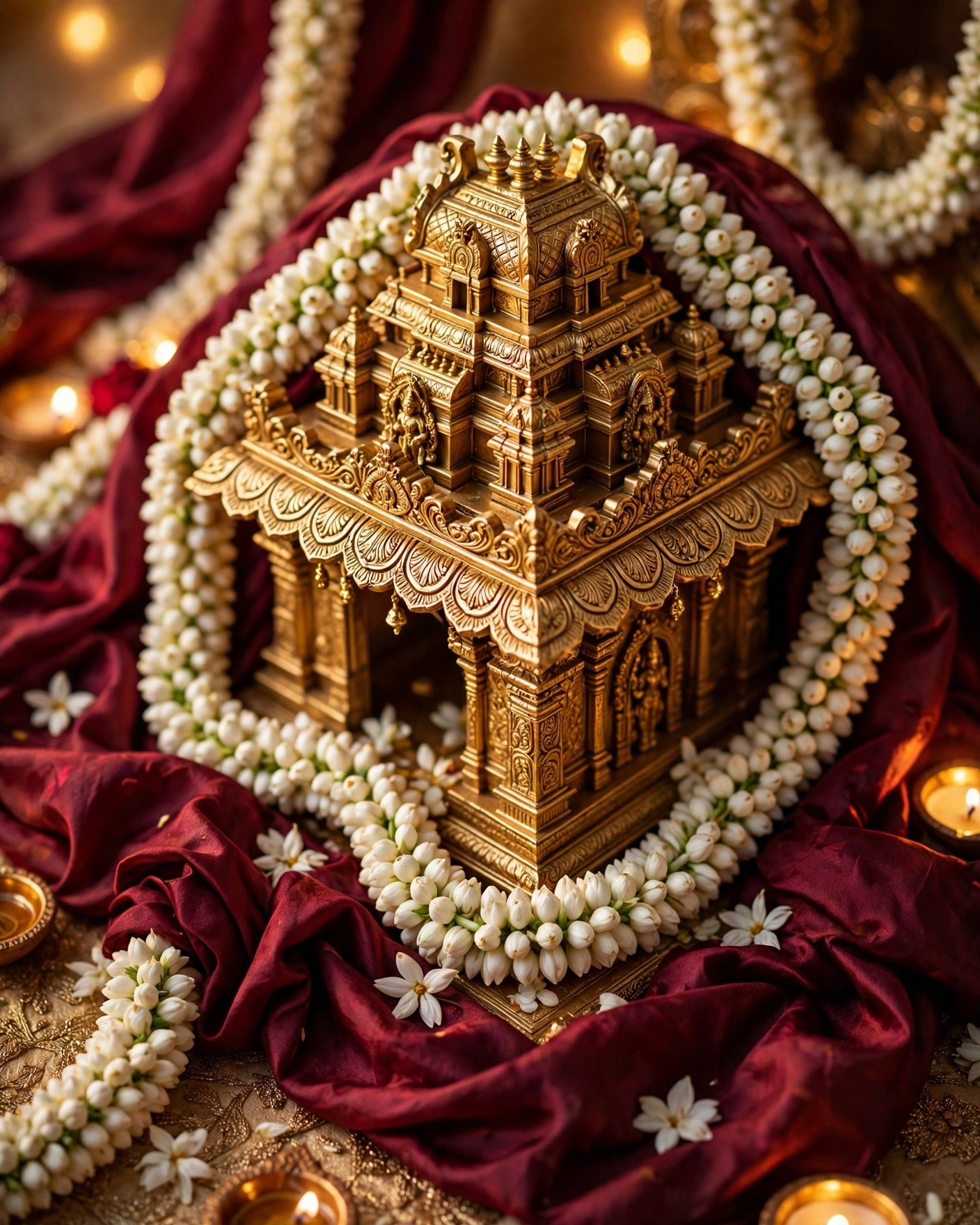
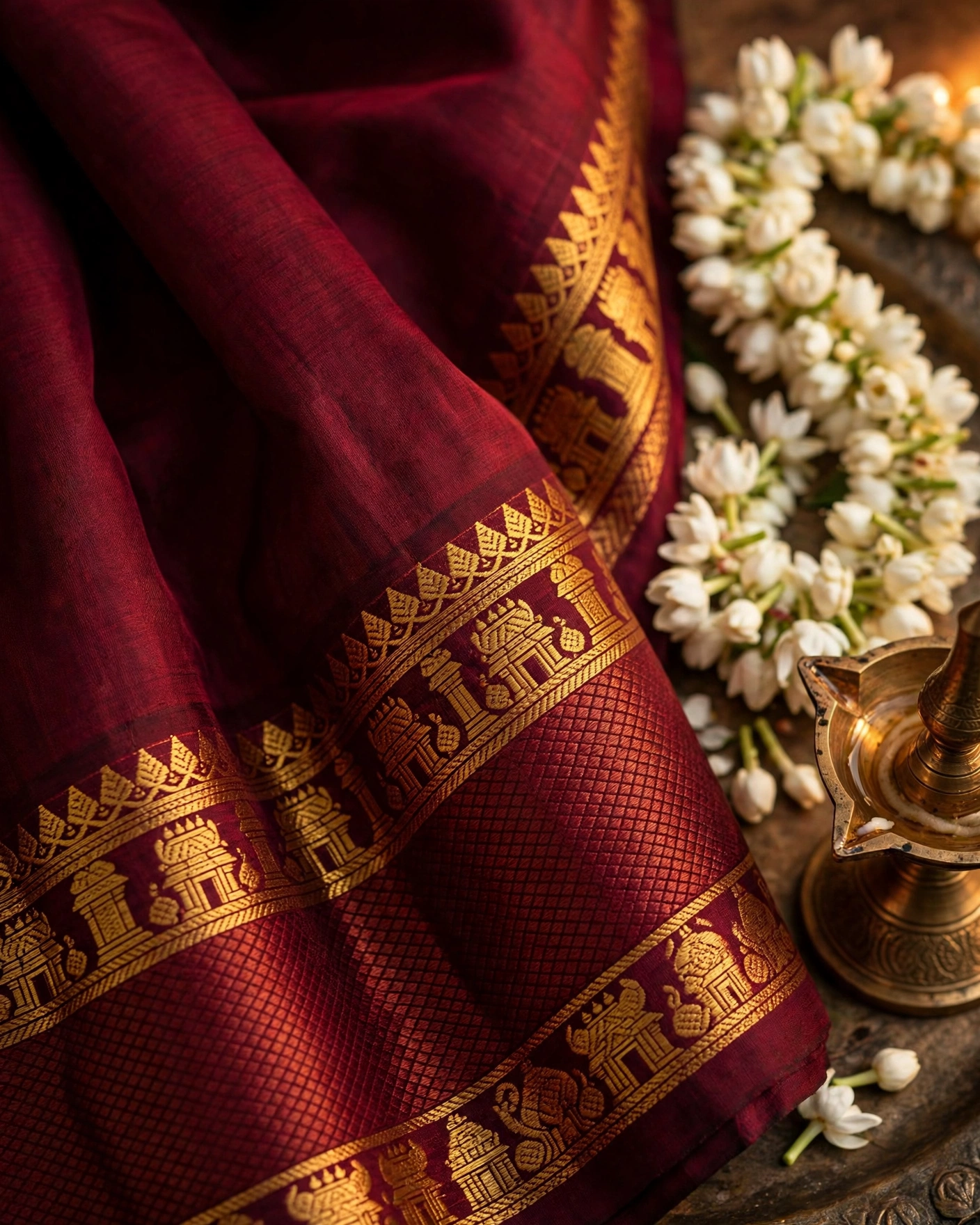
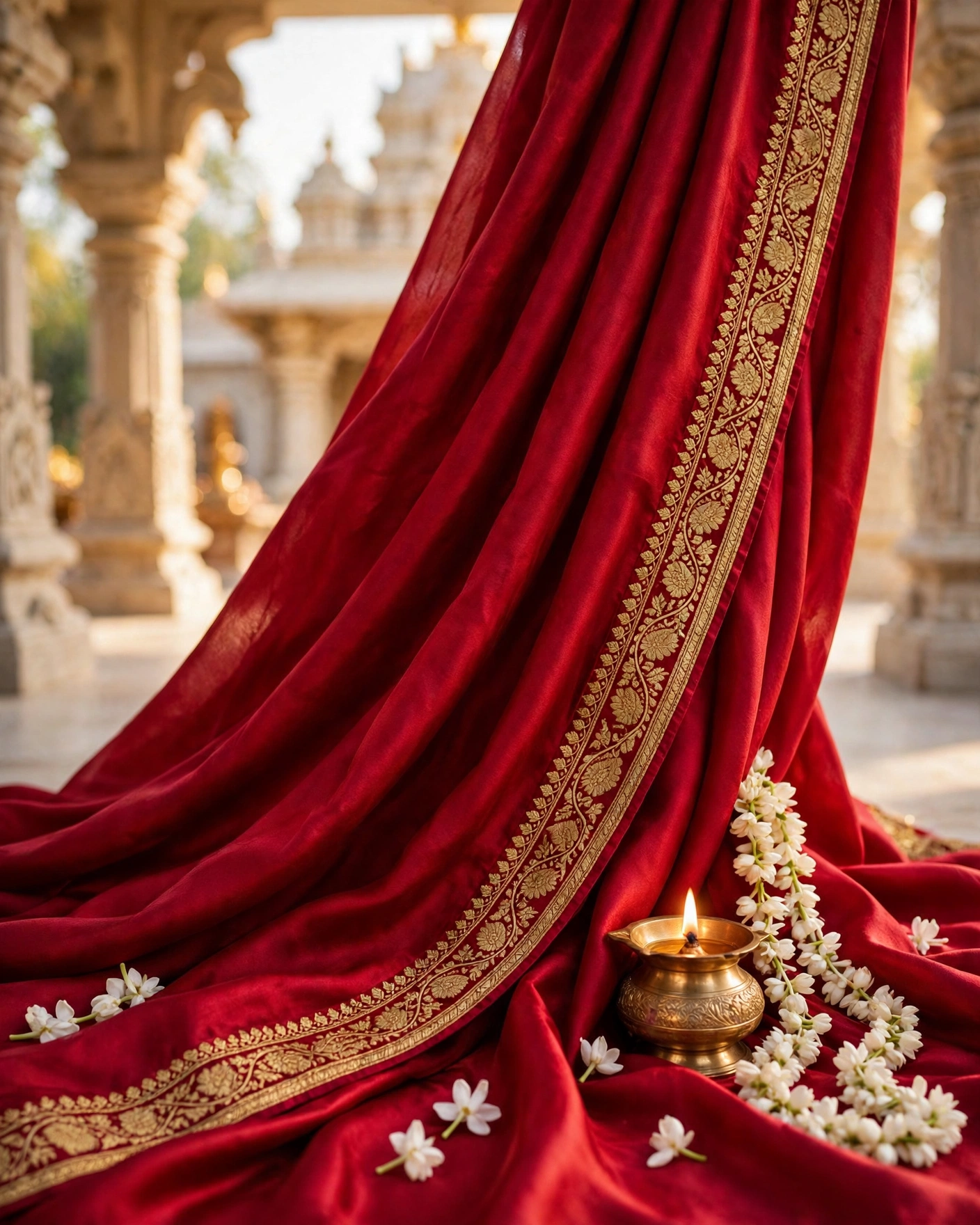
The design language is rich and warm: kanjeevaram silk borders, temple gopuram motifs, jasmine garlands, and gold on deep colours. A card in deep burgundy or green with a gold temple border reads instantly as South Indian and celebratory.
Designs to consider
- A classic card with a temple border in gold.
- A silk inspired card with a kanjeevaram style border.
- A jasmine themed card in ivory and gold with floral garlands.
- A digital card with the muhurtham and reception on separate screens.
Wording examples
- Traditional: With the blessings of our elders and the divine, we invite you to the wedding of our children. Muhurtham and reception details inside.
- Simple: South Indian wedding celebrations. Muhurtham in the morning, reception in the evening. Details inside.
Style and colour
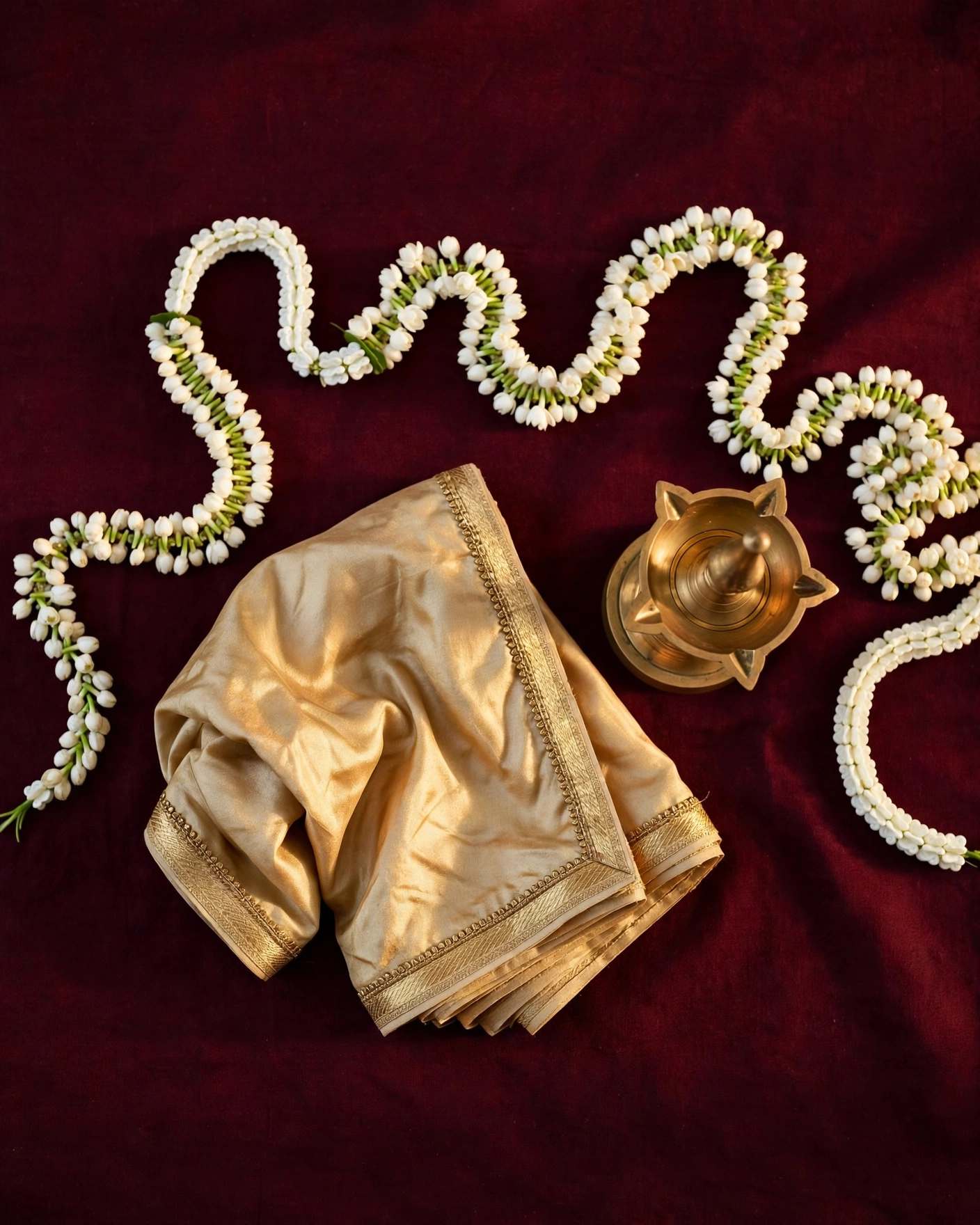
South Indian design suits deep burgundy, green, or maroon with gold, and jasmine as the signature flower. Temple borders should stay elegant rather than dense, so the text remains the hero. If your community has a specific motif, such as a particular temple style, one faithful detail beats many generic ones.
Silk, jasmine, and gold: a South Indian card glows like the temple it honours.
Details to confirm before you send
- Names of the couple and the two families, as elders want them written
- The muhurtham date, time, and venue
- Reception date, start time and the hall's full address
- A contact number for guests
Six more South Indian looks
Banana leaf and kolam
A green banana leaf border with a white kolam in the centre, festive and unmistakably southern.
Temple gopuram
A painted gopuram rising above the names, for a wedding held in a temple hall.
Silk saree border
A zari border inspired by Kanjeevaram silk, in mustard and maroon, along the top and bottom.
Nadaswaram and thavil
A small drawing of the wedding musicians, a sound every South Indian guest associates with the muhurtham.
Jasmine strands
Strings of jasmine falling down one side, fresh and fragrant in feel.
Brass kuthuvilakku
A tall brass lamp with five flames, centred on cream card, for a quiet and auspicious tone.
Sending it in four steps
- Put the muhurtham time first, because South Indian weddings are often early in the morning.
- List the nichayathartham, the reception and the wedding, with venues.
- Write the details in the family's own language with English below.
- Remind guests the night before, since many will need to leave home before dawn.
Many South Indian families hold the reception the evening before the wedding, which surprises guests from the north. A clear schedule on the card, with the reception and the muhurtham on separate lines, avoids confusion.
If the wedding is in a temple, mention whether there is a hall nearby for the feast, and whether guests should arrive at the temple or go straight to the hall.
Wording for a muhurtham card
Southern cards are usually written by the parents, who "solicit your gracious presence with family and friends" for the marriage of their daughter or son. The muhurtham line follows, with the time and the star or month if the family wishes. For friends and colleagues, a shorter English version saying "Please join us for our wedding at sunrise" sits comfortably beneath the formal text, and keeps the card welcoming for everyone.
Keeping the card readable
South Indian cards often carry two scripts, several family names, a shloka and multiple events. Give each its own line and plenty of space, choose one ornament rather than five, and make the muhurtham time the largest text after the couple's names. A crowded card is hard to read on a phone, and the muhurtham is the one detail nobody can afford to miss.
Frequently asked questions
Why are South Indian weddings held so early?
The muhurtham, or auspicious time, is often set in the early morning, sometimes before seven.
Which language should the card be in?
Tamil, Telugu, Kannada or Malayalam for elders, with English for friends and colleagues. Bilingual cards are common.
Is the reception before or after the wedding?
Often the evening before, though many families now hold it after. Make the order clear on the card.
What motifs suit a South Indian card?
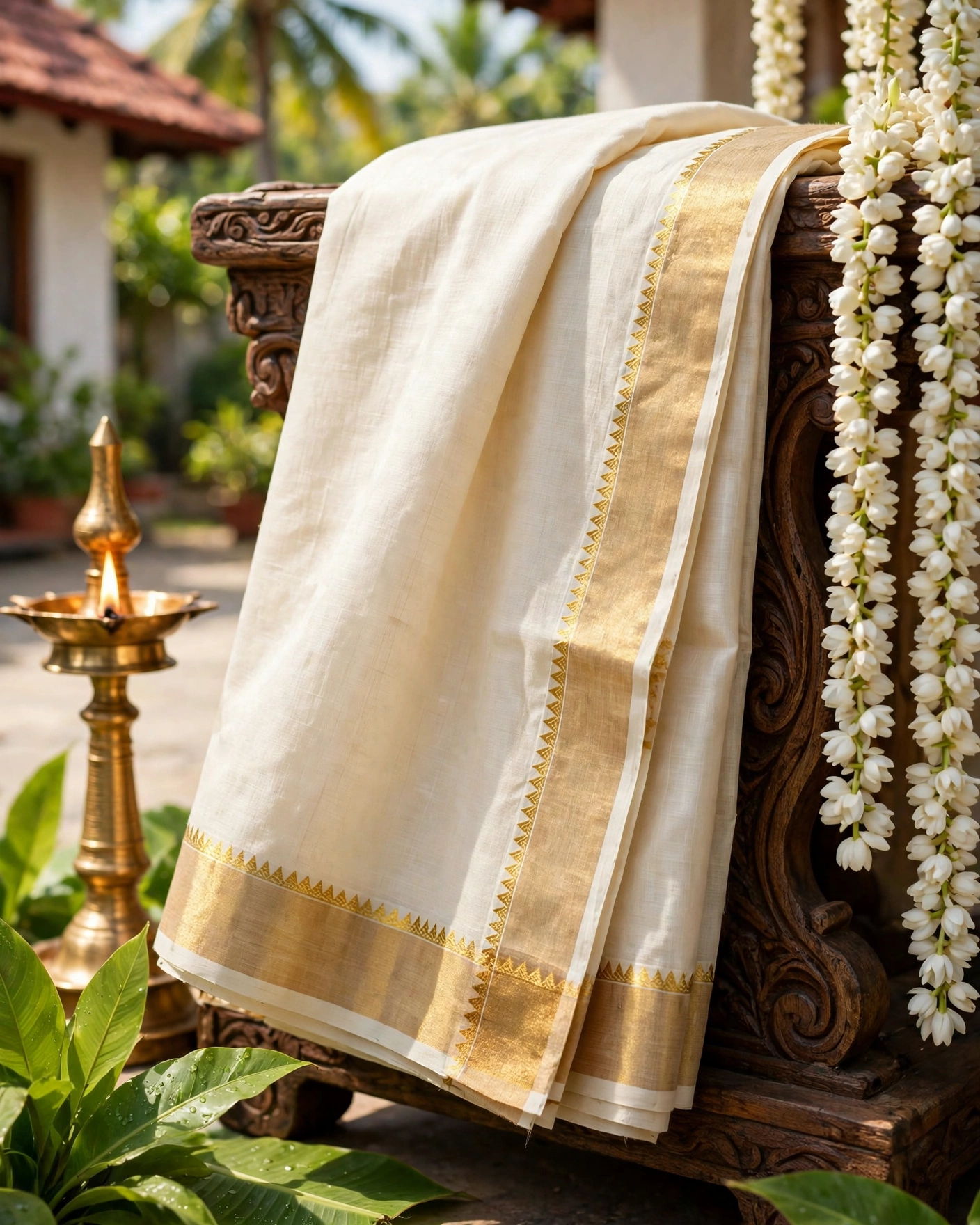
Kolam, banana leaves, temple gopurams, brass lamps, jasmine and silk saree borders.
Related reading
See it on a real invite
Open any of these to see the full invite, then add your own names and preview it free.
Found this useful? Share it with someone planning a celebration.
Share