Sikh Wedding Invitation Card Designs
Sikh wedding invitations put the design first: the Anand Karaj at the heart, the celebrations around it, and a look of grace and dignity.
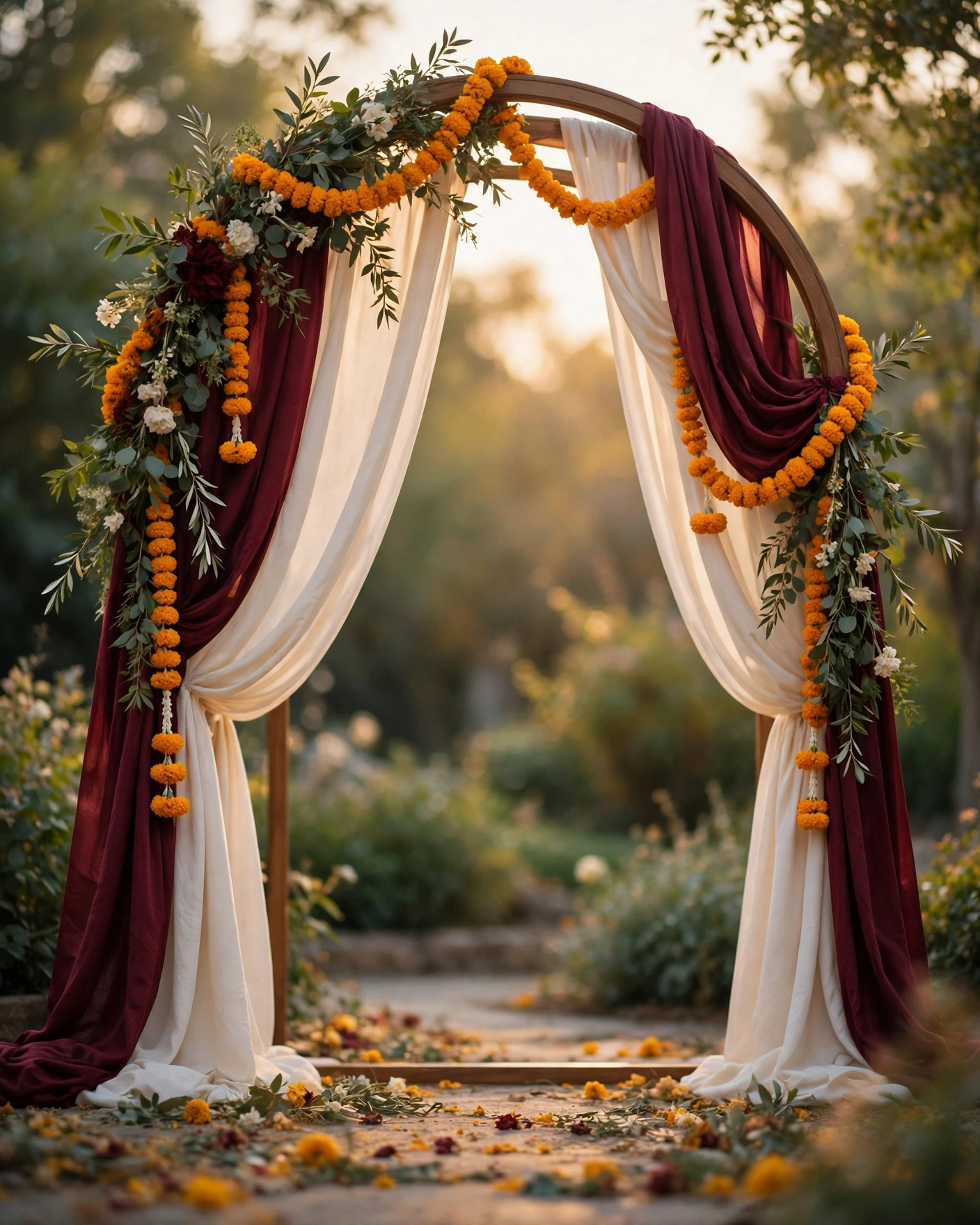
The Anand Karaj at the heart
This article is about invitation design, not about explaining the ceremony itself. The Anand Karaj takes place in the gurdwara, and the invitation's job is to present it beautifully: the date, the time, the gurdwara, and the celebrations that follow, all in one clear card.
Sikh wedding cards often open with the Ik Onkar symbol or a line of blessing, and they favour a dignified palette. The design should feel serene and celebratory at once, with the Anand Karaj given pride of place and the sangeet, haldi, and reception arranged around it.
Four designs for a Sikh wedding
- A classic card opening with Ik Onkar and the Anand Karaj details.
- A full week card covering sangeet, haldi, Anand Karaj, and reception.
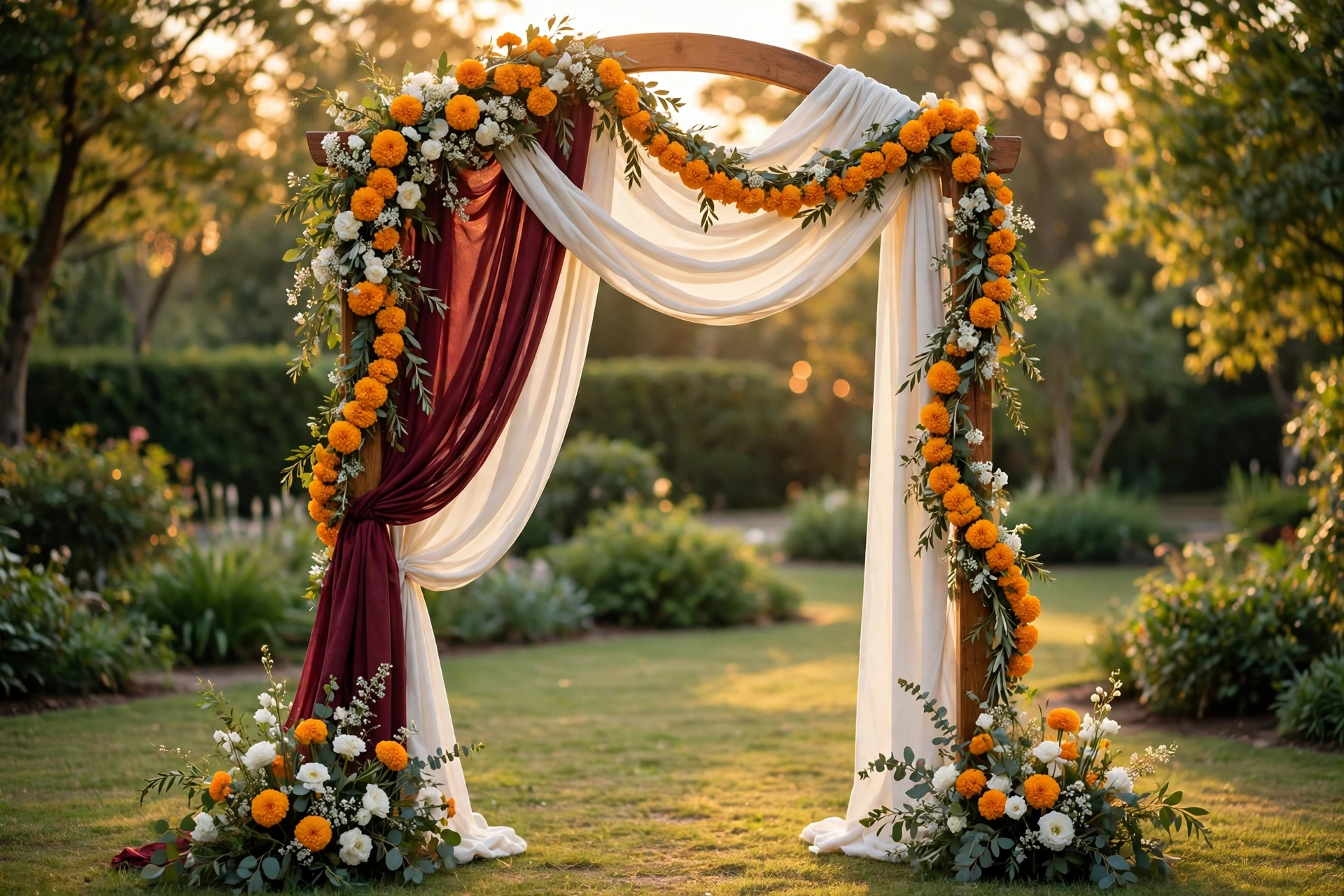
- A minimal card in ivory and gold with a single arch motif.
- A digital card with the gurdwara and reception venues on separate screens.
Wording examples
- Graceful: With the blessings of Waheguru, we invite you to the Anand Karaj of our children, followed by lunch and celebrations.
- Simple: Anand Karaj and wedding celebrations. Gurdwara ceremony in the morning, reception in the evening. Details inside.
The graceful version suits the classic card. The simple version suits a message carrying the link, where guests need the shape of the day at a glance: gurdwara in the morning, reception in the evening.
Design notes: grace from restraint
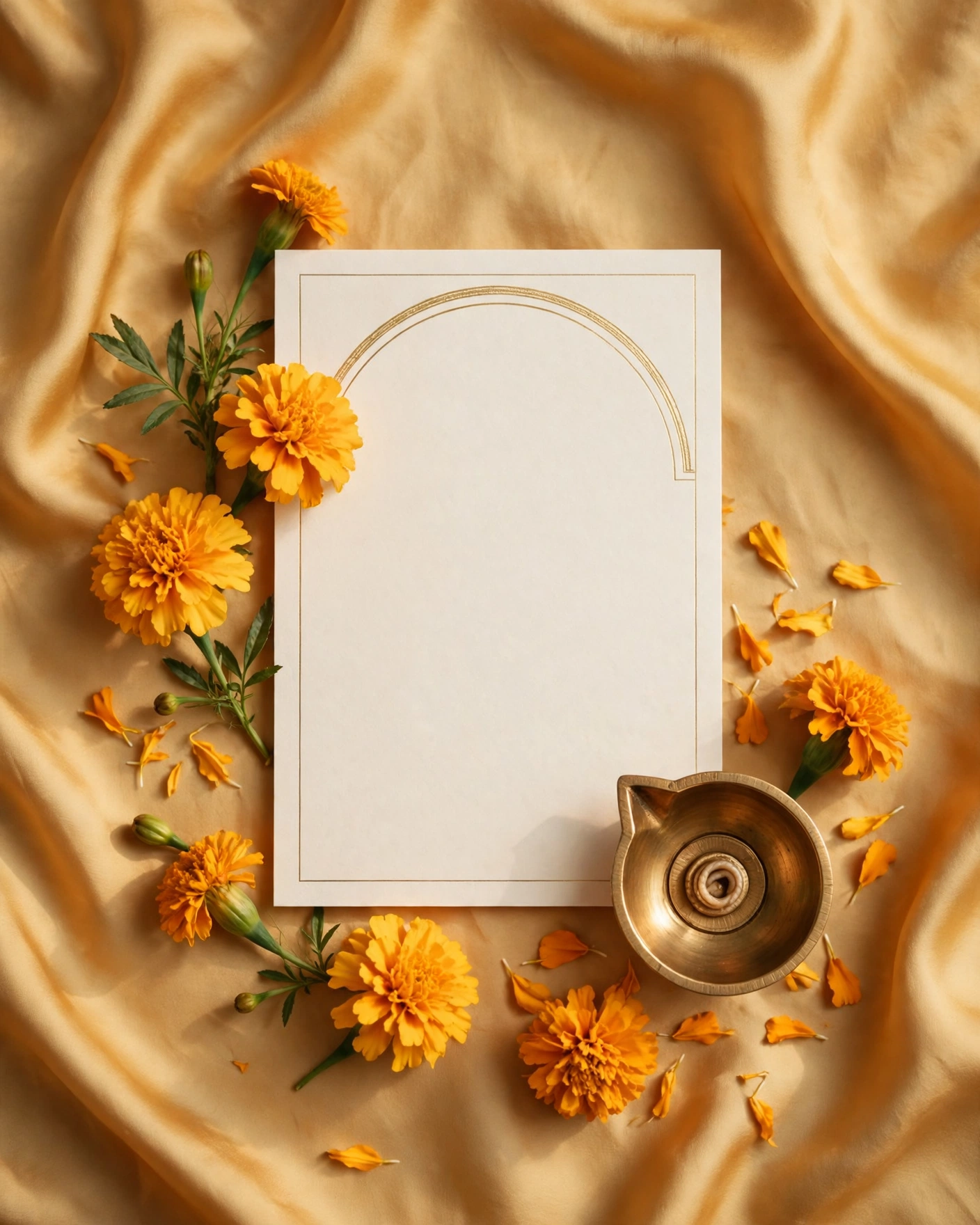
Sikh wedding design suits deep burgundy, ivory, and gold, with arch or floral motifs and a calm, spacious layout. Keep religious symbols respectful and correctly drawn, and keep the Anand Karaj details in the largest type after the couple's names. Avoid loud party graphics on the ceremony card itself; save the brighter treatment for the sangeet screen.
A Sikh wedding card earns its grace from restraint: one arch, one blessing, and the Anand Karaj at the heart.
Details to check and sharing
- The couple's names, checked letter by letter with each family
- The Anand Karaj date, time, and gurdwara address
- Reception date, start time and the hall's full address
- A contact number for guests
Six more ideas for an Anand Karaj card
Khanda in gold
A small gold khanda centred above the names, with ample white space around it. Respectful and clear.
Gurdwara silhouette
A soft outline of the gurdwara where the Anand Karaj will be held, drawn in a single colour.
Ek Onkar opening
The card opens with Ik Onkar at the top, followed by the details in calm, formal English or Punjabi.
Saffron and navy
Kesri and deep navy, the colours many families associate with the Nishan Sahib, used sparingly on ivory.
Laavan in four lines
Four short lines on the back, one for each laav, for families who want guests to understand the ceremony.
Langar note
A small illustration of a langar hall, with a line inviting guests to stay for the meal after the ceremony.
Sending it in four steps
- Confirm the gurdwara's timings, because the Anand Karaj is usually held in the morning.
- Add a gentle note about head coverings and removing shoes for guests who are new to a gurdwara.
- Send the card with the milni time if you want relatives present for it.
- Share the reception details separately or in the same link, clearly marked.
Guests from other faiths often worry about getting the etiquette wrong, and a single respectful line on the card about covering the head puts everyone at ease and keeps the morning calm.
For families where many guests live abroad, add the gurdwara's full address with a map pin, since visitors may be unfamiliar with the neighbourhood.
Frequently asked questions
What time is a Sikh wedding usually held?
The Anand Karaj is traditionally a morning ceremony, often finishing before noon, followed by langar.
Should guests cover their heads?
Yes. All guests cover their heads inside the gurdwara, and many families mention it on the invitation.
Can the card include a quote from Gurbani?
Many families include a short line. Keep it accurate and treat the printed card with care, or use a digital card.
What is the milni, and should it be on the card?
The milni is the meeting of the two families before the ceremony. List it if you want relatives there in time.
Related reading
- Anand Karaj Explained: The Sikh Wedding Ceremony, Step by Step
- Punjabi Wedding Invitation Card Designs
- Wedding Invitation Wording: Examples for Every Function
Create your Sikh wedding invitation on MyIndiAura, and keep the Anand Karaj at the heart of the card.
See it on a real invite
Open any of these to see the full invite, then add your own names and preview it free.

Found this useful? Share it with someone planning a celebration.
Share