Engagement vs Ring Ceremony: Meaning, Traditions and Differences
Engagement vs ring ceremony: what each word means, how families actually celebrate, and how to name your own function.
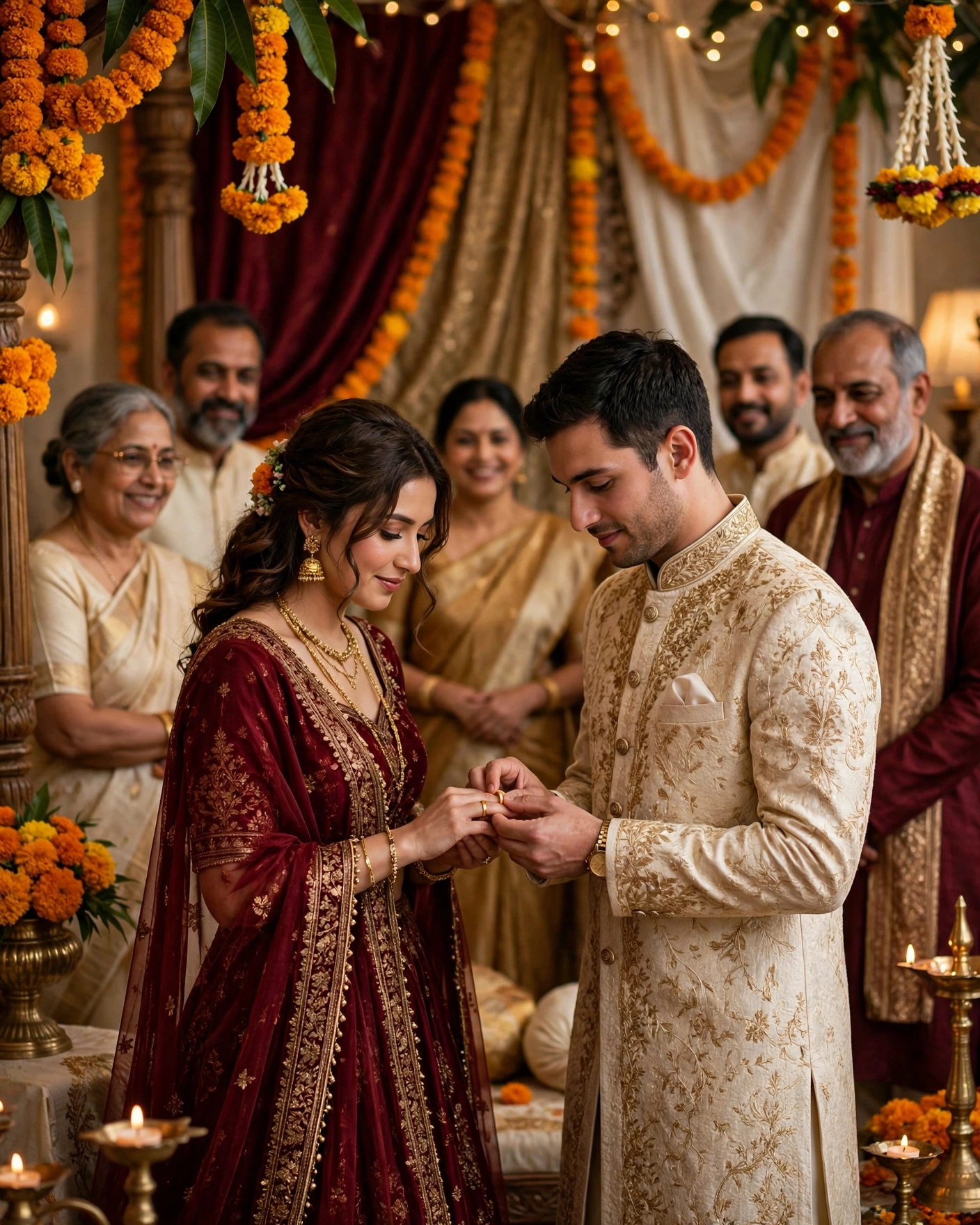
Two words, sometimes one evening, and families use them differently
Ask ten Indian families what an engagement is and what a ring ceremony is, and you will get ten slightly different answers. In some families the two are the same evening. In others they are two separate functions, weeks apart. In still others, the ring ceremony is the engagement, and the word engagement is never used at all.
This confusion is normal, and it is not a problem, until the invitation is printed. Once the card says "engagement" or "ring ceremony", guests arrive with expectations about what will happen, who will be there, and how formal it will be. This article untangles the two words, shows how families actually use them, and helps you name your own celebration so nobody is confused.
What each word means
An engagement is the formal agreement between two families that a marriage will take place. Traditionally, it is the moment the families meet, exchange gifts, and bless the match, often with a small ceremony and a priest. The emphasis is on the families and the agreement, not on the couple alone. In many families, the engagement is the bigger and more formal of the two, with elders, relatives, and sometimes a hundred guests or more.
A ring ceremony is the moment the couple exchange rings. It is the most visible and most photographed part of the celebration, and in many families it is the heart of the evening. The emphasis is on the couple and the rings, and the ceremony itself is short, often a few minutes between the families' blessings and the dinner.
The two overlap because the ring exchange often happens during the engagement. When a family says "our engagement is on Saturday", the ring ceremony is usually part of that evening. When a family says "our ring ceremony is on Saturday", they often mean the same evening, described by its most memorable moment.
The difference, side by side
The engagement is about the families agreeing. The ring ceremony is about the couple exchanging rings. The engagement can happen without rings, in a simple meeting with blessings and gifts. The ring ceremony cannot happen without the rings, and it needs the couple present and ready.
The engagement is usually the more formal function, with a priest, rituals, and elders leading. The ring ceremony is usually the more celebratory part, with music, photographs, and applause. The engagement guest list is often wider, including distant relatives and family friends. The ring ceremony guest list can be smaller, because the moment itself is intimate even when the party is large.
Neither word is more correct than the other. The right word is the one your family uses, and the one your guests will understand. When in doubt, ask the elders in both families what they call it, and use their word on the invitation.
How families actually celebrate
Engagement only
Some families hold an engagement with blessings, gifts, and a meal, and exchange rings later, sometimes on the wedding day itself. This suits families who want a simple, formal occasion without the pressure of a staged ring moment.
Ring ceremony only
Some families skip a formal engagement and go straight to a ring ceremony, often with a party around it. This suits couples who are already engaged in the modern sense, who have met, decided, and told their families, and who want one joyful evening to mark it.
A combined celebration
Many families combine the two into one evening: the engagement rituals first, the ring exchange in the middle, and dinner and music after. This is the most common pattern, and it suits families who want one function rather than two.
Two separate functions
Some families hold the engagement first, a formal family occasion, and the ring ceremony weeks later as a larger party with friends. This suits families where the elders want a traditional engagement and the couple want a modern celebration, because each gets its own evening.
Regional forms with their own names
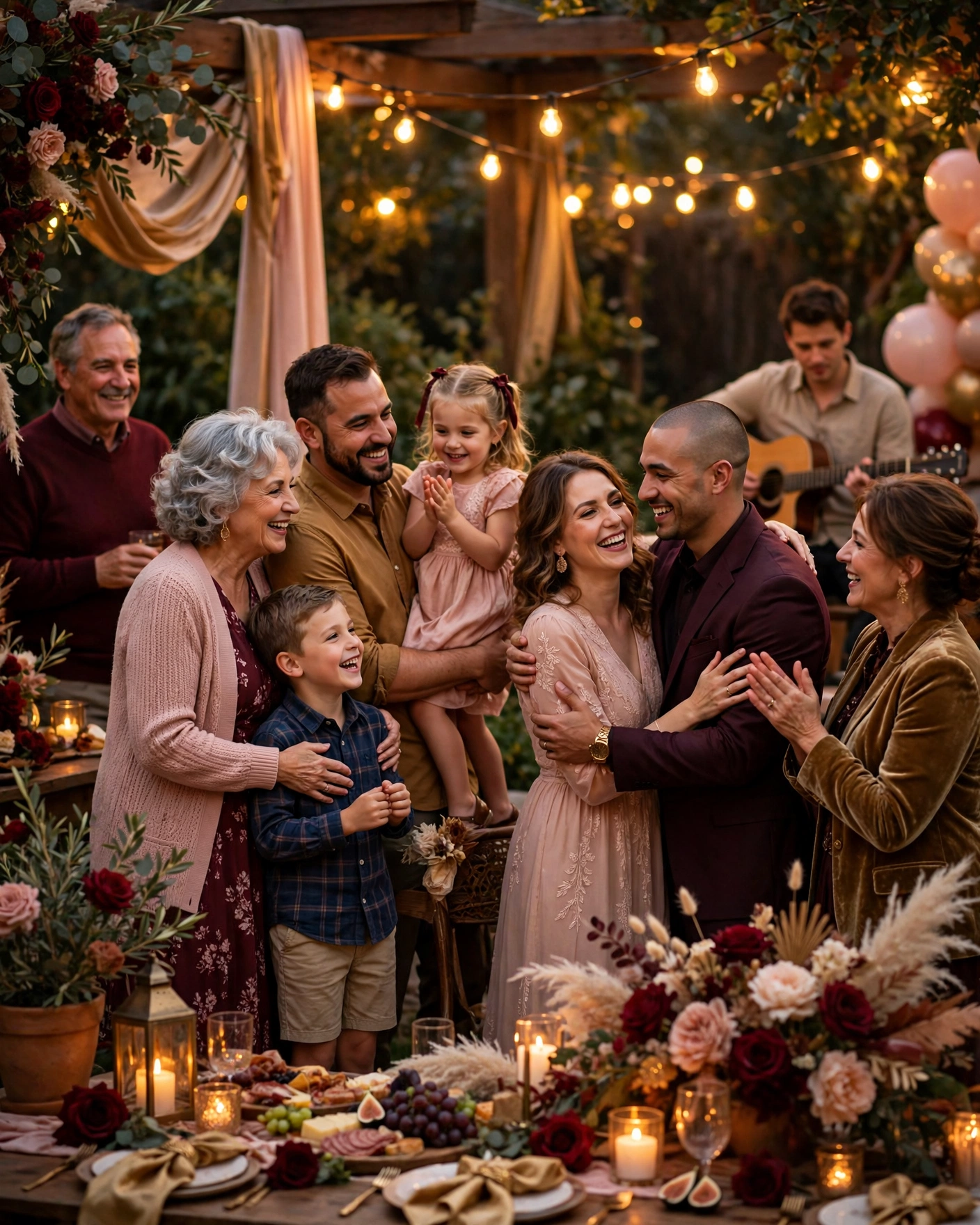
Different regions and communities have their own names for these moments: sagai, nisbat, vishesh, or a name in the family's own language. These names carry meanings that "engagement" and "ring ceremony" do not, and they matter to the families who use them. When the ceremony has a regional name, use it on the invitation alongside the English words, so every guest understands. Customs vary widely, so many families follow what their own elders did, and that is the safest guide. !Families celebrating together at an engagement party
Naming your celebration the way your families name it
The invitation is where the naming decision becomes real. If both families call it an engagement, write "engagement". If both call it a ring ceremony, write "ring ceremony". If the two families use different words, write both: "Engagement and Ring Ceremony of [Name] and [Name]". Guests do not mind two words. They mind arriving at the wrong function.
Planning the evening, step by step
- Fix the date with both families and the priest, six to eight weeks ahead, and confirm the venue on the same day.
- Agree the guest list and the scale: a family engagement, a friends' party, or both together.
- Decide the order of the evening and write it down: welcome, blessings, ring exchange, dinner, music.
- Order the rings and check the sizes two weeks before, because a ring that does not fit cannot be fixed on the day.
- Send the invitations three to four weeks ahead, and the save the date six to eight weeks ahead for travelling relatives.
- Rehearse the ring exchange once, briefly, so the couple know where to stand and who holds the tray.
- On the day, keep the ring tray ready, the photographer briefed, and the music cued for the moment after the rings are on.
Common mistakes to avoid
The most common mistake is assuming everyone knows what "engagement" means in your family. They do not. Say on the invitation what will actually happen, and nobody will be surprised.

Before you print the invitation
- Both families agree on what the function is called
- The order of the evening is written down, with the ring exchange timed
- The rings are ordered, sized, and checked two weeks before
- The invitation names the function, the rituals, and the timings plainly
- The photographer knows exactly when the rings are exchanged
Frequently asked questions
Is an engagement the same as a ring ceremony?
Not exactly, though many families use the words for the same evening. An engagement is the families' formal agreement to the marriage, while a ring ceremony is the couple exchanging rings. The ring exchange often happens during the engagement, which is why the two get confused.
Do we need both an engagement and a ring ceremony?
No. Many families have one function that includes both, and many have only one of the two. The decision belongs to the two families, and it usually depends on tradition, budget, and how many functions the families want to host.
Who should be invited to the engagement, and who to the ring ceremony?
The engagement is usually family and close relatives, while the ring ceremony can include friends and a wider circle. When the two are combined, the guest list is combined too.
What happens first, the engagement rituals or the ring exchange?
In a combined evening, the engagement rituals and blessings usually come first, and the ring exchange follows, because the rings mark the agreement that has just been blessed. Customs vary by family and region, so follow what your elders suggest, and write the order on the invitation so guests can plan around it.
Related reading
- Wedding Invitation Wording: Examples for Every Function
- Anand Karaj Explained: The Sikh Wedding Ceremony, Step by Step
Engagement or ring ceremony, the evening is about two families becoming one. Name it the way your families name it, plan the ring moment properly, and the rest of the evening will follow.
See it on a real invite
Open any of these to see the full invite, then add your own names and preview it free.

Found this useful? Share it with someone planning a celebration.
Share