Seemantham Invitation Card Designs
Seemantham invitation card designs: kanjeevaram silk borders, jasmine and brass lamps, temple motifs, Telugu and Tamil styles and modern ideas, with what to include.
Seemantham invitation card designs
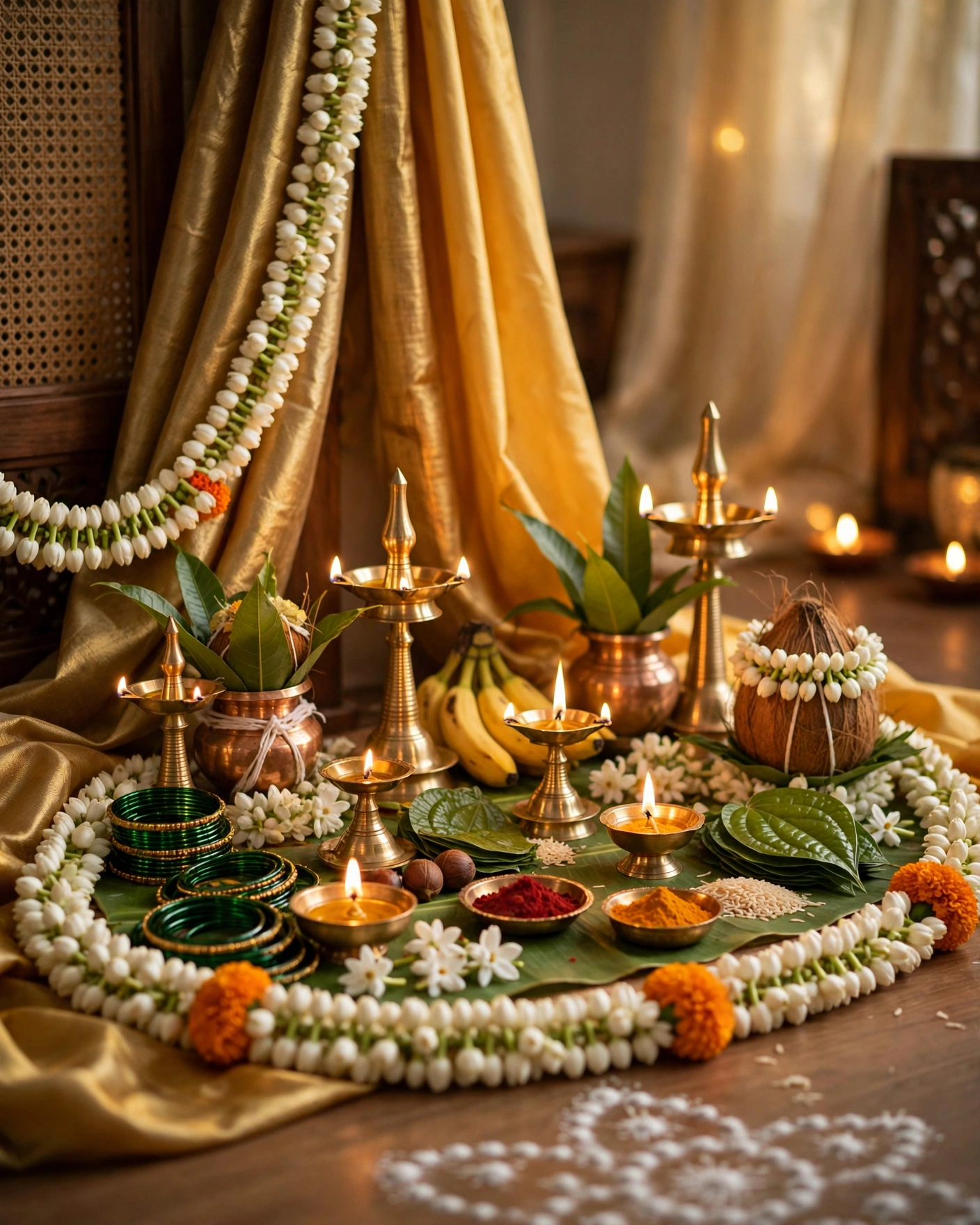
Seemantham, or seemantonnayanam, is the South Indian blessing ceremony for the mother-to-be, often held in the seventh or ninth month with prayers, music and a feast. Its invitation should carry the grace of the ritual: silk, jasmine, gold and temple light. Below are thirteen designs, grouped by style.
Silk and temple designs
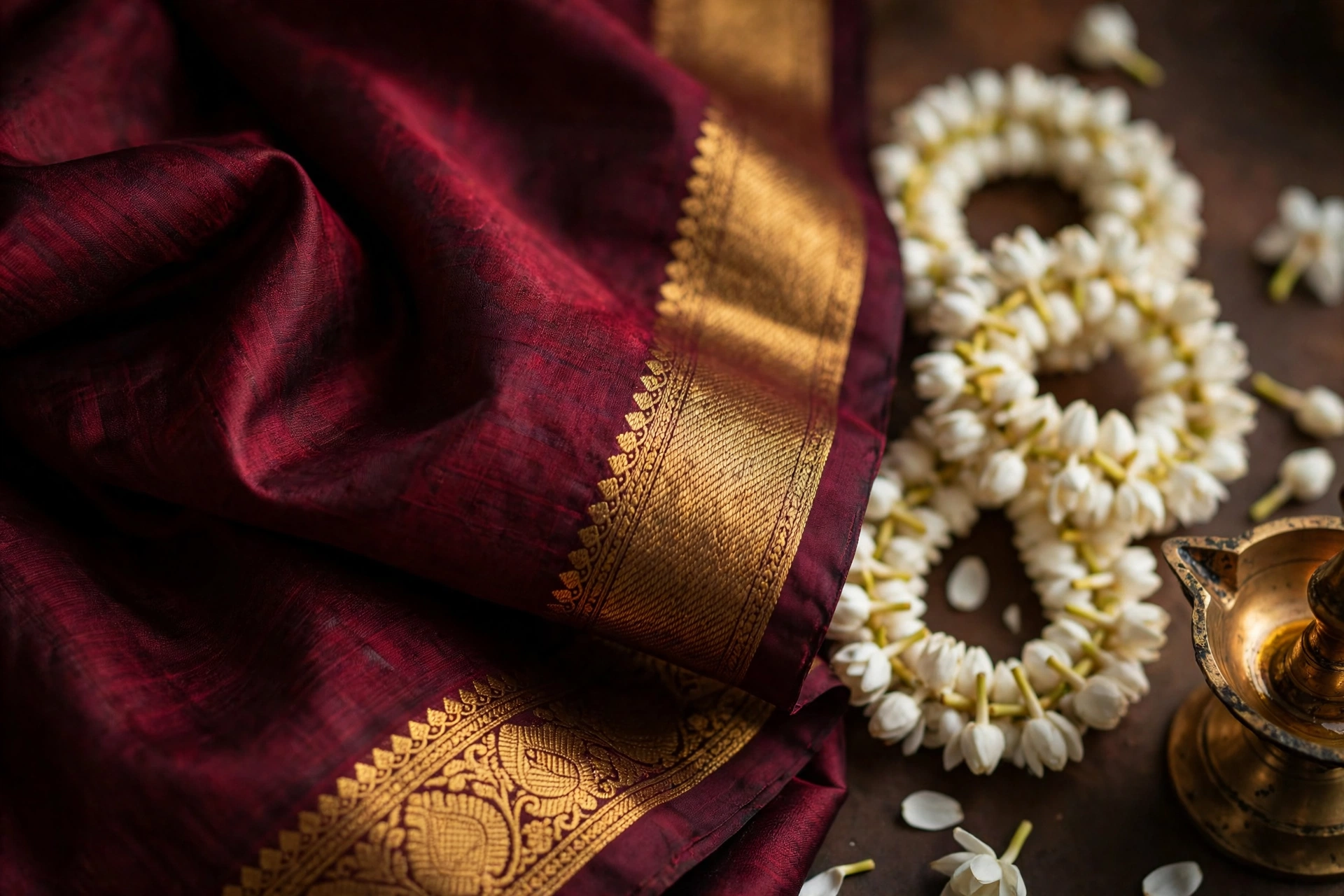
Kanjeevaram border
A rich silk-saree border in maroon, green or mustard with gold zari, on ivory. Instantly South Indian and deeply elegant.
Temple gopuram
A gold temple tower outline framing the details, for families who hold the ceremony with a temple visit or homam.
Brass lamp and kolam
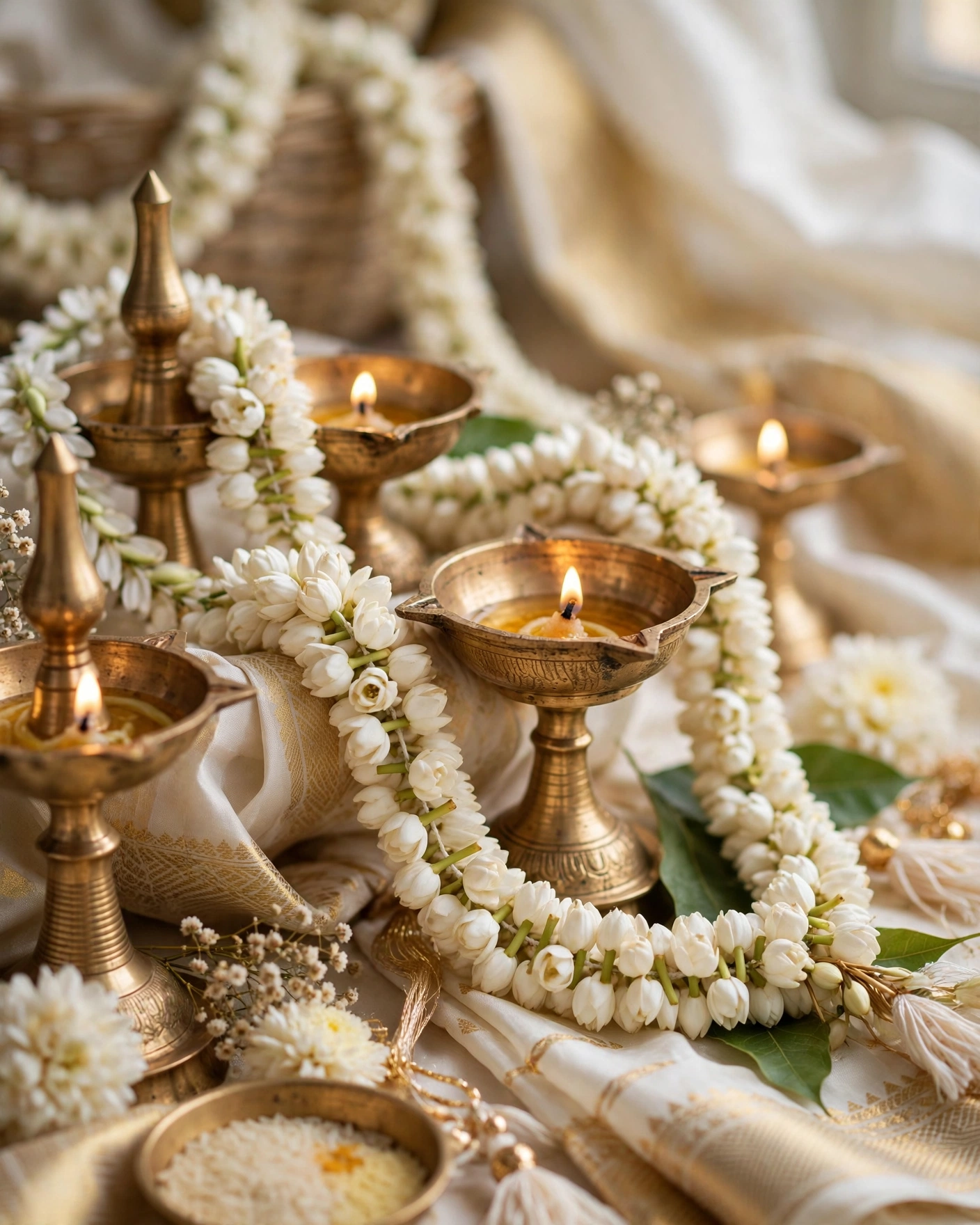
A lit kuthuvilakku with a kolam pattern beneath, warm and traditional.
Mango leaf toran
A string of mango leaves across the top of the card, the auspicious threshold of every South Indian celebration.
Floral designs
Jasmine garlands
Strings of white jasmine on ivory or deep green, fragrant on the eye and perfect for the ceremony.
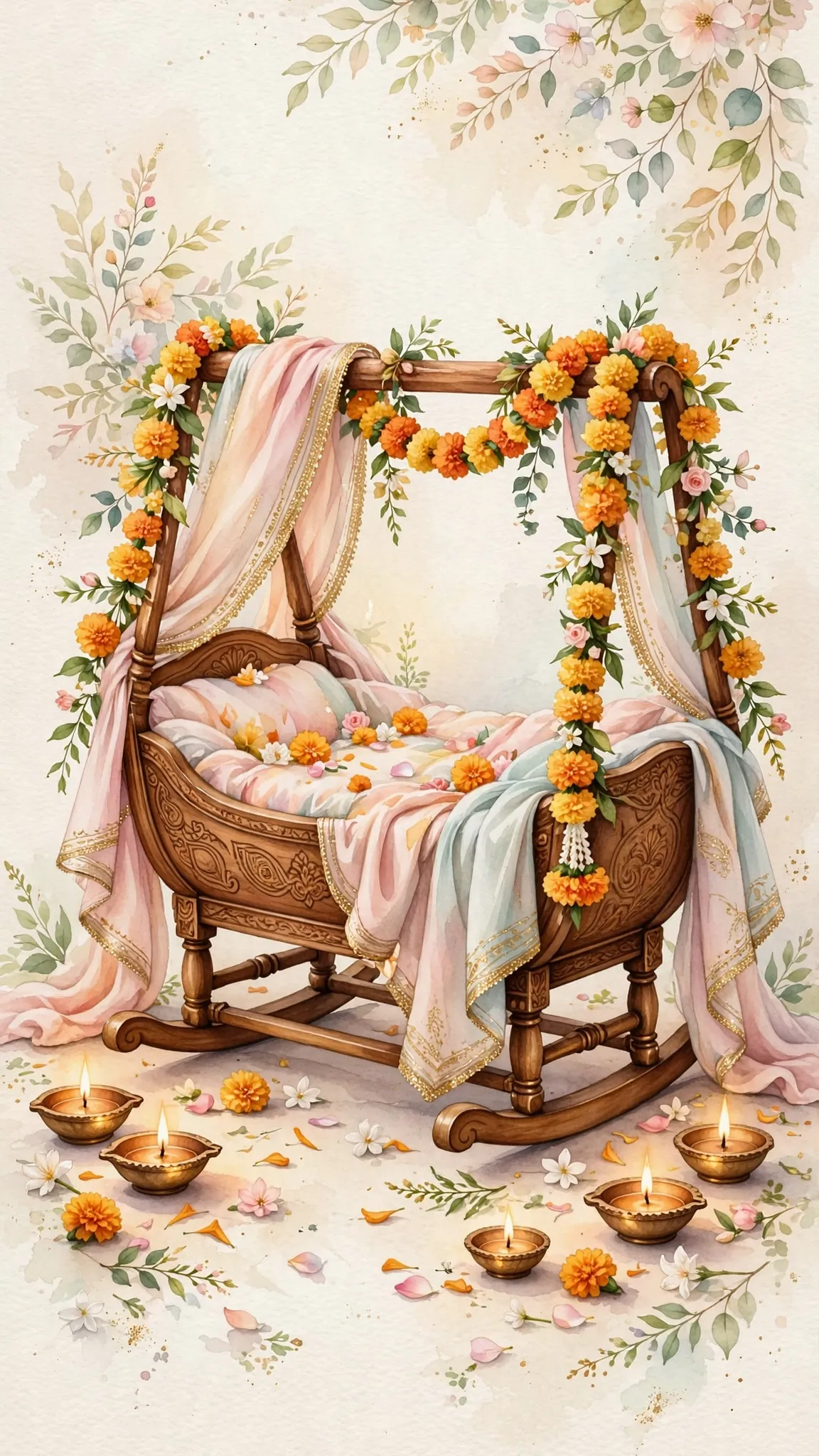
Jasmine and marigold
White jasmine with orange marigolds, festive and bright.
Lotus in gold
A pink lotus in fine gold line work, graceful and symbolic.
Regional styles
Telugu seemantham
Turmeric yellow and red with banana leaves and a kalash, for Telugu families.
Tamil valaikappu-style
Glass bangles and a silk border, for families who combine seemantham with valaikappu.
Kannada and Kerala touches
Kasavu-style cream and gold for Kerala families; mysore-silk colours for Kannada families.
Modern designs
Minimal ivory and gold
A single brass lamp or lotus in gold on ivory, with clean type. Elegant and easy for elders to read.
Mother-to-be illustration
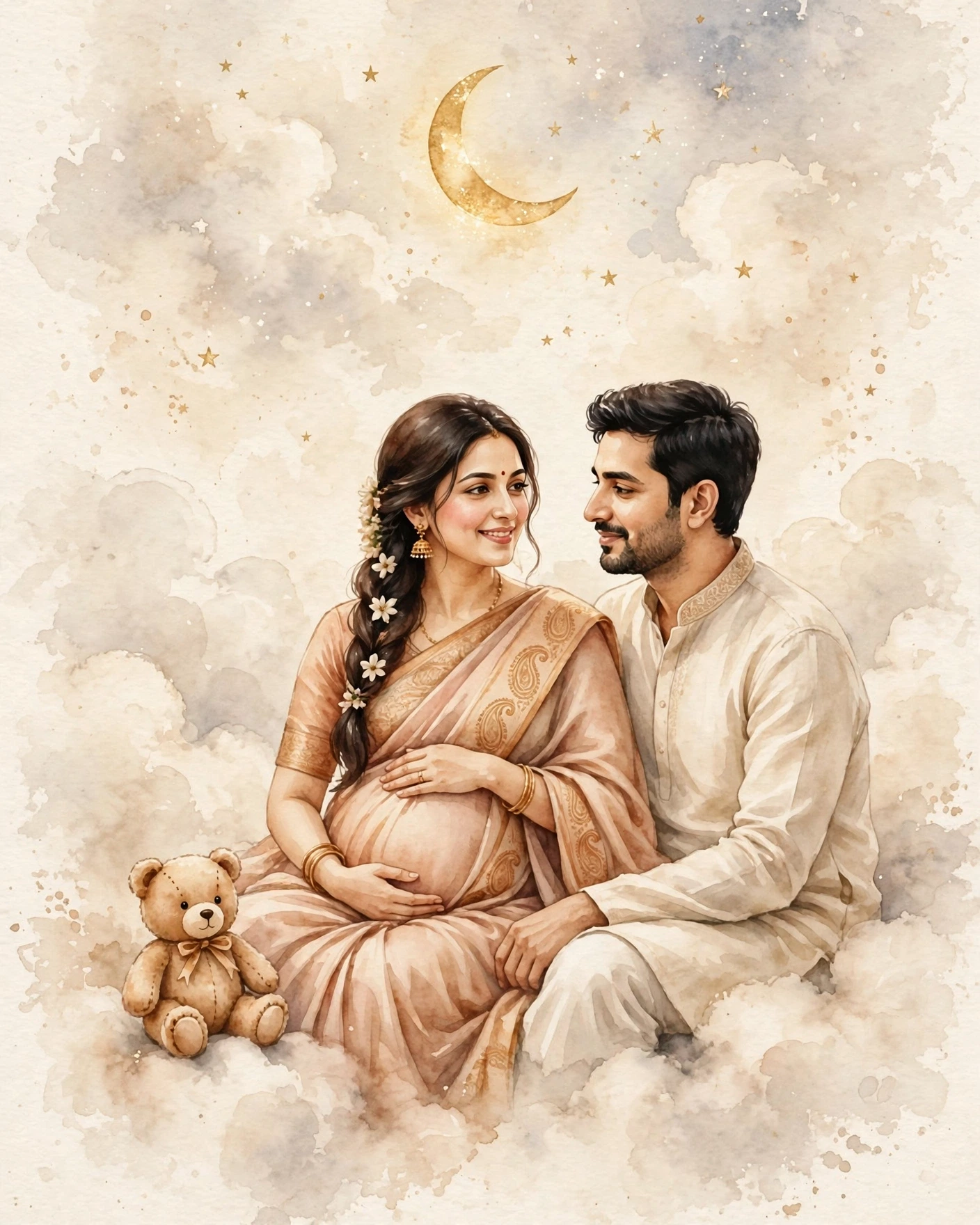
The mother-to-be in a silk saree with jasmine in her hair, painted in soft colours.
Cinematic opening
A short film opening on a lamp being lit, revealing the details, shared on WhatsApp for family near and far.
What to include
- The ceremony name your family uses: seemantham, seemantonnayanam, valaikappu or both.
- The muhurat time, since the ceremony is often timed by the priest.
- The venue, often the family home or a hall, with a map.
- The feast, since many seemanthams end with a traditional meal on banana leaves.
- Both languages, Tamil, Telugu or Kannada for the blessing and English for the details.
A seemantham card should feel like the first light of the lamp at dawn: calm, golden and full of blessing.
Before you choose
- Ceremony name and regional style agreed with elders
- Muhurat time confirmed with the priest
- Regional script checked by a fluent reader
- Venue and feast timing clear
Wording to pair with the design
- With the blessings of our elders, we invite you to the seemantham of our daughter-in-law [Name] on [Date] at [Time].
- Please join us for the seemantham and valaikappu of [Name], followed by lunch.
- The muhurat is at [Time]. We request your presence and blessings.
The ceremony, briefly
At a seemantham, the elders perform prayers for the health of the mother and baby, the mother-to-be is adorned with flowers and bangles, and the family shares a traditional meal, often served on banana leaves. Some families add music, with women singing traditional songs. Mentioning the order of the morning on the invitation helps guests arrive in time for the prayers and the meal.
Printed and digital
Many families still hand-deliver a few printed cards to elders and close relatives, and send the same design as a digital invite with a map and the muhurat to everyone else.
Send the invitation three to four weeks ahead, so relatives travelling from other towns can plan the trip.
Frequently asked questions
What is a seemantham ceremony?
A South Indian prenatal blessing ceremony, often in the seventh or ninth month, where elders bless the mother-to-be with prayers, music and gifts.
What colours suit a seemantham invitation?
Silk-saree colours such as maroon, green and mustard with gold, or ivory with jasmine white.
Is seemantham the same as valaikappu?
They're related. Valaikappu is the bangle ceremony and is often held together with seemantham in Tamil families.
Should the invitation be in a regional language?
Many families write the blessing in Tamil, Telugu or Kannada and the details in English.
Related reading
- Baby Shower Invitation Wording in English
- Baby Shower Invitation Designs for a Baby Boy
- Modern Baby Shower Themes for Indian Families
- Baby Shower Planning Checklist for Indian Families
Create your seemantham invitation on MyIndiAura, with the grace of silk and jasmine.
See it on a real invite
Open any of these to see the full invite, then add your own names and preview it free.

Found this useful? Share it with someone planning a celebration.
Share