Muslim Wedding Invitation Card Designs
Muslim wedding cards are known for their elegance: arches, geometric patterns, and a palette that feels both festive and serene.
The celebration and the card
A Muslim wedding celebration usually centres on the nikah, and often includes a mehndi, a sangeet style gathering, and the walima reception. The invitation card usually covers the whole sequence, with the nikah given pride of place.
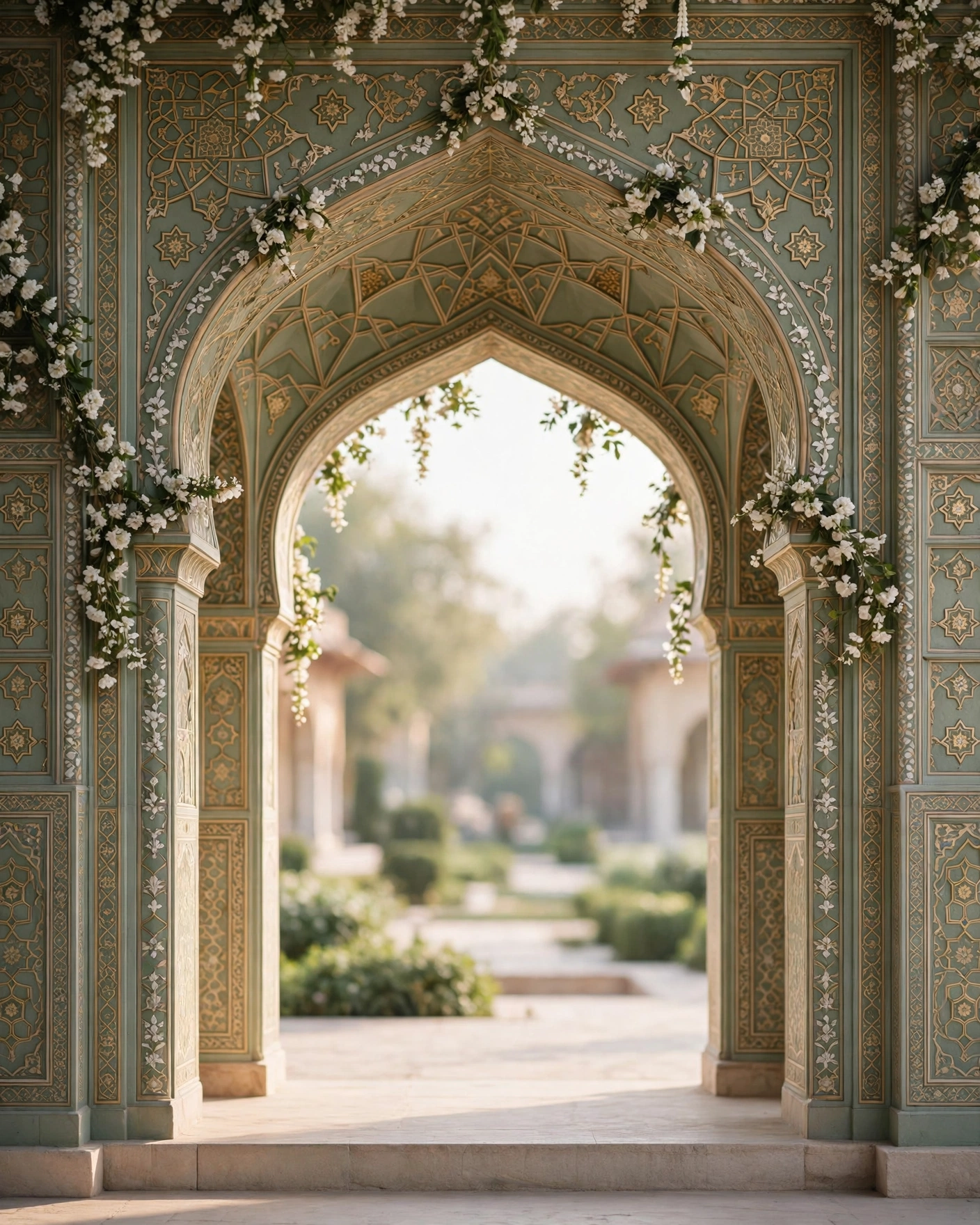
The design language is distinctive: Mughal arches, geometric and arabesque patterns, and colours like deep green, gold, ivory, and blush. The card should feel refined, with pattern used as a frame rather than a flood, so the names and details stay easy to read.
Designs to consider
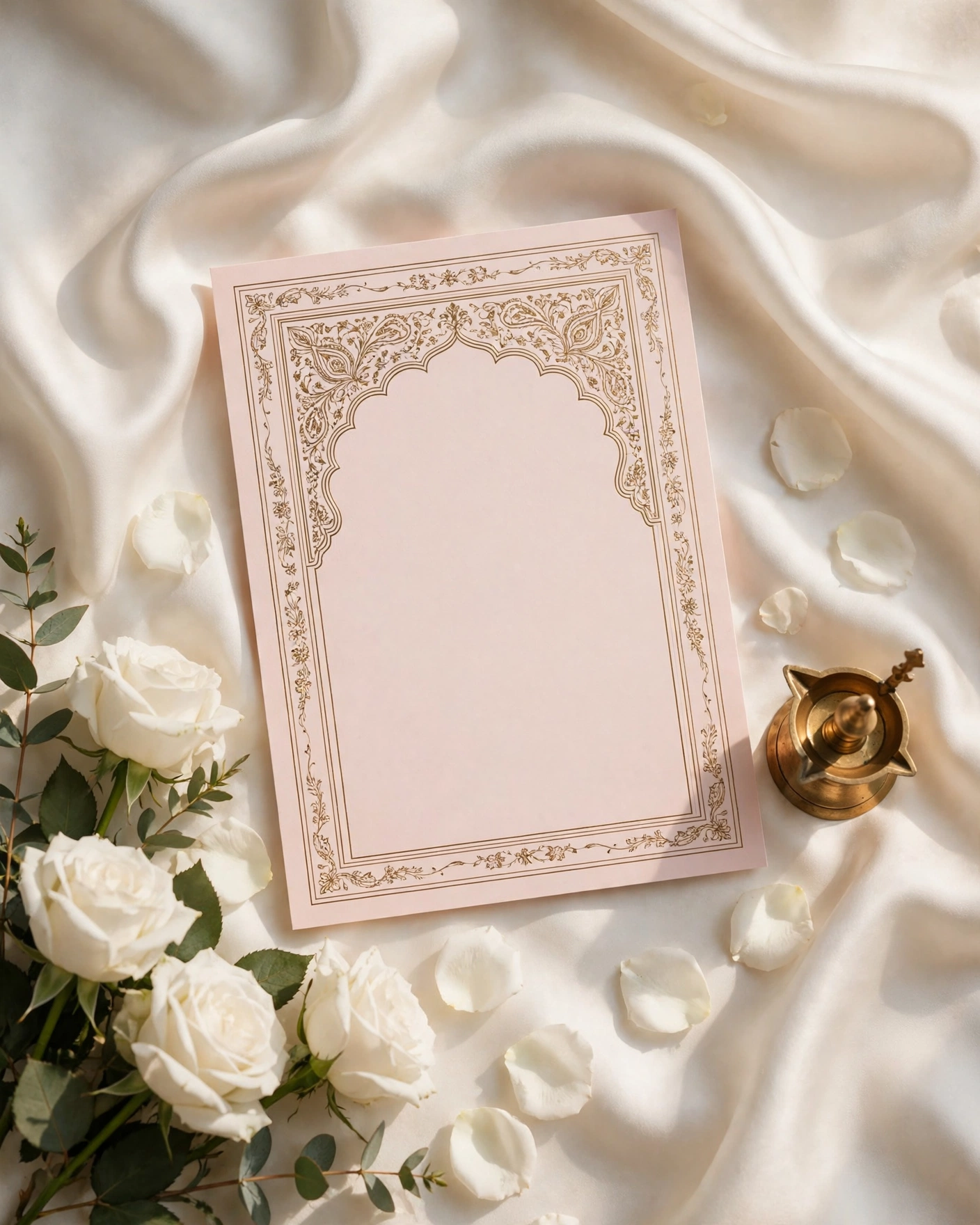
- A classic arch framed card in green and gold.
- A blush and gold card for a softer, modern feel.
- A full sequence card covering nikah, mehndi, and walima.
- A digital animated card that opens on an arch motif.
Wording examples
- Elegant: With the blessings of Allah, we invite you to the nikah of our children, followed by the walima reception.
- Simple: Nikah and walima celebrations. Two days of joy, family, and prayer. Details inside.
Style and colour
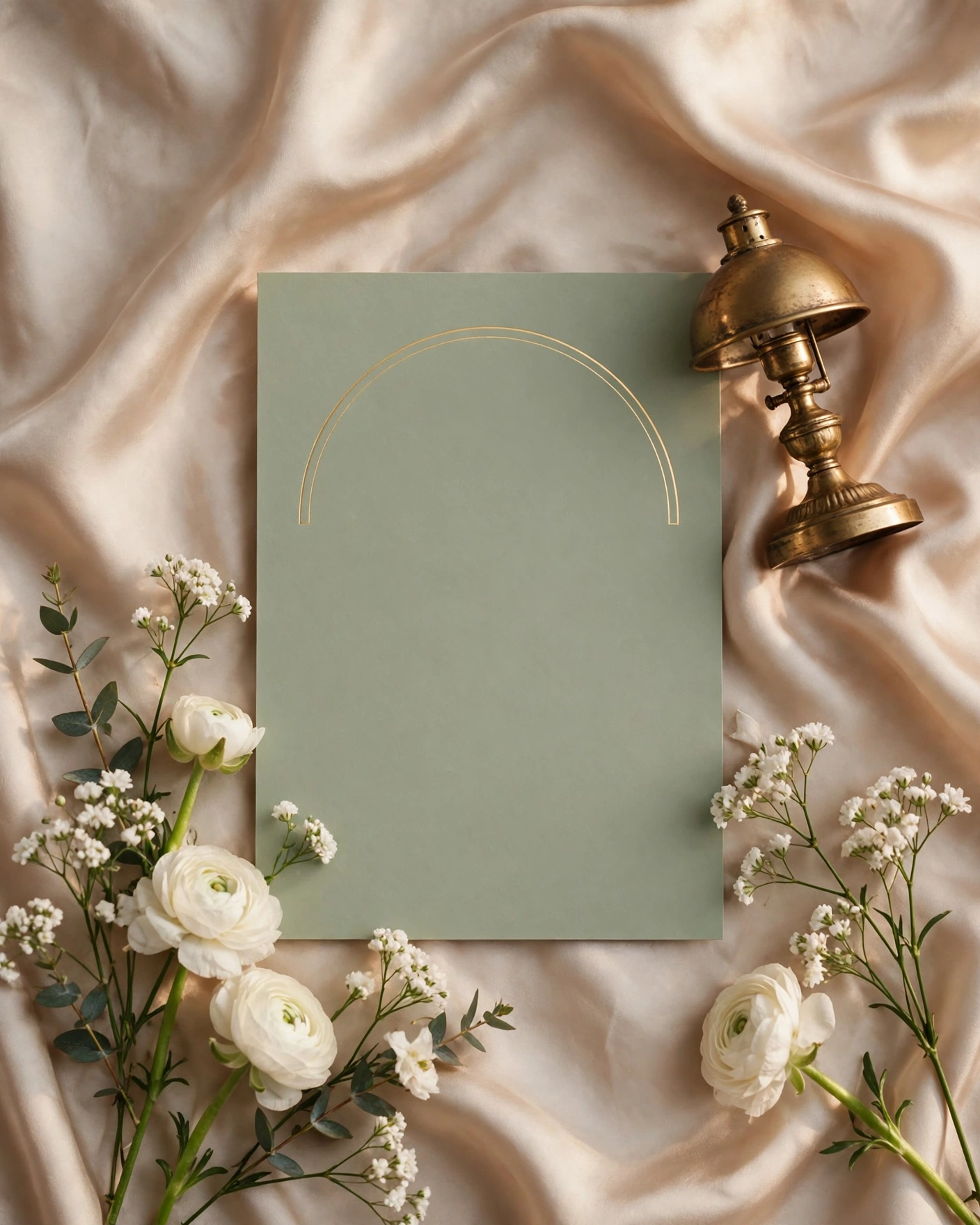
Muslim wedding design suits deep green or sage with gold, or blush with gold for a lighter mood. Arch frames and geometric borders are the signature, and they work best when kept symmetrical and uncluttered. Keep the couple's names in the largest type, and let the pattern support rather than compete with them.
Muslim wedding design proves that pattern, used with restraint, can feel both festive and serene.
Details to confirm before you send
- Names of the couple and the two families, as elders want them written
- The nikah date, time, and venue
- The walima date, time, and venue
- A contact number for guests
Six more designs for a nikah card
Bismillah header
The card opens with Bismillah in fine Arabic calligraphy, centred above the names. Families from every region recognise it and it sets a graceful tone.
Emerald and gold arch
A pointed Mughal arch in gold on deep emerald, with the details framed inside. Rich, but restrained enough for a nikah.
Moon and lantern
A crescent moon and a hanging lantern, softly lit, for an evening nikah or walima.
Jaali screen
A white jaali pattern on ivory, inspired by Fatehpur Sikri, with the text in a warm grey. Calm and elegant.
Urdu and English
The couple's names in Urdu nastaliq on one side and English on the other, a lovely choice for families who write in both.
Rose and attar
Dusky roses with a small attar bottle illustration, a nod to Lucknow and Hyderabad wedding traditions.
Sending the nikah set in four steps
- List each function: manjha or haldi, mehndi, nikah, rukhsati and walima, with the host family for each.
- Decide whether the walima card goes from the groom's family separately.
- Mention separate seating for men and women if the venue arranges it.
- Send the card with a short dua or blessing line, then remind guests a day ahead.
The walima is hosted by the groom's family, often a day after the nikah, so many families send two linked cards from two households. A digital invitation can hold both, with a clear note on who is hosting each.
Keep the nikah time precise, because the ceremony is usually short and guests who arrive late can miss it entirely. If the mehr or the qazi's arrival sets the timing, give a little margin and tell guests to be seated fifteen minutes early.
Families who prefer not to use photographs can rely on calligraphy, pattern and colour alone; a card built only from type and ornament can look every bit as rich as one with pictures.
If the mehndi is a ladies-only evening, say so plainly so that male relatives know which events to plan for.
For a daytime nikah followed by an evening walima, a two-colour card works beautifully: ivory and gold for the nikah, deep green for the walima.
Frequently asked questions
What should a nikah invitation include?
The bride and groom with their parents' names, the nikah date, time and venue, and the walima details if it is on the same card.
Is Bismillah written at the top of the card?
Many families begin with Bismillah or 786. Some prefer a digital card so the calligraphy is not discarded later.
Who hosts the walima?
The groom's family hosts the walima, usually after the nikah, and it often gets its own card or section.
Which colours suit a Muslim wedding card?
Emerald, ivory, gold and deep maroon are popular, with arches, jaali and calligraphy as the main ornaments.
Related reading
See it on a real invite
Open any of these to see the full invite, then add your own names and preview it free.
Found this useful? Share it with someone planning a celebration.
Share