Bengali Wedding Invitation Card Designs
Bengali weddings are rich with ritual, from the aai budo bhaat to the sindoor daan. The card should carry that red and white poetry.
The celebration and the card
A Bengali wedding unfolds over several days, with rituals like aai budo bhaat, haldi, and the main ceremony with its saat paak, mala bodol, and sindoor daan. The invitation usually covers the main ceremony and the reception, and often the pre wedding events too.
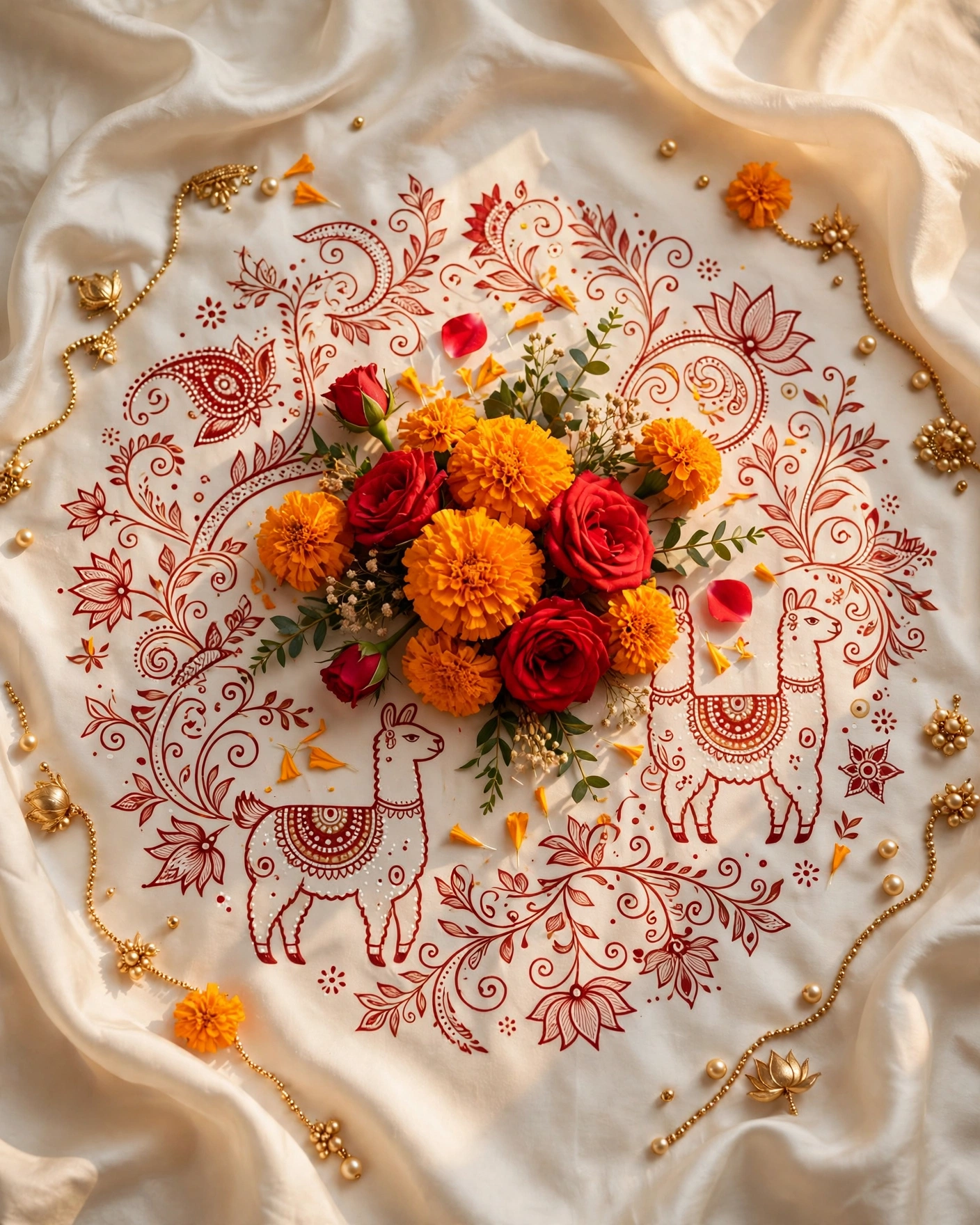
The design language is unmistakable: red and white, alpana patterns, conch shells, and the ulu dhwani spirit of celebration. A red border on ivory, or a deep burgundy card with gold and white alpana work, reads instantly as Bengali and festive.
Designs to consider
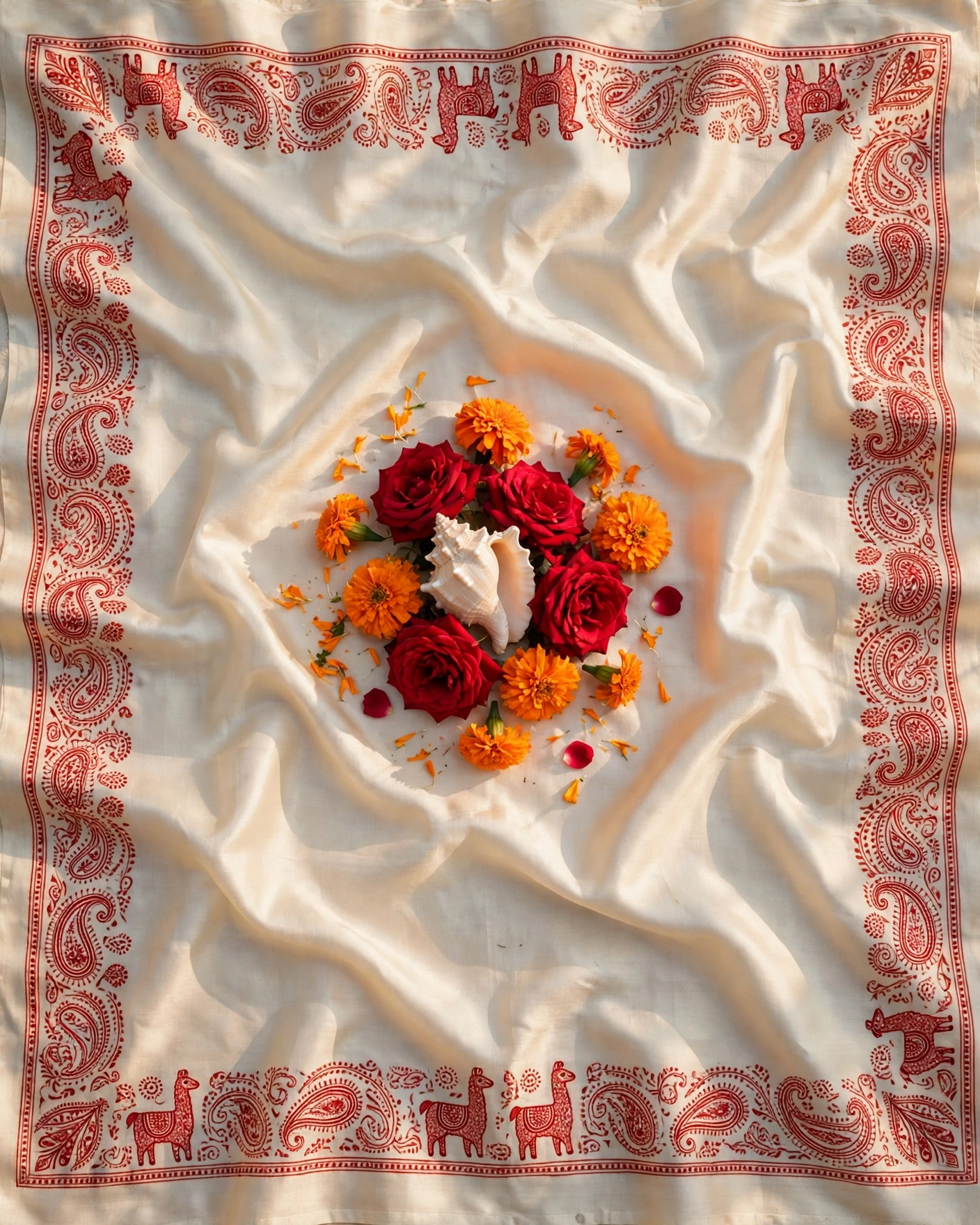
- A classic red and white card with alpana borders.
- A deep burgundy and gold card for a more formal feel.
- A full sequence card covering the pre wedding rituals and the main day.
- A digital card with each ritual on its own screen.
Wording examples
- Traditional: With the blessings of our elders, we invite you to the wedding of our children. Shubho bibaho, and a celebration of love and family.
- Simple: Bengali wedding celebrations. Main ceremony and reception, with pre wedding rituals. Details inside.
Style and colour
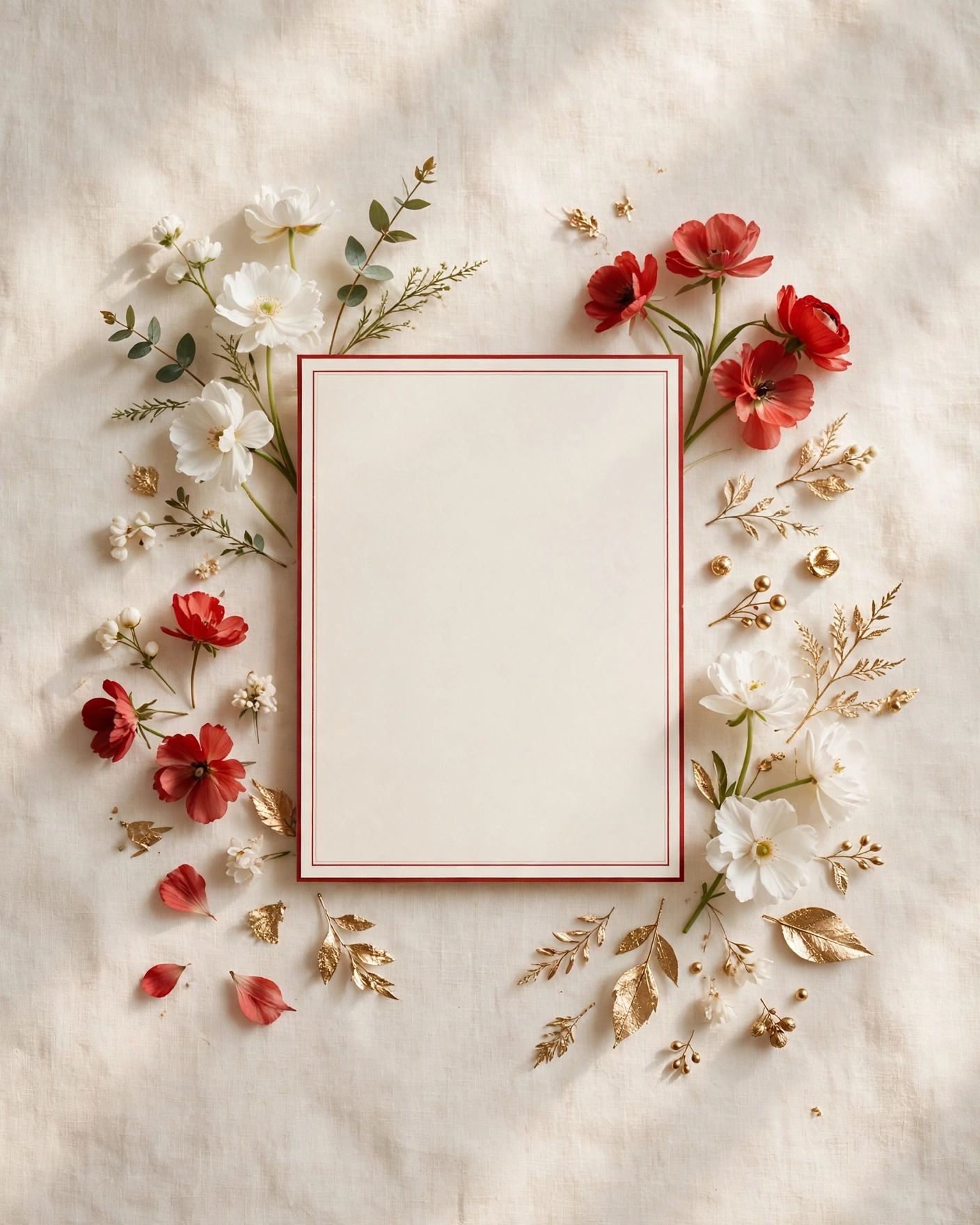
Bengali design loves the red and white pairing, with gold as the bridge. Alpana patterns make a beautiful border, used with restraint so the text stays readable. A conch or paisley motif adds authenticity without turning the card into a catalogue of symbols.
Red and white, alpana and gold: a Bengali card says its story before a single word is read.
Details to confirm before you send
- The couple's names, checked letter by letter with each family
- The main ceremony date, time, and venue
- When and where the reception begins, with a map pin
- A contact number for guests
Six more designs for a biye card
Alpana border
A white alpana pattern drawn around the card's edge on a red ground, as if painted on the floor of the home.
Shankha pola bangles
A pair of red and white bangles beside the names, a sign of marriage every Bengali relative knows.
Topor and mukut
The groom's topor and the bride's mukut drawn in fine line, side by side.
Kantha stitch
A soft kantha running-stitch border on cream, warm and handmade in feel.
Terracotta temple
Panels from a Bishnupur terracotta temple framing the details, for families who love Bengal's craft heritage.
Bengali script first
The details in Bengali script with English below, the order elders appreciate most.
Sending it in four steps
- List the aiburobhat, gaye holud, biye, bou bhaat and reception, with the host family for each.
- Mention the lagna time for the biye, because the muhurta often falls late at night.
- Send the card to elders first, ideally after a phone call.
- Remind guests of the bou bhaat separately if it is hosted by the groom's family in another city.
Bengali weddings often begin late in the evening and continue past midnight, depending on the lagna. Guests from outside Bengal sometimes arrive far too early, so a line such as "dinner from eight, wedding at eleven" sets expectations kindly.
Many families still print a small run of traditional cards for elders, then send a digital version to everyone else, which keeps costs low without losing the ritual of handing over a card.
Wording that sounds like home
The traditional Bengali card is written by the parents in a formal voice, inviting relatives to grace the occasion with their presence. Younger couples sometimes add a lighter line in English for friends, such as "come for the shehnai, stay for the fish fry". Mixing the two works well on a digital card, where the formal invitation sits first and the playful line appears on the next screen.
The tattva and the invitation
Bengali families exchange tattva, beautifully arranged trays of gifts, before the wedding. Some couples echo that on the card with a small drawing of a decorated tray of sweets, fish and a saree, which delights relatives and makes the design feel truly local rather than generic.
Frequently asked questions
What is written at the top of a Bengali wedding card?
Many cards begin with a short invocation to Prajapati or Ganesh, followed by the parents' invitation.
Which colours suit a Bengali card?
Red and white, with touches of gold, echo the bride's saree and the shankha pola bangles.
Should the card be in Bengali?
Elders appreciate Bengali script. Many families print Bengali with English below, or send both versions.
What is the bou bhaat?
The groom's family's reception, where the bride serves rice for the first time in her new home. It often has its own card.
Related reading
See it on a real invite
Open any of these to see the full invite, then add your own names and preview it free.


Found this useful? Share it with someone planning a celebration.
Share